-

-

What conditions are needed for cherry cultivation? A full analysis of growing requirements
Cherry cultivation conditions
-
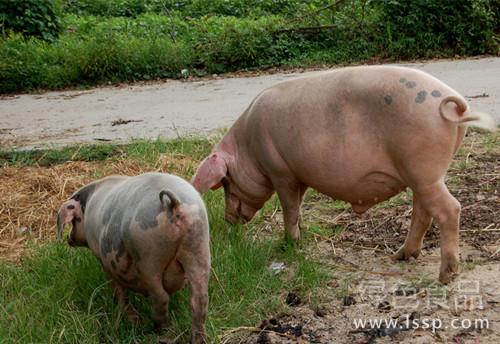
Detailed Explanation of Body Condition and Feed Formulas for Sows at Different Stages
Body Condition of Sows at Different Stages and Feed Formulas for Sows at Different Stages
-

What kind of environmental conditions does Codonopsis pilosula cultivation require?
Codonopsis pilosula is also known as three-leaf vegetable, single leaf, and stinking codonopsis. It is a perennial climbing herbaceous plant of the Campanulaceae family. Codonopsis pilosula is a commonly used traditional Chinese medicine, originally from Shangdang, Shanxi; its root resembles ginseng, hence the name codonopsis. The root is used medicinally and has the functions of tonifying qi and nourishing blood, harmonizing the spleen and stomach, promoting fluid production and clearing the lungs. There are many varieties of codonopsis medicinal material, such as Western codonopsis, mainly produced in Gansu, Shanxi, Sichuan and other provinces; Eastern codonopsis, mainly produced in the northeastern provinces; Lu codonopsis, mainly produced in Shanxi, Henan and other provinces. The Tai codonopsis among the Western codonopsis is especially the best in quality. Codonopsis is a deep-rooted plant that prefers a cool and moist climate.
-
What are the cultivation conditions for agave? A detailed guide to care essentials
Sunlight The original growing environment of agave often has quite intense sunlight, so agave is very well adapted to environments with abundant sunlight. If the sunlight in the environment is not sufficient, the plant often grows poorly and loses its original striking appearance. Therefore, in winter, when sunlight conditions are relatively poor, special attention should be paid to the sunlight situation in the agave's cultivation environment, providing as much sunlight as possible, as only this can benefit the agave's growth and help it overwinter safely. Temperature Agave has tough vitality, which of course also means that agave can
-
Growing environment requirements and suitable cultivation conditions for Pinellia ternata
Pinellia ternata is a shallow-rooted plant that prefers fertile soil, and was originally mostly found growing wild on moist, loose, and fertile sandy loam or humus soil. It prefers a mild, humid climate and a shaded environment, is afraid of drought, and avoids high temperatures. In summer, it is best grown in a semi-shaded, semi-sunny environment; it grows relatively well when soil moisture content is 20%-40%; drought and water shortage easily cause the seedlings to fall over. Generally, with changes in the growing environment, it can fall over 1-3 times a year. For Pinellia ternata, falling over is, on the one hand, an adaptation to adverse conditions, and more importantly, it increases the number of bulbils, that is, it carries out one round of asexual
-
What conditions must be met for cut chrysanthemum cultivation?
1. Light. Autumn chrysanthemums are typical short-day plants. Their vegetative growth stage generally requires a day length of no less than 14 hours, and their reproductive growth stage generally requires a day length of no more than 12 hours. Supplemental lighting for rooted cuttings can prevent premature flower bud formation. The duration of supplemental lighting for chrysanthemums depends on the variety and cultivation fertilizer and water conditions. The correct supplemental lighting requirements are as follows: (1) One 100-watt incandescent bulb every 3 m, at a height of 1.5 m, ensuring that the weakest light area is above 50 LUX. (2) Generally, a 4-hour night-interruption supplemental lighting method is used
-
How is the condition of Euonymus japonicus disease? Let us help you recognize the common disease symptoms
1. Symptoms: In the early stage of the disease, there are small yellow spots on the leaves, which gradually turn yellowish-brown and expand into round or irregular spots. The diameter of the spots is 2 mm to 10 mm. In the later stage, the spots become grayish-brown or grayish-white, with darker edges, and many small black dots form on the spots. In severe cases, the spots merge into one large area, and the leaves turn yellow and fall off. 2. Disease pattern: The pathogen overwinters in the form of mycelium and other structures on diseased leaves or fallen leaves, serving as the primary infection source. Spores are spread by wind and rain. In the spring of the following year, as the temperature rises, conidia are produced,
-
Key Technical Points for Spring Broodstock Conditioning of the Four Major Chinese Carps
Spring is an important period for the maturation of broodstock gonads. From the beginning of spring to spawning, a large amount of nutrients in the broodstock's body is diverted to gonad development, so broodstock conditioning should be intensified in spring to meet the needs of gonad development, promote timely maturation of broodstock and ensure smooth spawning. The conditioning techniques are: 1. Divide ponds early. Adjusting stocking density and species combination is the primary condition for good broodstock conditioning. The pond area for broodstock division should preferably be 2000-2600 sq m. Before dividing the ponds, first drain the pond water, remove wild trash fish, snails, mussels and harmful organisms, and at the same time remove part of the sludge
-
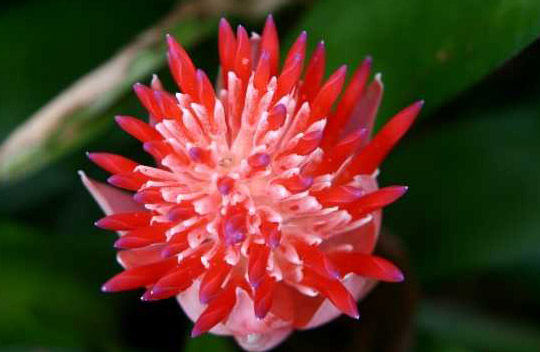
What conditions are needed for a billbergia to achieve excellence in both flowers and foliage?
The leaves of the billbergia are emerald green and glossy, growing in clusters in a rosette shape, and the leaf cylinder can hold water without leaking, which is how it got its name. Around National Day, a columnar bright red inflorescence emerges from the tender green leaf cylinder.(1) The billbergia likes warmth, humidity and a semi-shaded environment. In spring, summer and autumn, it can be placed indoors in a spot with bright scattered light
条件筛选