-

The development of the dairy industry urgently needs to build a closer community with a shared future
The development of the dairy industry urgently needs to build a closer community with a shared future
-
Only a cadre who vies with farmers for a seat on the bench counts as a close friend
Only by "vying with farmers for a seat on the bench" can one count as a close friend
-
Increase rural employment opportunities so that farmers can find work close to home
Give farmers more employment opportunities in rural areas
-
Chinese farming wisdom amazes the world, ancient agricultural techniques draw close attention
Chinese farming wisdom amazes the world
-
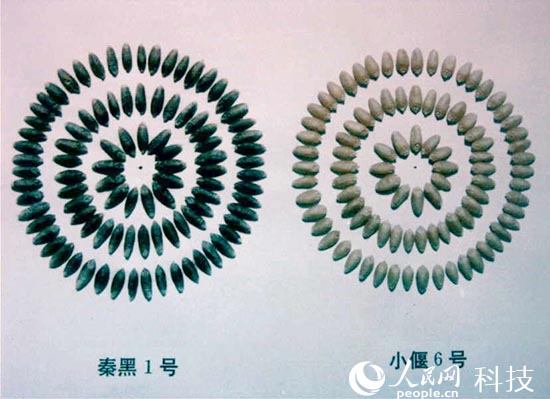
Colored-grain wheat and colored potatoes arrive, anthocyanin content close to blueberries
Colored-grain wheat and colored potatoes arrive, anthocyanin content close to blueberries
-
High-yield Cultivation Techniques for Soybean with Wide Ridge and Narrow Row Close Planting
Wide ridge and narrow row close planting of soybean can increase the canopy leaf area index, make full use of light energy, and achieve the goal of increasing yield. (1) Site selection and land preparation. The best preceding crops are wheat, corn or potato. Ridging is done as sowing proceeds. The ridge spacing is 130 cm, the ridge height is 25 cm, and the ridge top width is 3O cm. (2) Variety selection. For wide ridge and narrow row close planting of soybean, the varieties selected should generally be 168, ZOQI, 9409B, Fengshou 544, Mijiawang, Hefeng 25, Hebing 93-BS, etc. Seed selection should be carried out before sowing.
-
Rational close-planting techniques for dryland potato cultivation
Potato cultivation has a long history in Ulanqab City, and its growth and development patterns match the local natural climate characteristics, giving it obvious resource advantages and enormous development potential. In recent years, potato cultivation techniques have also developed greatly, with the goal of high quality and special use, taking excellent virus-free seed potatoes as the main line, integrating key technologies, forming technical models and technical systems, and innovating extension methods to effectively raise the rates of technology popularization and adoption. In our city, the promotion and application of virus-free seed potatoes was first accelerated, vigorously promoting dryland plastic film mulching cultivation, dryland water-saving practices, soil testing and formulated fertilization, integrated pest and disease control, high-ridge cultivation on irrigated land, and rational close-planting cultivation techniques.
-
Key points of tea cultivation: selecting improved varieties and reasonable close planting
1. Selecting improved varieties Seeds (seedlings) are the basic means of production in tea cultivation, and any cultivation method is built on the improved varieties of a given period. Since the 1980s, tea cultivation has entirely adopted the close-planted, dwarfed, no-tillage method. Because individual space is reduced and population density increased, it is all the more necessary to match this with suitable improved varieties in order to achieve the desired results. For example, Fuding Dabaicha, Qianmei 101, Qianmei 303 and others are all fine tea varieties suitable for close planting. 2. Collection and
-
Methods and key technical points for rational close planting of garlic
How should garlic be rationally close-planted? Before sowing, the planting density must first be determined, that is, the number of plants per mu. According to trials in the Cangshan garlic production area, on plots with medium to high production levels, planting 30,000 plants per mu yielded 686.7 kg of fresh garlic bulbs; planting 40,000 plants per mu yielded 920 kg of fresh garlic bulbs, a 33.9% increase over planting 30,000 plants; planting 45,000 plants per mu yielded 526.7 kg of fresh garlic bulbs, a 23.3% decrease. The trials found that when the number of plants per mu exceeded 40,000, although the yield increase was significant, the commercial
-
Technical points for achieving early high yield through close planting of honeysuckle
Honeysuckle (Lonicera japonica) is a perennial semi-evergreen woody vine, also known as erhua or shuanghua, and is a traditional valuable Chinese medicinal herb. The roots, stems, leaves and flowers of honeysuckle can all be used medicinally, but the main medicinal part is the dried flower buds, which have the effects of clearing heat and detoxifying, eliminating chronic inflammation and improving human immunity. In recent years, with the intensification of honeysuckle development and the broadening of application fields, market demand has grown ever larger. Improving cultivation techniques to increase the early-stage yield of honeysuckle and maintain the duration of the full-yield period has become a major problem urgently needing solution in production. In recent years, based on
条件筛选