-

What is the difference between bunching onion and fragrant onion? Detailed explanation of high-yield cultivation techniques
Bunching onion is also called four-season onion, vegetable onion, winter onion, frozen onion, etc. It is widely cultivated in the southern regions of our country. It is actually a variety of onion and an important seasoning, often used when cooking dishes and stewing soup. So where is the difference between bunching onion and fragrant onion? High-yield cultivation techniques
-
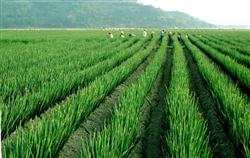
How should you water Welsh onions (bunching onions) correctly in the late growth stage?
How do you water Welsh onions in the late stage of cultivation? Here is an introduction. In early autumn the weather turns cooler and the onions begin vigorous growth, but the temperature is still relatively high, so the plants grow rather slowly. Their water requirements are not high, so water sparingly. Watering should be done in the morning and in the evening; avoid watering at noon, which suddenly lowers the soil temperature and affects root growth. In late August, ...
-
What are the techniques for large-scale production of export white bunching onions in the Chongming area?
1 Variety selection Select varieties such as Changbao, Changyue and Chunwei according to the export specifications and timing requirements for white bunching onions. For example, Changyue bolts late and has strong tolerance to heat and cold; it can be planted densely, planted from March to May, and harvested from November to January of the following year. 2 Raising seedlings 2.1 Preparation of the seedbed Seedbed preparation procedure: prepare the field (deep ploughing 350m, freeze the soil clods) -> apply base fertilizer -> plough twice (25cm) -> make beds (bed surface specification 1.5m x 30m). Applying base fertilizer: about 20 days before sowing, apply biological
-
Key Production Techniques for Green Food German Bunching Onion
1 Base Conditions The production base for green food German bunching onion should be selected in areas with unpolluted air and a good ecological environment, away from industrial and mining areas, main highways and railway lines, and avoiding the influence of industrial and urban pollution sources. The environmental quality should comply with the Class I standard listed in the National Ambient Air Quality Standard GB3095-82. At the same time, the soil and water resource conditions should be suitable for high-quality, high-yield and sustainable production of German bunching onion. 2 Variety Characteristics of German Bunching Onion German bunching onion is a thermophilic plant, relatively heat-tolerant but not cold-tolerant, with an optimum growth temperature of 22-24°C. In winter when it snows or the temperature is relatively low, the aboveground part dies back and the plant enters dormancy; when the temperature rises in spring, new shoots can sprout and continue to grow. It is suitable for slightly acidic (pH 6.5-7.5) loam or sandy loam; clayey soil is more favorable for bunching onion to safely pass through the hot summer. German bunching onion likes moisture and avoids dryness, and the field must be kept moist regularly.
-
Variety Characteristics and Cultivation Techniques of Evergreen Bunching Onion (Multiplier Onion)
Plant height about 25 cm, spread about 13 cm, leaf length 14 cm, green, no wax bloom. Pseudostem 8 cm long, flat and round, bulb white, base slightly swollen, outer skin white. Strong tillering ability, cold- and heat-tolerant, does not wither year-round, tender texture, does not flower, propagated by division. Can be cultivated in all four seasons, but mainly in spring and autumn, row spacing 25-30 cm, hill spacing 10-15 cm, 2-3 plants per hill: 45 days after planting, it can be harvested by division successively; apply fertilizer after each harvest, yield about 1500 kg per mu.
条件筛选