-

What are the latest solutions to the low fruit-setting rate of bell peppers?
Bell peppers differ from other peppers in that their taste is not only not spicy but also slightly sweet, and they also have the advantages of high yield and good returns, making them a very suitable crop for cultivation. However, many bell pepper growers report a low fruit-setting rate, so how should this be solved?
-
How to improve the fruit-setting rate of bell peppers? An introduction to the latest methods
Bell peppers often run into the problem of a poor fruit-setting rate, with flower and fruit drop, causing an imbalance between vegetative growth and reproductive growth, excessive plant growth, and a serious reduction in yield. Many farmers believe that controlling water and fertilizer can curb excessive growth, but the result is that the plants grow more and more vigorously and fruit setting becomes more and more
-
Detailed Explanation of the Latest Prevention and Control Measures for Deformed Fruit in Bell Peppers
There are many varieties of chili peppers, and bell peppers are among the transplanted ones. Many friends often cultivate them in greenhouses during winter and spring. However, because this year's situation is rather special, some vegetable farmers have been a bit lax in management. By the time the fruit sets, they find that many bell peppers cannot hold their fruit, and even if they do set fruit
-
How to manage bell peppers during the fruit-setting stage? Master the latest key technical points
Bell peppers are now very common in China, and their planting area is also very large. When growing bell peppers, their management work is very important. When managing bell peppers, we need to appropriately adjust our management measures according to the growth stage of the bell peppers. Especially
-
Latest Analysis of the Causes of Flower and Fruit Drop in Bell Peppers
Bell pepper cultivation is now very common in our country, with widespread distribution in both the north and south. When growing bell peppers, we need to do a good job of management, and careful management is the key to ensuring the normal growth of bell peppers. If management is poor, then
-
How to Grow Elaeagnus umbellata? A Detailed Guide to the Latest Cultivation Techniques
Elaeagnus umbellata, scientific name Elaeagnus pungens, also known as quercus crispula, sweet stick, milk fruit root, Elaeagnus umbellata, etc., is an evergreen erect shrub of the genus Elaeagnus in the family Elaeagnaceae. When ripe, the fruit is sweet and edible. The roots, leaves and fruits are all used medicinally, and it also has certain ornamental value. Cultivation can be done by sowing seeds or cuttings.
-
What Is the Wax Apple (Bell Fruit)? A Full Analysis of Current Planting Prospects
Growing fruit is something many friends are doing now, because the fruit market is booming, and for many groups, starting a business in this area is the first choice. The fruits on the market are fairly common to us, and some new non-traditional fruits are also constantly developing. Compared with apples and pears
-
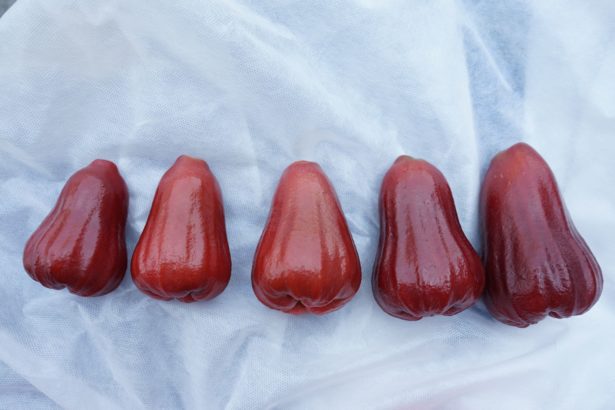
Through the South Wind, Seasonal Flavors: A Multi-Pronged Approach to Protecting the Red Bell Fruit
"Through the South Wind. Seasonal Flavors" A Multi-Pronged Approach to Protecting the Red Bell Fruit
-
Detailed Guide to Wax Apple (Bell Fruit) Cultivation Techniques
Wax apple fruit tastes refreshingly sweet, with an apple-like aroma, and is a cheap and excellent summer refreshment. Wax apple is native to India, the Malay Peninsula (mostly Java), the Andaman Islands and other archipelagos, and is now widely distributed across tropical regions of the world. It has been introduced and cultivated in China for more than four hundred years. At present, it is cultivated in Taiwan, China, Hainan, Guangdong, Guangxi, Fujian and other provinces (regions). Products of superior domestic varieties fetch high market prices, are deeply welcomed by consumers, and have very good prospects for development. I. Distribution and Characteristics of Wax Apple In China, wax
条件筛选