-
Introduction to Model Beekeeping with the Chinese Honeybee: Beekeeping Techniques Teach You How to Keep Bees
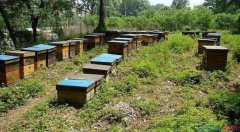
What is model beekeeping like? How good is this beekeeping method? How exactly is model beekeeping done? Let's take a look together. Model beekeeping is currently the most advanced beekeeping technique in China. Model beekeeping saves manpower and material resources, builds strong colonies that do not swarm, and the bees have a particularly strong resistance to wax moths. When the queen's egg-laying ability declines, natural supersedure occurs on its own without human intervention; usually two queens lay eggs in the same hive, rapidly strengthening the colony, greatly increasing honey production, several times or even more than ten times higher than conventional rearing methods.
-

Storage Methods and Technical Key Points for Queen Bees
Beekeeping operations store some spare queen bees, so that aging or injured queens can be replaced at any time, and lost queens can be replenished at any time. Queen storage methods include in-colony storage and out-of-hive storage. (1) In-colony storage Storing queen bees in mating colonies is the most convenient. When the new queen in a mating colony has been laying eggs for about one week, confine her in a rectangular iron wire queen cell cage and insert it into the brood comb of the mating colony. At the same time, introduce a mature queen cell into that colony. A similar method can also be used to store queen bees in the supers of strong colonies.
-
Why should high-quality queen bees be used in beekeeping?
In using high-quality queen bees, three main aspects should be considered: selecting Chinese bee (Apis cerana) breeds with excellent breed characteristics and production performance, using new queen bees, and preventing the degeneration of the Chinese bee breed used. Using queen bees with excellent traits is the guarantee for strong colony rearing of Chinese bees. In Chinese bee rearing, breeds should be selected that have characteristics such as strong egg-laying ability of the queen, strong colony strength, weak swarming tendency, high yield, and strong disease resistance (especially resistance to Chinese sacbrood disease). Excellent queen bees can be obtained through bee breeding production departments, but it must be noted that introduced queen bees should be able to
-
What preparation work needs to be done for artificially rearing queen bees?
Before artificial queen rearing, the following preparation work needs to be done: (1) Selecting parent colonies. Select healthy, disease-free colonies whose honey or royal jelly yield exceeds the average yield of the whole apiary, with weak swarming tendency and rapid colony development, as parent colonies. The drone colony is the colony that provides drones, and the queen mother colony is the colony that provides queens. Whether drone colony or queen mother colony, both are used to rear bee larvae. The same drone colony can also rear thousands of drones. If only one or two breeding colonies are used every year to rear virgin queens and drones, the whole apiary's colonies will undergo inbreeding, causing productivity and
-
Keeping mountain bees brings high returns and is a good path to increasing income and becoming better off
The mountain bee is a wild economic insect. The honey it makes from the nectar of the many flowers in nature is a fine grade of honey, and its market price can reach 30-40 yuan per kg. Generally, one bucket of mountain bees can yield about 25 kg of honey per year. If the colony is strong, the nectar source is good and the climate is suitable, each colony can produce 40-50 kg of honey. Right now is the peak period for mountain bee colony division, and bringing mountain bees home to raise them is a good project with low investment and quick results. Making and placing the bee bucket. The bee bucket is made up of a bottom bucket, an extension bucket, a bucket bottom and a bucket cap (lid)
-
What time and conditions are needed for artificially rearing queen bees?
When the new bees reared by the colony that year have completely replaced the old overwintering bees and the colony has entered its growth and expansion period with a relatively strong population, you can prepare for artificial queen rearing. In the north, it is best to rear queens in early summer when the daytime temperature is stable above 20°C and there is a nectar source, especially when there is an abundant pollen source and drones also begin to emerge one after another. In North China this is generally in May. This can ensure the quality of the queen bee, and also allows the early replacement of aging queens with new queens. Colonies with a queen from the current year will not undergo natural swarming. Use the new queens reared early to carry out artificial colony splitting
-
How Beekeepers Observe Bees Outside the Hive to Judge Conditions Inside
Honeybees are social insects that prefer a stable, quiet environment. In artificial beekeeping, opening the hive to inspect the bees is unavoidable due to production needs. But if the hive is opened too often and too frequently, it will inevitably disturb the colony's stability, and may even cause the colony to refuse the "climate" and abscond as a whole. Under normal temperature conditions, several bees stand at the hive entrance, not biting the entrance, not vibrating their wings, not crawling over one another, only paying a little "attention" to bees going in and out, or slightly following them; worker bees enter and exit one after another in succession; returning bees are either big-bellied, or have pollen pellets stuck to two legs.
-
Nine Practical Methods to Prevent Summer Decline in Bees
"Summer decline" is generally caused by high temperatures. To avoid and reduce "summer decline," the key is to do a good job of heat prevention and cooling for the colony, creating a suitable microclimate for the bees. The specific measures are as follows: 1. The summering apiary should be set under large trees or in a bamboo grove, in a ventilated and shady place, avoiding direct sunlight. The hive entrances should face south with the backs to the north. 2. Build a shade shed over the hives and cover it with straw, and plant crops such as pumpkins, hyacinth beans, and loofahs to let their vines climb onto the shed, increasing the shading layer. 3. Place a water-soaked sponge between the inner cover and the outer cover of each hive, which can
-
Detailed Explanation of Beeswax Production Methods and Technical Key Points
Based on the bees' ability to secrete beeswax, 20,000 bees can secrete about 1 kg of beeswax in their lifetime. A strong colony can secrete 5-7.5 kg of beeswax in spring and summer over the course of 1 year. Taking appropriate measures can increase beeswax production. 1. Build more new combs. Old combs are the main raw material for producing beeswax. Eliminate more old combs and build more new combs; building 1 new comb can produce 50-70 g of wax. 30% of old combs should be eliminated each year. 2. Widen the bee space. During the major honey flow period, widen the bee space between honey combs, and the bees
-
Causes and Prevention Methods of Robber Bees in Bee Colonies
During the active season for bees, when nectar sources are scarce, some bees often invade other colonies' hives and plunder their stored honey. A few robber bees invade the robbed colony, fill themselves with honey and return to their original hive, reporting to their hive mates through dances, and together they go to rob. The robbed colonies are mostly weak colonies, diseased colonies, or queenless colonies; their queen is often killed by the robber bees, and the stored honey is completely plundered. Once the robber bees succeed, they expand their robbing to other neighboring bee colonies; in front of the robbed colony's entrance, dead bees lie in disorder. Not only is the colony weakened, the queen killed, and the stored honey plundered clean, but robber bees are also transmitters of infectious diseases.
条件筛选