-

Guidelines for Fishery Reconstruction Measures After Rain, Snow and Freezing Disasters in Southern China
Since early January 2008, rain, snow and freezing weather has severely affected fishery production in multiple provinces and municipalities in southern China. According to incomplete statistics, losses from fish and shrimp killed by freezing in southern provinces and regions exceeded 10 billion yuan. In response, the following measures and suggestions for freshwater fishery reconstruction after rain, snow and freezing disasters in southern regions are proposed for reference. In terms of aquaculture species and regions, the current damage is mainly divided into the following types: 1. Tilapia aquaculture: The tilapia aquaculture industry suffered the most severe losses during this winter's cold wave.
-
How to prevent and treat goose flu? These methods must be mastered
Epidemiology Goose influenza, abbreviated as goose flu, is an acute systemic or respiratory infectious disease caused by certain pathogenic serotype strains of type A influenza virus, occurring mainly in goslings within 30 days of age. In recent years, the incidence of goose flu has gradually increased, mostly due to sudden climate changes, poor feeding and management, and goslings catching cold and becoming infected. The mortality rate is generally 50%-90%. Clinical symptoms are mostly seen in the acute type; affected geese suddenly fall ill, with depression, ruffled feathers, drooping wings, and elevated body temperature.
-
Emergency treatment for cattle bloating, farmers must master it in time
Causes of bloating There are three main causes of bloating in cattle: 1. Eating green plants containing too much water and soluble protein. 2. Overeating grain feed and forage, which accelerates the decomposition of fatty acids, lowers the alkalinity in the rumen, and leads to acid accumulation. 3. Mechanical obstruction of the esophagus, which hinders belching. Bloating in farm cattle is generally not difficult to diagnose; the difficulty lies in how sudden the onset is, and often there is no time to find a veterinarian for diagnosis and treatment before death occurs in 1 to 2 hours. Emergency measures 1. Pure ichthammol 150 to
-
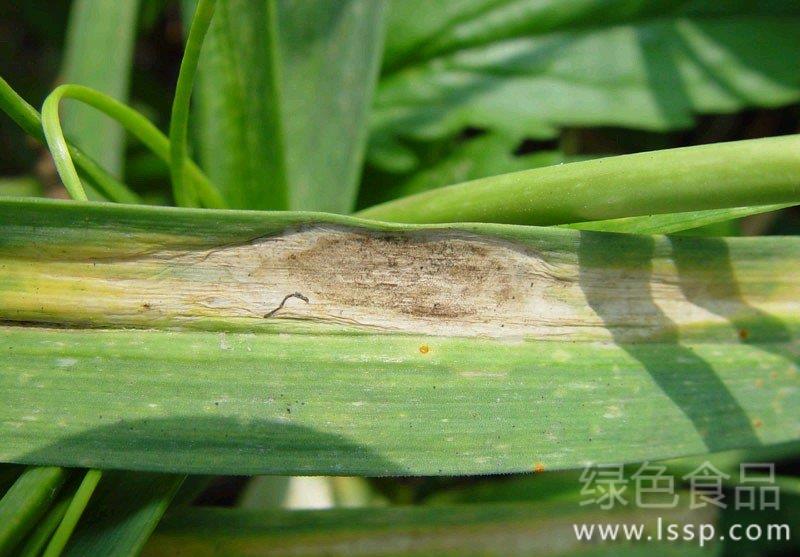
Garlic leaves turning from green to brown and yellow: master the control methods for garlic leaf blight
Garlic leaves turning from green to brown and yellow: control methods for garlic leaf blight
-
How to control cotton mirid bugs? These methods must be mastered
The occurrence of mirid bugs is very sensitive to the ecological environment. Mirid bugs prefer temperatures of 25°C~30°C and a relative humidity of 80%~90%. The recent humid weather with little sunshine is very favorable for the occurrence of mirid bugs. Intercropping in cotton fields is also conducive to the parasitism and transfer damage of mirid bugs. Now, soybeans, broad beans and other vegetables are intercropped in cotton fields everywhere, which is conducive to their reproduction. Therefore, some cotton farmers in cotton areas of counties and cities such as Hanchuan and Yunmeng in Hubei Province have recently reported that the occurrence and damage of mirid bugs have already emerged
-
How to carry out field management of licorice? Four key points to master
Cultivation: Licorice seedlings grow slowly, and weeds have a relatively large impact on them. Cultivation should be combined with timely removal of weeds, with weeding 2-3 times in the same year. After the plants grow larger, weeds become fewer. Pay attention to pulling out weeds, and avoid hoeing the soil, so as not to damage new shoots sprouting from the rhizome. Topdressing: Licorice belongs to the legume family, and its root nodules have nitrogen-fixing ability, so nitrogen fertilizer is generally not applied, and phosphate fertilizer is mainly used for topdressing. After the aboveground parts of licorice wither in late autumn, 2000 kg of decomposed farmyard manure can be applied per mu to cover the ground, so as to increase ground temperature and soil fertility. Thinning: For direct-seeded seedlings of the same year, when they have 2-3 true
-
How to control licorice aphids? Master these methods
They damage tender leaves, tender shoots, flowers and fruits. Adults and nymphs suck plant sap; in severe cases they can cause leaves to turn yellow and drop, affecting seed set and marketable yield. Control methods: ① Avoid planting next to leguminous plants. ② During the occurrence period, spray with 40% dimethoate emulsifiable concentrate at 1000 times dilution.
-
How to control black locust aphids? Master these methods for good results
Control methods for black locust aphids: 1. Protect natural enemies such as ladybugs, hoverflies, green lacewings and aphid parasitoid wasps. 2. Strengthen pest monitoring and forecasting. When the number of winged aphids suddenly increases and the rate of aphid-infested plants reaches 20% to 30%, spray pesticide promptly. If the ratio of ladybugs to aphids reaches 1 to 100, and the aphid population shows a declining trend, stop spraying pesticide for control and protect natural enemies. 3. During the peak outbreak period, spray 50% pirimicarb wettable powder at 1500 times dilution, 10% imidacloprid wettable powder at 1500 times dilution, or spray EB-82 aphid-killing fungus at 300 times dilution
-
Detailed explanation of Chinese honeylocust seedling cultivation techniques, master the key propagation points
Chinese honeylocust (Gleditsia sinensis), also called "zaojiao", is a deciduous tree of the Fabaceae family, reaching up to 30 m tall. Its wood is solid and is used for making furniture, vehicles, farm tools, etc.; the pods are rich in saponin, and using them to wash silk and valuable furniture does not damage the luster; in traditional Chinese medicine, the pods, thorns, seeds and deformed pods are used as medicine. The pods are warm in nature, pungent in taste, and slightly toxic; their functions are to dispel phlegm and open the orifices, and they are mainly used to treat profuse phlegm with cough and asthma, lockjaw from stroke, epilepsy and other conditions; the thorns of Chinese honeylocust are called "zaojiao thorns", with the function of expelling toxin and draining pus, mainly used to treat carbuncles, swellings and sores, and for conditions where pus has already formed but has not yet ruptured
-
How to prevent and treat root rot in rhododendrons? These methods you need to master
Root rot is a serious threat to rhododendrons. Although its incidence rate is not high, the mortality rate after infection is very high, so the prevention and treatment of root rot must be taken seriously in the cultivation and management of rhododendrons. Root rot is a soil-borne disease caused by Fusarium fungi, mostly occurring at the root and stem parts of rhododendrons, because these parts are often moist with insufficient sunlight, and the Deuteromycetes Fusarium fungi are highly active there. Once they invade the cortex, rot soon follows, with water-soaked brown spots and soft rot appearing on the roots, followed by decay and peeling of the bark, the xylem turning dark brown
条件筛选