-

Introduction to the Sahuahong Flat Peach Variety and Analysis of Its Characteristics
Originating from the Caohuijing and Changqiao areas of Shanghai. The fruit is flat in shape, with the two halves asymmetrical, the apex sunken, the back rounded, and the belly protruding as a blunt point; average single fruit weight 120 g; the skin is creamy yellow in color, with a red blush at the top, densely covered with dark red spots, the skin relatively thick, highly tenacious, and easy to peel; the flesh is milky white, slightly red near the pit, soft in texture, very juicy, and sweetly fragrant; soluble solids 11.9%. Clingstone. The tree vigor is medium to strong, with an open, spreading growth habit. Multiple flower buds predominate, and the starting node position of flower buds is low. It fruits mainly on short fruit branches and is high-yielding. In the Nanjing area
-
What to Do When the Survival Rate of Planted Sichuan Pepper Is Low? Cause Analysis and Solutions
Main Causes of and Countermeasures for the Low Survival Rate of Planted Sichuan Pepper Sichuan pepper grows fast, bears fruit early, and has relatively high economic benefits, making it a major tree species for poverty alleviation and prosperity in poor mountainous areas. In recent years, with the large-scale implementation of the Grain for Green Project, the area planted with Sichuan pepper has increased year by year, but the survival rate is not high. The reasons mainly include the following aspects. 1. Too little local seedling raising In recent years, Sichuan pepper seedlings have mostly been raised in river valley areas with better water and fertilizer conditions, resulting in pepper seedlings raised in river valley areas being planted in mountainous areas. The site conditions for Sichuan pepper differ greatly, and the seedlings cannot adapt all at once, which directly affects survival.
-
A Complete Analysis of the Key Cultivation Techniques for Three-Eagle Chilies
I. Sowing and Seedling Raising 1. Sowing Sowing can be done from early March to mid-April. Before sowing, water the seedbed thoroughly; after the water seeps in, scatter the seeds and cover with 1 cm of soil. After sowing, cover with a small arched shed. Before emergence, generally do not ventilate, and keep the seedbed temperature at 25-30°C. After emergence, begin ventilating, and remove the film by late April. If the seedbed is dry, water appropriately, and apply additional fertilizer according to the seedlings' growth.
-
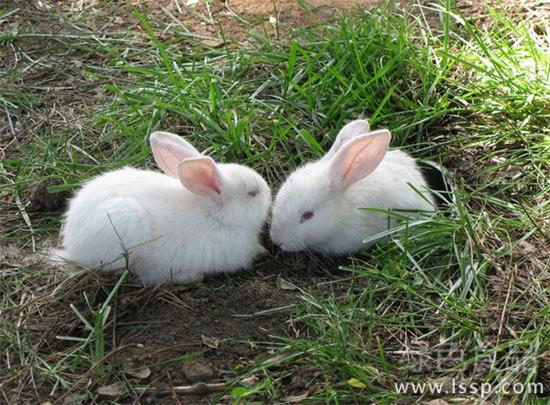
Young rabbits have weak constitutions and poor disease resistance, and are prone to death: an analysis of key points in feeding and management
Young rabbits have weak constitutions and poor disease resistance and are prone to death: key points in the feeding and management of young rabbits
-
Analysis of Key Technologies and Economic Benefits of Deep-Buried Drip Irrigation for Cotton
Cotton "deep-buried" drip irrigation technology is another new high-efficiency water-use technology that has emerged following cotton subsurface hose micro-porous irrigation technology. This technology can utilize fertilizer and water with high efficiency, and its yield-increasing effect is obvious. I. Key Technologies 1. Irrigation The start of irrigation is at the cotton squaring stage. In the cotton region of northern Xinjiang, this is generally June 7-10, with irrigation carried out on a 3-day rotation cycle. If autumn is rainy, irrigation can be carried out on a 5-day cycle. Irrigation amount: at the squaring stage, each irrigation is 8 cubic meters per 667 sq m; at full flowering, 10 cubic
-
Detailed Explanation of Licorice Planting Technology and Market Analysis
I. Market Analysis Licorice is a perennial herbaceous plant of the Fabaceae family, with its roots and rhizomes used as medicine. Licorice is the king of traditional Chinese medicine and has a very wide range of uses. The underground part of licorice has effects such as clearing heat and detoxifying, moistening the lungs and stopping cough, quenching thirst and removing phlegm. Most traditional Chinese medicine prescriptions cannot do without licorice, commonly known as "nine out of ten prescriptions contain licorice." The above-ground part of licorice has high crude protein and crude fat content, and relatively low crude fiber content. The stems and leaves contain various trace elements needed by animals, and the feeding effect is similar to that of alfalfa (Medicago sativa), so it can serve as an excellent leguminous forage. In recent years, the price of licorice has been climbing
-
What to Do When Shiitake Mushroom Logs Rot? Detailed Analysis of Causes and Control Techniques
In recent years, varying degrees of log rot have appeared in some shiitake-producing areas, causing waste of resources and economic losses for mushroom growers, and in some areas it has seriously threatened the development of the shiitake industry. For example, in Xianliang Town, Qingyuan County, Zhejiang Province, the log rot rate in 1999 reached 17%, with some individual growers exceeding 50%, resulting in heavy losses. In response, we have conducted dedicated research since 1999 and have preliminarily identified the causes of rot and control techniques. 1. Causes of log rot. Log rot mostly occurs in old mushroom-producing areas with many years of cultivation, and its fundamental
-
What to Do When Shiitake Mushroom Logs Are Burned by Heat and Rot? Cause Analysis and Preventive Measures
From late June to early August 2003, Lishui City, Zhejiang Province experienced a historically rare continuous high-temperature and low-rainfall weather lasting more than 40d, with temperatures exceeding 40°C for 14d, among which the urban area of Lishui reached 43.2°C, breaking the historical extreme and ranking first in the country. This brought serious impacts on people's production and daily life, especially dealing a devastating blow to shiitake mushroom production. The mycelium of shiitake mushroom logs, harmed by high temperatures, exhibited phenomena such as black liquid oozing, rotting and log disintegration. Of the city's 350 million bags of flower shiitake mushroom logs, 150 million bags rotted due to high-temperature mycelium burning, accounting for
-
A Detailed Analysis of the Entire Life Cycle of the Shiitake Mushroom
After the spores of the shiitake mushroom mature, they are ejected from the gills, and under suitable conditions, the spores will germinate and produce germ tubes. The germ tubes carry out apical growth and branch out to develop into hyphae. The monokaryotic hyphae of the shiitake mushroom must undergo heterothallic mating before they can form dikaryotic hyphae. This kind of dikaryotic hypha continuously grows and forms clamp connections to proliferate cells, reproducing within the substrate to form a mycelium. The mycelium continuously grows and develops, accumulating nutrients, and under suitable conditions will form the primordium of the fruiting body and rapidly grow into a mushroom bud. After the fruiting body matures, it can then reproduce the next
-
What are the values and uses of the Chinese honey locust? A comprehensive analysis
The Chinese honey locust has a broad crown and dense shade, and a relatively long lifespan, making it very suitable as a shade tree and a greening tree for roadsides and surrounding areas. In addition, the fruit of the Chinese honey locust is rich in saponin, so its decoction can be used as a substitute for soap; the seeds can be pressed for oil, which can be used as a lubricant and for making soap, and medicinally it has the effects of treating ringworm and relieving constipation; both the thorns and the pods can be used medicinally; boiling the leaves and pods in water can also kill red spiders. The wood of the Chinese honey locust is hard, rot-resistant and wear-resistant, but it cracks easily, and freshly cut wood has a very strong odor, so it can only be used for furniture, columns and piles in construction, and handles and grips on implements.
条件筛选