-

Why is the grain issue not a simple matter of addition and subtraction?
The grain issue is not a simple matter of addition and subtraction
-
How to treat omasal impaction in cattle? A detailed explanation of the Da Cheng Qi Tang therapy
Rhubarb 100g, magnolia bark and bitter orange each 60g, angelica 80g, bupleurum and licorice each 40g, green tangerine peel, tangerine peel, Oriental waterplantain rhizome and poria each 50g, fresh Chinese tallow tree root 200g, salt 150g, soybean oil 150ml. Except for the salt and soybean oil, decoct the remaining herbs in water; when administering, add the salt and soybean oil and shake well, 1 dose/day, given in 2 divided doses in the morning and evening. This formula can treat omasal impaction caused by various factors, and can also restore and improve the digestive function of the stomach.
-
What is osthole? Introduction to the mode of action of botanical pesticides
Osthole - Osthole is the active ingredient extracted from the dried, mature fruit of Cnidium monnieri (cnidium fruit), a plant of the Apiaceae family; the formulation is 0.4% osthole emulsifiable concentrate. It acts mainly by contact toxicity, with stomach toxicity as a secondary effect, and has good control efficacy against cabbage caterpillars on cruciferous vegetables and tea geometrid moths on tea plants. For controlling cabbage caterpillars on cruciferous vegetables, the dosage is 80-120 ml of 0.4% emulsifiable concentrate per 667 sq m; for controlling tea geometrid moths on tea plants, the dosage is 100-120 ml of 0.4% emulsifiable concentrate. Generally, per 667 sq m use
-
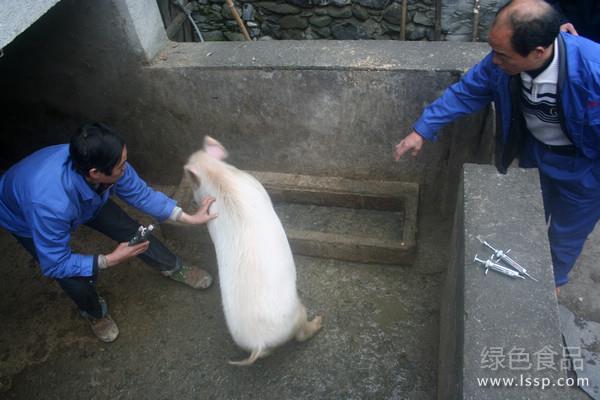
Precautions for Preventing Adverse Reactions During Livestock Immunization
Precautions for Preventing Adverse Reactions in Livestock Immunization
-
How to prevent and treat abomasal impaction in sheep? A detailed guide to practical methods
Abomasal impaction in sheep, also known as abomasal food accumulation, is mainly caused by dysfunction of vagal nerve regulation, in which abomasal contents stagnate, the stomach wall dilates, volume increases, and an obstruction forms, secondarily leading to omasal impaction, causing an extremely severe pathological process of digestive dysfunction, rumen fluid accumulation, autointoxication and dehydration, and often leading to death. Expert analysis of the disease. (1) Causes: mainly caused by improper feeding management and feed changes; some cases result from pica caused by disorders of digestive and metabolic function; it is also seen in dysfunction of vagal nerve regulation,
-
What to Do About Abomasal Impaction in Deer? A Detailed Guide to Surgical Treatment
Deer abomasal impaction is caused by feeding tough, coarse-fiber-rich feed or insufficient drinking water, among other reasons, which leads to an indigestible coarse fiber mass blocking the pylorus of the abomasum, causing the deer to stop eating and eventually die of exhaustion. 1 Symptoms: The deer is in good body condition, suddenly loses its appetite completely, stops defecating, grinds its teeth, and has abdominal bloating; in the later stage it only drinks water and sometimes shows abdominal pain. On abdominal palpation, a hard object of varying size can be felt at the abomasum, and in severe cases it fills the entire abomasum. 2 Materials and methods for surgical treatment
-
Prevent Allergic Reactions When Using Streptomycin in Pigs and Cattle
Some pigs and cattle develop allergic reactions after being given streptomycin. If rescue treatment is not timely or not appropriate, it can cause death, just like penicillin allergy. Therefore, streptomycin use in pigs and cattle must not be taken lightly; after administration, observe the animals carefully and be prepared for emergency treatment. Streptomycin allergy in pigs and cattle mostly occurs acutely. With the first dose, the allergic reaction develops somewhat slowly, with symptoms appearing in about 10-15 minutes; with the second dose, the allergic reaction develops more quickly, with symptoms appearing in about 5 minutes. The main symptoms are: pigs and cattle tremble all over
-
What are the rescue methods for allergic reactions in cattle and pigs?
When mass vaccinating cattle against bovine pleuropneumonia and foot-and-mouth disease and using drugs such as antibiotics and sulfonamides, livestock such as cattle and pigs can develop allergic reactions. After an allergic reaction occurs in livestock, edema develops in multiple parts of the body, along with symptoms such as allergic bronchitis and asthmatic bronchopneumonia; in severe cases or if rescue is delayed, it can lead to death. Russian livestock workers have adopted a method for treating allergic reactions in livestock, which is to inject livestock subcutaneously with a 1% atropine sulfate solution as soon as the first clinical symptoms appear
-
A Detailed Guide to the Extraction and Processing Methods of Sweet Potato Starch
Sweet potatoes can be divided into two types: fresh sweet potatoes and dried sweet potatoes. Starch production from fresh sweet potatoes generally belongs to rural manual production, while sweet potato starch factories mostly use dried sweet potatoes as the starch raw material, so it belongs to industrial production. 1. Starch production from fresh sweet potatoes has the following process flow: raw material selection - washing - crushing - grinding and filtering - slurry blending - skimming the vat and settling the vat - skimming the slurry - removing the starch - drying. The production process is as follows: (1) Raw material selection: Because sweet potato varieties differ, their quality and starch content also differ. Even for the same variety, in different producing areas,
-
What are the medicinal values of peach blossoms? An analysis of their effects and actions
[Source]This product is the flower of the Rosaceae plant peach, Prunus persica (L.) Batsch. It is picked when it blooms in spring and dried in the sun. [Nature, flavor, and meridian entry]Bitter, neutral. [Functions and indications]Purging and relieving constipation, promoting diuresis and reducing swelling. Used for edema, ascites, and constipation. [Usage and dosage]1 to 2 qian. [Selected formulas]① To treat beriberi, chronic water retention in the waist, kidneys, and bladder, and phlegm-fluid retention: peach blossoms, dried in the shade, measure one large sheng, pound into powder. Mix with warm clear wine, take the whole dose at once, with free bowel movement as the standard; take on an empty stomach
条件筛选