-
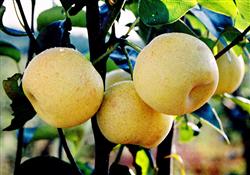
Which crops are suitable for potassium sulfate and potassium chloride application?
Which crops are suitable for potassium sulfate or potassium chloride application? Please give an introduction. Crop chloride tolerance refers to a crop's ability to endure chloride applied to the roots without suffering toxicity; the lower the concentration at which toxicity begins, the poorer the chloride tolerance. Among common crops, those with strong chloride tolerance include sugar beet, spinach, foxtail millet, kenaf, radish, chrysanthemum, rice, sorghum...
-
Reasonable Application Methods for Water-Soluble Fertilizers
Plants need to absorb various nutrients for growth and development. However, what determines crop yield is the nutrient factor present in the smallest relative amount in the soil, and yield also changes relatively within a certain limit as this factor increases or decreases. This is usually explained using a water-filled wooden bucket. The bucket is made of staves representing different nutrient contents and factors...
-
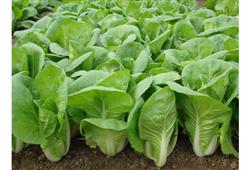
Application Methods of Potassium Fertilizer in Vegetable Cultivation
There are many types of potassium fertilizer, and different types have different application methods. Commonly used potassium fertilizers include potassium chloride, potassium sulfate, potassium-magnesium fertilizer and plant ash. Potassium chloride and potassium sulfate are physiologically acidic fertilizers and should be applied together with lime and organic fertilizer. For chlorine-sensitive crops such as potatoes, potassium chloride and potassium-magnesium fertilizer with high chlorine content should not be applied...
-
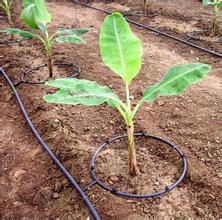
Fewer Vegetable Diseases: Temperature, Light, Water and Fertilizer Regulation Is Key
Q: What is integrated water and fertilizer technology? What methods are commonly used at present? Expert: Strictly speaking, integrated water and fertilizer technology is dissolving fertilizer into irrigation water, using water to carry fertilizer so that water and fertilizer are supplied synchronously to the soil around the crop roots. One advantage of integrated water and fertilizer technology is that it can give play to the synergistic effect of fertilizer and water blending, making the benefits of fertilizer and water...
-
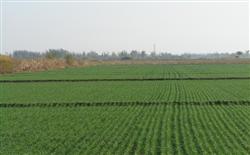
Pay attention when irrigating and fertilizing farmland: these four types of fertilizer are not suitable for application with water
The application method of fertilizing with water is also called "fertilizing with irrigation water". It is generally a topdressing method that provides supplementary nutrients during the period of rapid crop growth. Since it is supplementary fertilization, it cannot replace main fertilization methods such as base fertilizer. However, because this method is both convenient and quick-acting, it is widely used on vegetable land and on irrigated land where cash crops and special edible crops are grown...
-
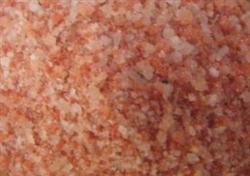
Potassium chloride is suitable for use in combination with alkaline fertilizers
Potassium oxide is a physiologically acidic fertilizer, and when applied to soil over the long term, attention should be paid to applying it together with alkaline fertilizers such as lime to prevent soil acidification; it is most suitable for application on calcareous and alkaline soils. Potassium chloride must not be applied on saline soils, as it will worsen salt damage. Potassium chloride contains chloride ions, and chloride ions are related to crop quality. At present...
-

How should water-soluble fertilizers be applied to be reasonable? A detailed explanation of the correct method
Reasonable application methods for water-soluble fertilizers
-

Unreasonable Fertilization Methods? Avoid These Four Common Mistakes
Four Common Unreasonable Fertilization Methods
-

What fields is ammonium bicarbonate suitable for? A detailed explanation of usage precautions
Application fields and precautions of ammonium bicarbonate
-
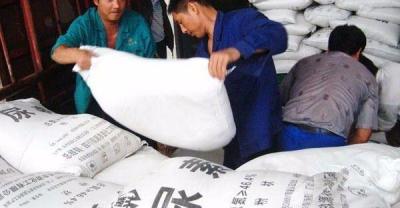
Which fertilizers are unsuitable as seed fertilizers? These fertilization basics are worth knowing
Simultaneous sowing and fertilizing of corn (1) Fertilizers containing harmful ions. Such as: ammonium chloride, potassium chloride, etc. (2) Fertilizers that corrode seeds. Such as: ammonium bicarbonate, ...
条件筛选