-

Technical key points for converting young Scots pine (Pinus sylvestris var. mongolica) stands into Korean pine (Pinus koraiensis) nut orchards
In recent years, the establishment of Korean pine dual-purpose nut and timber forests and Korean pine nut orchards has developed rapidly in Heilongjiang and Jilin provinces of China. In some places, developing Korean pine nut orchards has become a path to prosperity, and relatively large-scale Korean pine nut orchards have been established one after another. However, due to deviations in people's understanding, the selection of superior scions for grafting to establish orchards has been neglected, and the scions selected are rarely improved varieties that have undergone identification. Establishing Korean pine nut orchards without such selection cannot guarantee the yield and quality of seeds and nuts, let alone early fruiting, high yield, and stable yield. Practice has proven that using young Scots pine
-
Detailed Explanation of Key Grafting Techniques for Young Korean Pine Forests
1. Scion collection: Select mother trees with good growth traits and strong seed-bearing capacity in the seed orchard for scion collection, and carry it out in the early spring of the grafting year, in the first and middle ten days of March, before the sap begins to flow. The collection site is the 2nd to 3rd whorl of branches on the trunk, and these should be robust 1-year-old branches. The scion diameter should be about 8 mm. Do not collect too many scions at one time; 15-20 branches per tree can be controlled to protect the superior mother trees. After collection, the scions must be packaged, transported with moisture retention, or stored in a cellar. If using a rural vegetable cellar for storage, place 50 cm of ice at the bottom, put the scions in, and seal
-
Why are there cone-like objects on young spruce trees? Control of the larch adelgid
On young spruce trees, round objects resembling small cones often appear in June. They are actually galls formed by the damage of the larch adelgid (Adelges laricis). Completing one life cycle of the larch adelgid requires several transformations through different forms on two tree species, spruce and larch. For its life process, see "156. What are the white hairs on larch leaves". Before the galls split open, remove the galls on spruce by hand. Strengthen preventive measures to prevent the transport and planting of infected seedlings. Spruce and larch must not be planted mixed or close together; the isolation distance
-
How is tending and management of young Taxus chinensis (yew) plantations carried out?
Taxus chinensis is currently the most important anti-cancer plant, and it is planted on a large scale in various places. Here is a concise introduction to the methods for tending its young plantations. 1. Shading. Taxus chinensis seedlings and young trees are extremely intolerant of strong light and sun exposure, so after afforestation, shading must be a key priority. 1. Mountain afforestation. Apart from afforestation under the canopy of sparse woodland, for ordinary conventional barren hill afforestation or regeneration afforestation on cutting sites and burned sites, fast-growing shading trees need to be interplanted at the same time as planting Taxus chinensis or in the first year for shade. The interplanting method can be scattered planting,
-
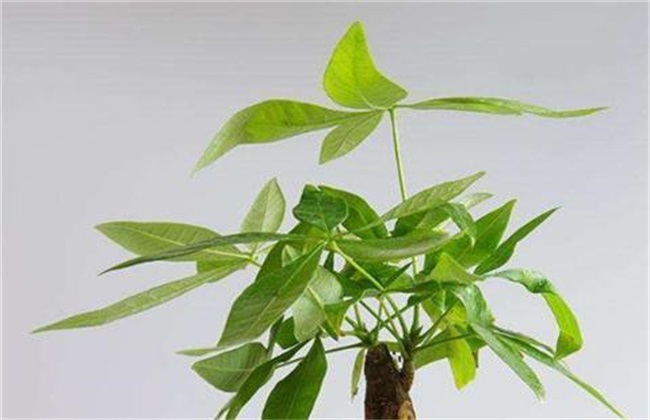
What to do when the young buds of a money tree won't grow? Causes and solutions
What to do when the young buds of a money tree won't grow
条件筛选