-
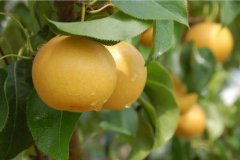
The pear with the greatest development prospects: what is organic pear tree cultivation and management like?
These days everyone talks about wanting to be healthy, and that is how organic fruits and vegetables came about. Today let us first take a look at what makes organic pears different and how they are cultivated. Arriving at "Risen Organic Shangjiang Pear Orchard" in Sanxing Township, Yilan, owner Liao Junqin is busy harvesting just-ripened
-

Introduction to the Characteristics of the Zaobaijian Tea Tree Cultivar
It belongs to the sexually propagated group. Also known as Zaobaidian. It is a national-level improved cultivar. It originated in Junlian County, Sichuan Province. Morphological characteristics: shrub type, medium-leaf, early-budding cultivar. The tree posture is open and spreading. Spring tea buds around mid-March, and each year around March 20 in the local area, one bud with two or three leaves can be picked. The buds and leaves are light green and hairy, with a 100-bud weight of 33.5 grams. It has strong tenderness retention and is suitable for making the famous green tea "Maojian"; the appearance is elegant, the tender down is visible, the aroma is fresh and clear, and the taste is fresh and mellow. Quality characteristics of fresh leaves of one bud and two leaves of spring tea: tea polyphenols 27.3%, amino acids 2.3%, caffeine 4.5%, catechin
-
Key Points of High-Yield Bag Cultivation Techniques for Tea Tree Mushroom
The tea tree mushroom, scientifically named Yangliu mushroom, also known as tea tree mushroom or tea mushroom, grows singly, in pairs, or in clusters, with a plump cap and crisp stipe; eaten fresh, it is crisp and refreshing with a delicious taste. When dried by roasting, it has an even more unique flavor, rich and fragrant, sweet and delicious, and is a highly popular mountain delicacy at folk weddings and festive banquets. It is suitable for year-round production to supply the market, and it has unique curative effects in lowering cholesterol, promoting diuresis, strengthening the spleen, and treating low fever and bedwetting in children. It is the latest high-yield, contaminant-resistant, beautifully shaped, wide-temperature, high-quality high-yield strain launched in recent years, among which "Tea Tree Mushroom No. 9" fruits at
-
Detailed Explanation of Key Points in Cultivation and Management Techniques for the Tea Tree Mushroom
The tea tree mushroom, also known as the tea mushroom, is a rare, precious, and delicious edible fungus. Its cap is tender and its stem crisp, with a pure, delicate fragrance and excellent texture, and it can be cooked into all kinds of delicious dishes. According to testing by the China Food Quality Supervision and Inspection Center, the fruiting body contains important nutrients such as glucose, fungal protein, and minerals, and has all eight amino acids needed by the human body, among which lysine content is as high as 1.75%. It also has strong kidney-tonifying effects and antitumor activity, making it one of the top ten best-selling mushroom products on the international mushroom trading market, and it is known as the "Chinese divine mushroom." In supermarkets in Japan, Singapore, the United States, the European Community, Hong Kong, China, and Taiwan, China, each kilogram of dried product is worth as much as 100 US dollars.
-
Detailed Explanation of Artificial Cultivation Techniques for the Tea Tree Mushroom
In nature, animals, plants, and fungi stand as three pillars, complementing one another. If plants are nature's producers, animals are nature's consumers, and fungi are nature's decomposers. It is precisely the coordination among these three that maintains the ecological balance of nature. Among these three, our understanding of animals and plants has reached over 80%, while our understanding of fungi has only reached 5%, which shows that our knowledge of fungi has only just begun. Experts predict that edible fungi, as a future supplementary food, are a way to
-
Tea tree mushroom
Tea tree mushroom (Agrocybe aegerita) belongs to the family Bolbitiaceae and the genus Pholiota (Agrocybe). It is a soil-borne wood-decaying fungus that grows in subtropical regions and is a rare edible mushroom. Its appearance is attractive, its flesh is crisp and tender, its flavor is delicious, and its texture is excellent. It is rich in amino acids and cellulose, and the protein content of its fruiting bodies is high, even higher than that of enoki mushroom (Flammulina velutipes). It is popularly praised as the "divine mushroom." Liao Hanquan, a researcher and provincial microbiology expert, believes that the tea tree mushroom variety is truly rare. Cultivating tea tree mushroom plays a major role in rationally utilizing mountain forest resources, maintaining a healthy cycle of ecological agriculture, and helping farmers become wealthy.
-
Key technical points for autumn and winter management of mulberry trees, tea trees and fruit trees
I. Winter management of mulberry fields Doing a good job of winter management of mulberry fields lays a solid foundation for the growth of mulberry trees in the coming year and is also an important measure for increasing the yield and quality of mulberry fields. 1. Clearing the field: After the mulberry leaves fall, collect all the residual leaves and weeds in the mulberry field to make compost or burn them, so as to eliminate pathogenic bacteria and overwintering pests hidden in the mulberry leaves and weeds. 2. Bundling: Before winter plowing, use rice straw to bundle the mulberry branches together, which not only facilitates winter plowing and fertilization, but also lures pests to hide in the bundled straw to overwinter, making it easier to capture and kill them. 3. Winter plowing: Control the plowing depth at
-
Answers to Key Questions on Tea Tree Mushroom Cultivation Techniques
Tea tree mushroom, also known as the tea tree mushroom (Agrocybe aegerita), is a rare mushroom variety newly developed in recent years and well received in domestic and international markets, becoming a highlight among varieties promoted for cultivation in various regions. Gutian County, Fujian Province alone reaches an annual cultivation volume of 100 million bags. Because the cultivation history of the tea tree mushroom is short, production management lacks standardization, and both the mycelium and fruiting bodies of this mushroom contain an almond-like fragrance, pests and diseases are relatively numerous, resulting in substandard yields, declining quality, and excessive pesticide residues in products, directly affecting economic benefits and the sustainable development of the industry. With the implementation of the national "Law on the Quality and Safety of Agricultural Products" and
-
How can high yield be achieved in bag-cultivation of tea tree mushroom?
The scientific name of tea tree mushroom is Yangliu mushroom, also called tea tree mushroom or tea mushroom. It grows singly, in pairs, or in clusters, with a thick cap and crisp stipe; eaten fresh, it is crisp and refreshing with a delicious taste. When dried by roasting, it has an even more distinctive flavor, rich and fragrant, sweet and savory, and is a highly popular mountain delicacy at folk weddings and festival banquets. It is suitable for year-round production to supply the market. It has unique therapeutic effects in lowering cholesterol, promoting diuresis, strengthening the spleen, and treating low fever and bedwetting in children. It is a recently introduced newest high-yield strain with high yield, resistance to contamination, beautiful shape, wide temperature tolerance, and high quality. Among them, "Tea Tree Mushroom No. 9" fruits at 12-35°C, with a conversion rate
-
Detailed Guide to Tea Tree Mushroom Cultivation: A Full Analysis of Key Planting Techniques
Tea tree mushroom, also known as the tea plant mushroom, is a rare, precious and delicious edible fungus. Its caps are tender and its stems crisp, with a mellow, delicate fragrance and excellent texture, and it can be cooked into all kinds of delicious dishes. According to testing by the China Food Quality Supervision and Inspection Center, the fruiting bodies contain important nutrients such as glucose, fungal protein and minerals, and include all eight amino acids needed by the human body, among which lysine content is as high as 1.75%. It also has strong kidney-tonifying effects and antitumor activity, making it one of the top ten best-selling mushrooms on the international mushroom trading market, known as the "Chinese divine mushroom." In Japan, Singapore,
条件筛选