-
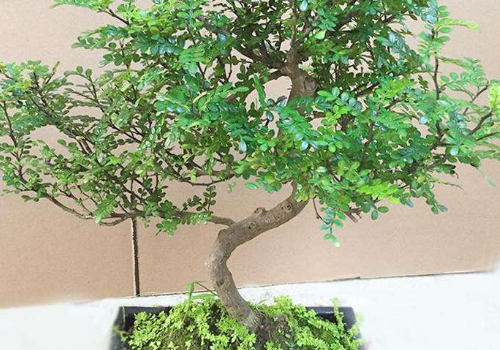
What to Do When Pepper Tree Leaves Turn Yellow and Drop? Common Disease Identification and Control
When watering the pepper tree, you must pay attention to the amount and frequency. What are the common diseases of the pepper tree? What to do when leaves turn yellow and drop: What are the common diseases of the pepper tree: Actually, the pepper tree has relatively few diseases, and anthracnose is the common one. In the early stage of anthracnose,
-
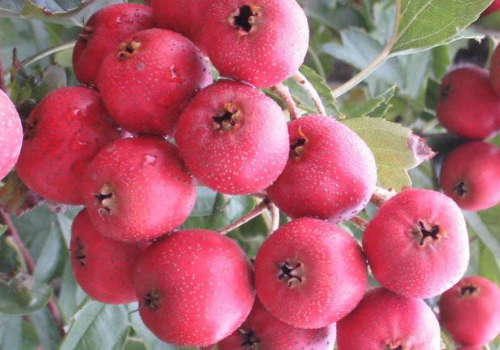
Is it good to grow a hawthorn tree at home, and can it be grafted with an apple tree?
The hawthorn tree is also a kind of fruit tree, and a great many people know about it, so is it good to grow a hawthorn tree at home? Can it be grafted with an apple tree: Is it good to grow a hawthorn tree at home: Hawthorn is a sun-loving tree species and can be grown at home without any taboo.
-
When should wax apple seedlings be planted? A detailed guide to wax apple tree planting techniques
Do you know how to plant wax apple? Are you clear about the planting time, planting distance, and planting methods? If not, let's take a look together. 1. Planting period: Where irrigation is convenient, the most suitable planting periods are February to March and September to November.
-

How to cultivate Chinese tallow tree for high yields? Key technical points explained
High-yield cultivation techniques for Chinese tallow tree
-

What are the precautions for growing Agrocybe aegerita (tea tree mushroom)?
Precautions for growing Agrocybe aegerita
-

Detailed Explanation of Olive Tree Training and Pruning Methods and Techniques
How to Train and Prune Olive Trees
-

Detailed Introduction to the Characteristics of the 'Penzao No. 3' Jujube Tree Variety
1. Strong early fruiting and high yield: In the small environment of container planting (note: the inner diameter of the flower pot mouth should preferably be about 35 cm-40 cm, and the pot depth should preferably be about 28 cm), it sets fruit in the same year, reaching about 70 fruits, and in the second year each plant produces 216 fruits, with an average fresh jujube yield per plant of 4.3 kg. 2. Fruit characteristics: The fruit is long cylindrical, with an average fruit weight of 20 g, and the peel is deep red. 3. Taste and quality: The flesh is fine and crisp, rich in juice, strongly sweet in flavor, slightly sour, with a sugar content of 28%, and the quality is excellent. Because the fruit
-
Peach Tree Planting and Cultivation Methods and Key Technical Points
(1) Seedling raising and planting. For graft propagation, use wild peach rootstock; the seeds undergo stratification treatment and are broadcast sown in winter; bud grafting is done from June to August, or cleft grafting in early spring of the following year; the following winter the saplings can be lifted from the nursery. The planting spacing is 4 m x 5 m or 3 m x 4 m, with 500-840 trees planted per hectare. Planting can be done anytime from after leaf fall to before bud break. A peach orchard must not be continuously cropped, otherwise young trees will show noticeably weak growth, leaf chlorosis, new roots turning brown with many forks, and gumming on the branches and trunk. This continuous-cropping intolerance is more severe in sandy soil or soil with low fertility. The main cause is that the residual roots of the previous crop decompose in the soil
-
Pruning and Flower and Fruit Management Techniques for Dense Planting of Apricot Trees
I. Training and Pruning 1. Training The apricot is a light-loving fruit tree; for dense planting orchards, a "V" shape with good ventilation and light penetration is recommended. The training method is as follows: plant at a row spacing of 3 m x 1 m; in the planting year, shorten the trunk by cutting to 40 cm; when new shoots reach 30 cm in spring, select and retain two symmetrically growing branches that extend toward the row middle, grow vigorously, and form a 30-60 degree angle with the trunk as the main branches, and let them grow naturally. Select and retain another 3-4 new shoots as auxiliary nurturing branches, remove the remaining new shoots, and at the beginning of May when the auxiliary nurturing branches are 20 cm long, pinch out the growing tips; in late June
-
What are the treatment methods for cherry tree wounds?
During the growth of cherry trees, long-term exposure to the sun makes the bark prone to aging and damage, causing rot and forming hollows, which affects the growth and lifespan of the cherry tree. Therefore, once a wound is found on a cherry tree, treatment measures must be taken immediately. Generally, first use a sharp knife to shave and scrape the wound clean, then disinfect it with a disinfectant such as a 5-degree lime sulfur mixture or ink, and finally apply a protective agent such as tung oil to prevent the wound from rotting and promote its healing. If the cherry tree wound has already become a hollow, it should be repaired. The method is: first dig out the rotten wood inside the hollow, then scrape clean the dead tissue at the edge of the hollow, then disinfect with a chemical agent, and use leaf mold and charcoal powder to wrap the rotten area to promote the restoration of its normal physiological functions. Observe carefully and keep the leaf mold and charcoal powder wrapping moist. If it dries out, water it to maintain a certain humidity. After such treatment, the hollow of the cherry tree will slowly grow adventitious roots. Combined with annual soil improvement, the adventitious roots will continue to grow, and finally extend into the soil and gradually thicken. The adventitious roots will transform into a trunk, becoming a healthier main trunk that sprouts and produces flowers.
条件筛选