-

Who is really troubled by the aging of farmers?
The key to resolving the problem of who will farm the land tomorrow is to make farming a respectable profession and agriculture an attractive undertaking and a promising industry. According to media reports, a chairman of a kiwifruit planting cooperative in Chongqing recently encountered the troubles of elderly farmers. This
-
Who will farm the land tomorrow? The household contract management system needs further improvement
The "Opinions on Guiding the Orderly Transfer of Rural Land Management Rights and Developing Moderate-Scale Agricultural Operations" proposes accelerating the cultivation of new types of agricultural operating entities. Cultivating new types of agricultural operating entities is of great significance for accelerating the transformation of agricultural production methods and solving the problem of who will farm the land in the future.
-
How can rural areas attract young talent to return?
Who will farm the land tomorrow? Beyond the stigma of status discrimination and the low comparative returns of the agricultural industry, what other reasons keep young people from returning to rural areas to work in agriculture? How can rural agriculture attract young talent to return? Recently, a reporter visited Shanxi to look into relatively high-return cooperatives and the "second-generation farmer" successors of leading enterprise owners.
-
What is the difference between tomorrow's grass and bright moon grass?
The names of tomorrow's grass and bright moon grass differ by only one character, but they are two completely different plants. Below, the editor will introduce the differences between tomorrow's grass and bright moon grass. 1. Differences between tomorrow's grass and bright moon grass. Leaves differ: tomorrow's grass leaves are like celery.
-
How to Grow Yesterday-Today-Tomorrow (Brunfelsia pauciflora)? A Complete Guide to Cultivation Methods and Precautions
Yesterday-today-tomorrow (Brunfelsia pauciflora) usually gets its name because, due to the different times at which the flowers open, a single plant often bears flowers of two different colors. When the flowers open, their fragrance is also slightly more intense than that of other jasmines. That is why many households grow it. So
-
A Detailed Guide to Propagating and Pruning Yesterday-Today-and-Tomorrow (Brunfelsia pauciflora)
Propagation is the basis for the continuation of a species. Plants, as producers, generally exist in greater numbers than animals, so that they can meet the needs of consumers. Therefore, plants usually have more ways of propagating than animals do. Brunfelsia
-
Solutions for Yellowing Leaves and No Blooms on Yesterday-Today-Tomorrow
Yesterday-today-tomorrow is a rather precious variety and very interesting; its English name means "yesterday, today, tomorrow," which vividly describes the changes in its flower color. The flowers of yesterday-today-tomorrow change from yesterday's deep blue to today's purple and then to tomorrow's white. ⟦4 <p>Yesterday-today-tomorrow is a rather precious variety and very interesting; its English name means “yesterday, today, tomorrow,” which vividly describes the changes in its flower color. The flowers of yesterday-today-tomorrow change from yesterday's deep blue to today's purple and then to tomorrow's white, which has made many flower lovers fall in love with it without realizing it. However, if the leaves turn yellow during the color-changing process, that is a very bad problem.</p><p></p><p><strong>What to do if yesterday-today-tomorrow leaves turn yellow</strong></p><p>1. Improper watering. Yellow leaves caused by long-term watering are shown as young leaves turning yellow with no gloss, while old leaves show no obvious change, the roots are small and yellow-green, and new shoots shrink and do not grow.</p><p>Measures: Watering should be restrained; in severe cases, the plant can be removed from the pot, placed in a shady place to dry the soil, and then repotted.</p><p>2. Improper fertilizing. Due to too much fertilizer or too high a concentration, the tips of new leaves appear dry brown, and the tips of old leaves become dry, scorched, yellow, and fall off. Generally, although the leaf surface is thick and glossy, it is mostly uneven.</p><p>Measures: Stop applying fertilizer or flush out the fertilizer with clean water. If potted flowers are given only water and no fertilizer for a long time, or are not repotted for many years, the roots become tangled into a ball, the plant cannot get nutrients, and the leaves turn yellow. In addition to timely repotting, usually apply thin fertilizer frequently. 3. Improper lighting. If potted yesterday-today-tomorrow is kept in insufficient light for a long time, the chlorophyll in the leaves decreases, so the green color of the leaves gradually disappears, showing albinism.</p><p>Measures: Move the plant to a place with plenty of sunlight so the leaves slowly turn green again.</p><p>4. Soil tends to be alkaline. Yesterday-today-tomorrow is a flower that likes acidic soil. If the potting soil or water quality tends to be alkaline, it often causes the leaves to turn from green to yellow, or even fall off.</p><p>Measures: In addition to using acidic nutrient soil for cultivation, you can spray with alum fertilizer water or a 0.2%-0.5% ferrous sulfate aqueous solution, which can make the leaves turn from yellow to green.</p><p>5. Unsuitable temperature. Yesterday-today-tomorrow is not tolerant of high temperature and high humidity, and yellowing can be caused by hot summer weather, poor ventilation, and improper shading.</p><p>Measures: Pay attention to ventilation and cooling, and the potting soil must not be too warm. In addition, in cold winter, if the indoor temperature is low, the leaves of yesterday-today-tomorrow will also turn yellow and fall off. In addition, when harmed by pests and diseases, it can also cause yellow leaves to fall off. If a few leaves at the lower part of the plant turn yellow and fall off, that is normal.</p><p></p><p><strong>Solutions for yesterday-today-tomorrow not blooming</strong></p><p>1. Prune in time</p><p>When yesterday-today-tomorrow grows to a certain height, promptly cut off the leaves and flower buds at the top. Do not be reluctant to do it; this can promote more side branches. Once there are more branches, there is no need to worry that the flower buds on one or two branch tips will grow poorly.</p><p>2. Fertilize before blooming</p><p>Begin fertilizing one month before blooming, focusing on additional phosphorus and potassium fertilizer and reducing nitrogen fertilizer, to ensure sufficient nutrient supply for flower buds, enhance the plant's resistance, and naturally produce more flowers.</p><p>3. Plenty of sunlight</p><p>If fertilizer is insufficient, let sunlight make up for it. With sufficient sunlight, the plant can accumulate adequate nutrients in its body, and even if fertilization is insufficient for a time, it can still hold out for a while. Give it more sun, but do not expose it to blazing sun.</p><p></p><p><strong>Reasons yesterday-today-tomorrow does not bloom</strong></p><p>1. Improper fertilizing</p><p>Some flower lovers' yesterday-today-tomorrow only grows leaves and does not bloom. The main reason is choosing the wrong fertilizer; too much nitrogen fertilizer causes vigorous growth of branches and leaves, while the lack of phosphorus and potassium fertilizer means flower buds cannot differentiate. The growth of leaves consumes most of the nutrients, making flower bud differentiation more difficult.</p><p>2. Improper watering</p><p>Yesterday-today-tomorrow grows vigorously, and if water is replenished in time, everything seems normal, but it is exactly this normal watering method that causes yesterday-today-tomorrow not to bloom. Usually watering generously is not a problem, but the branches and leaves grow very luxuriantly while not a single flower is seen. This is because the leaves have grown excessively due to sufficient water, and affecting blooming is inevitable.</p><p>3. Pruning</p><p>Yesterday-today-tomorrow is a woody plant and tolerant of pruning. During flower bud differentiation, if it is not pruned in time, the flower buds grow poorly and fall off early, affecting blooming.</p><p></p><p><strong>How to grow yesterday-today-tomorrow</strong></p><p>1. Soil requirements</p><p>Yesterday-today-tomorrow is generally cultivated in East China and North China, and is suitable for slightly acidic soil with good drainage and air permeability.</p><p>2. Temperature</p><p>The suitable temperature for the growth of yesterday-today-tomorrow is 20-30°C. At this temperature, the branches and leaves are lush and growth is vigorous. When the temperature drops to 12°C, it becomes dormant. It is not cold-tolerant, so in winter take care to move it indoors in time to avoid frost damage.</p><p>3. Light</p><p>Yesterday-today-tomorrow likes a sunny and humid environment, and avoids blazing sun exposure, so proper shading is needed in summer. If exposed to too much sun, the flowers and leaves easily curl. The daily light duration must not be less than 4 hours, so as to ensure abundant blooming.</p><p>4. Watering</p><p>Yesterday-today-tomorrow likes moisture and fears waterlogging, so watering should follow the principle of watering when dry and stopping when wet. Watering in summer requires attention: not only must it meet the plant's growth needs, but the air must also be kept humid, spraying clean water on the leaf surface 2-3 times a day. In winter, keep the potting soil dry to prevent frost damage.</p><p>5. Fertilizing</p><p>During the growing season, promptly water with alum fertilizer water, which both prevents soil alkalization and avoids yellowing leaves, while also increasing soil fertility and promoting plant growth. After the flowers fade, apply a diluted cake fertilizer water once, and 10 days later apply a liquid fertilizer mainly of phosphorus and potassium fertilizer once, and combined with watering, spray a potassium dihydrogen phosphate solution on the leaf surface to promote flower bud differentiation.</p><p></p><p>The reason yesterday-today-tomorrow shows yellowing leaves and no blooming is still very much related to how flower lovers care for it in daily maintenance. Its flowers are beautiful, but it cannot stand being messed around, so when growing yesterday-today-tomorrow, everyone should still pay it more attention.</p>
-
How to Grow Yesterday-Today-and-Tomorrow (Brunfelsia pauciflora)? A Detailed Guide to the Latest Growing Methods
The two-colored jasmine is also known as yesterdays-today-and-tomorrow, five-colored jasmine, etc. It gets its name because the flowers bloom in succession and different colors can be seen on the same plant at the same time. Its English name means yesterday, today, tomorrow, which vividly depicts the special changes in flower color. When the small flowers first open
-
Anshan's grand event will astonish the whole country starting tomorrow, only 3 days, miss it and you'll really regret it
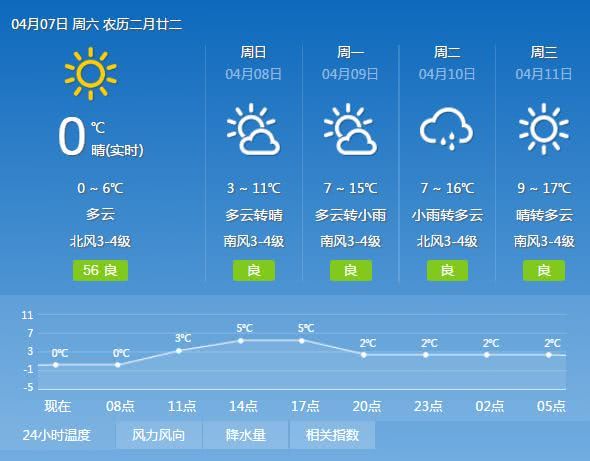
Today's weather. Attention, attention, attention. Starting tomorrow, Anshan will once again a-ston-ish the whole country! During the Qingming holiday these past few days, although it was raining and snowing in the north, nothing could stop people's enthusiasm for outings. Besides those traveling and enjoying spring outings, there are also large numbers of...
-

Tomorrow is May Day, and here comes the second episode of our tour guide series
Loved by everyone, many fans are also active in the comments and have recommended our routes ...
条件筛选