-
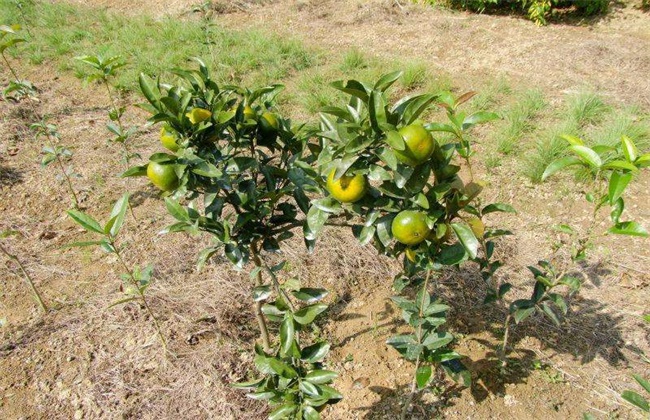
What are the management key points for young Shatian pomelo trees?
Management key points for young Shatian pomelo trees
-

Reasons and preventive measures for Shatian pomelo blooming but not bearing fruit
Reasons and preventive measures for Shatian pomelo blooming but not bearing fruit
-

Detailed Explanation of Key Cultivation Techniques for High-Yield Shatian Pomelo
High-Yield Cultivation Techniques for Shatian Pomelo
-

How to Improve the Fruit Set Rate of Shatian Pomelo? Practical Methods Shared
How to Improve the Fruit Set Rate of Shatian Pomelo
-
Detailed Introduction to Two Varieties of Kunlun Tianxing Apricot
**The Second Ranch of Yecheng under the Third Agricultural Division of the Construction Corps is located 60 km south of Yecheng County on the northern slope of the Kunlun Mountains, at 76°30" to 77°35" E and 36°40" to 37°30" N, with an average altitude of 2200 to 4850 m, and has a warm temperate continental climate. The average annual temperature is 5 to 8°C, the highest temperature is 36°C, the lowest temperature is -25°C, the effective accumulated temperature is 2800 to 3200°C, the annual precipitation is 80 to 200 mm, the annual evaporation is 1000 to 1800 mm, and the annual sunshine is 299
-
Key management points for cold-frame peaches in the Beijing-Tianjin region around the Spring Festival
1. Frame-covering period. Because cold-frame peaches have no cold-protection facilities and rely solely on sunlight for warming and the frame film for insulation, the day-night temperature difference is large. The frame-covering period should preferably be around February 20, so that the flowering period is March 25-31 and the peach ripening period is early June, 10-15 days earlier than open-field peaches. For heated cold-frame peach sheds, install 1 heater per 350-450 sq m at the center of the cold frame, burning wood or coal; the gas is discharged outside the frame through the chimney in the middle of the stove, and the air is preheated through the stove's interlayer and then
-
Introduction to the New Carambola Variety Tianyangtao No. 3
Tianyangtao No. 3 is a bud sport single plant of the Malaysian sweet carambola. In May 2007, it passed the approval of the Guangxi Zhuang Autonomous Region Crop Variety Approval Committee and was named. (1) Fruit economic traits: the fruit is long-elliptical, with an average single fruit weight of 183.0 g (the original variety 285.0 g). The fruit ridge is thin and the fruit tip protrudes (the original variety has a thick fruit ridge and a concave fruit tip). The peel is thin and smooth (the original variety's peel is slightly rough and lusterless). Unripe fruit is green, ripe fruit is yellow, and the ridge edge is green. The flesh is fine and crisp, with few fibers, and the taste is fresh and sweet.
-
Processing Methods and Technical Key Points for Candied Indian Jujube (Ziziphus mauritiana)
(1) Processing flow of golden-thread jujube: material selection → washing → slitting → sulfur dipping → rinsing → draining → boiling → drying → shaping → bagging → finished product. Key operating points: select fresh, thick-fleshed, intact fruit. After washing, cut 30--40 slits in each fruit, penetrating 2/3 into the flesh without changing the fruit shape, then place in sulfite solution and soak for several hours. After thorough rinsing and draining, add 45% sugar solution and boil, then remove; next, treat in stages with hot and cold sugar solutions of different concentrations to bring the sugar solution concentration to
-
Gansu Tianshui kernel-apricot cultivation technology passes appraisal
Recently, the project "Development of Wasteland Resources in Tianshui City -- Demonstration of High-Yield Cultivation Technology for 100,000 mu of Kernel Apricot," jointly undertaken and implemented by the Tianshui Municipal Fruit Tree Research Institute and the horticulture departments of various counties and districts, passed the achievement appraisal of the Provincial Science and Technology Department. Experts believe that the project uses "four types of wasteland" for kernel-apricot base construction, which not only saves cultivated land but also plays an important role in reducing soil erosion and windbreak and sand fixation, and its results have reached the advanced level of similar projects in China. Up to now, the city has built 20 mu of improved-variety kernel-apricot scion orchards, established 647 mu of improved-variety seedling bases, propagated 8.31 million improved-variety seedlings, and reached 116,700 mu of production bases, with an annual output of 682,300 kg and an output value of 27.292 million yuan.
-
Wax apple is also called Jinshan wax apple, lianwu and tianwu.
Wax apple (Jinshan wax apple, lianwu, tianwu), an evergreen tree of the Myrtaceae family, 6-15 m tall. Bark brown, clear trunk height 2-4 m; crown oval. Leaves opposite, leathery. Oblong-elliptic, 12-25 cm long, 6-9 cm wide, entire, apex obtuse, base slightly concave or rounded, dark green above, with tiny glandular dots, midrib and lateral veins conspicuous on both surfaces, with marginal veins; petiole about 3 mm long. Cymes terminal or axillary; flowers white or pale yellow, stamens numerous. Berry top-shaped or shallowly cup-shaped, top flat and broad, concave in the middle.
条件筛选