-

Detailed Explanation of Key Points of Pollution-Free Pear Bagging Technology
① Bag selection: The selection of paper bags for pear bagging should be reasonably made according to the tree growth conditions in the orchard, production goals, and economic capacity. Since the main purpose of bagging pears is to improve the smoothness and finish of the fruit surface, lower-cost single-layer bags can be chosen, such as Kaixiang bags, Tianjin bags, etc.; for those aiming to improve quality, double-layer bags with a black inner bag can be chosen. ② Bagging period: Pears should be bagged after fruit thinning is completed in early to mid-May; the best bagging time is on sunny days from 9:00 to 11:00 in the morning and from 2:00 to 6:00 in the afternoon. ③ Bagging
-
A Detailed Guide to the Processing Technology and Methods of Multi-flavor Jujubes
Multi-flavor jujube is a new type of jujube product between candied jujubes and red jujubes, with a variety of flavors, which makes up for the shortcomings of candied jujubes being too sweet with a single flavor and red jujubes having thick skins that are inconvenient to eat. I. Production process flow: raw material selection - washing and grading - scoring and sulfur dipping - sulfur fumigation and rinsing - soaking and draining sugar - baking and packaging. II. Processing key points: 1. Raw material selection: choose fresh jujubes with large fruit, small pit, loose flesh, relatively little juice, thin skin, nine-tenths ripe, white with a touch of red in color, free of pests and diseases, and not sprayed with pesticides within half a month as raw materials.
-
Detailed Explanation of Key Points of Peach Quick-Freezing Processing Technology
(1) Process flow: raw material selection → pitting and color protection → blanching and cooling → peeling → packaging and adding sugar syrup → pre-cooling → quick freezing → frozen storage. (2) Key operating points. Raw material selection: after peaches are picked, ripe ones must be processed immediately; hard, unripe fruit must be ripened. Properly ripened peaches have bright color, rich flavor, and are easy to pit and peel. Pitting and color protection: after the raw material ripens, remove the pit with a small knife or a pitting machine, and immediately place the flesh in cold water to avoid contact with air and prevent discoloration. The pitting machine has fruit
-
Detailed Explanation of the Processing and Production Technology of Barley Grass Extract
The tender leaves of barley and wheat are rich in barley grass extract, enzymes, natural vitamins, minerals, amino acids and other components; barley grass extract is not a medicine, yet it can eliminate toxins that have accumulated in the blood over a long period, and has good auxiliary therapeutic effects on asthma, constipation, diabetes and many other diseases, making it an excellent food therapy product. In addition, barley grass extract can also prevent the occurrence of coronary heart disease, cerebral hemorrhage, liver disease, poor eyesight and many other diseases. Foreign countries have already researched and developed a series of wheat leaf products, such as wheat leaf fiber food, wheat leaf health food, wheat grass juice beverage, barley grass extract cola, etc. Market
-
Detailed Explanation of the Oil-Immersion Smoking Processing Technology for Canned Ribbonfish
(1) Raw material handling: Remove the fins, tail, and belly meat from fresh or frozen (thawed) ribbonfish. Control the tail width at 2.5-3 cm. Blanch in hot water at 70-75°C for 2-6 s, scrape off the scales, cut off the head, and wash away blood, black membrane, and impurities with running water. Split into fillets, remove the backbone, and rinse again with running water for 40 min to remove blood. (2) Salting: Immerse the fillets in 4.5-5.5°B6 brine for salting. The ratio of fillets to brine is 1:2, and the salting time is 20 min. (
-
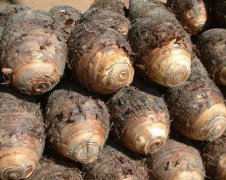
Organic rice costs too much, so is organic taro cultivation technology and yield better?
Do you know whether it is better to grow organic rice or organic taro? In fact, the organic rice market is now saturated. If you grow organic rice, you will not make much money. It would be better to try growing organic taro, which can bring high returns and is easier than growing
-
How to Enhance the Aroma of Natural Liquid Tea? A Detailed Explanation of the Key Technology
Tea fresh leaves contain large amounts of glycosidic substances with monoterpene alcohols and aromatic alcohols as aglycones. During tea processing, these substances are catalytically hydrolyzed by endogenous glycosidases to release volatile aglycones, which are an important source of the floral and fruity aromas of various teas. It has been confirmed that in fresh tea leaves there exist β-glucosides, β-primeverosides and a small amount of other types of diglycosides, with cis-3-hexenol, linalool, methyl salicylate, geraniol, benzyl alcohol and 2-phenylethanol as the main aglycones. After fresh tea leaves are picked, when being processed into various finished teas, they all undergo
-
Detailed Explanation of the One-Year Three-Harvest Cultivation and Processing Technology for Pinellia (Pinellia ternata)
I. Land Selection and Preparation For planting Pinellia, loose and fertile soil is best. When preparing the land, apply 3000-5000 kg of farmyard manure per mu, 25-30 kg of phosphate fertilizer, and 100 kg of plant ash; do not apply ammonium bicarbonate. Plow deeply and harrow finely, with beds 1.3 m wide and 0.17 m high, and ditches 0.3 m wide; tall crops such as wheat, corn, sorghum, or kenaf can be intercropped in the ditches. II. Sowing Method Usually tuber propagation is used, allowing three plantings and three harvests in one year, namely planting in April and harvesting in July; planting in July and harvesting in October; planting in October and harvesting in April of the following year. The amount of seed tubers used per mu varies with
-
Detailed Guide to Bag-Cultivated Casing Soil Cultivation Technology for the Tiger Milk Mushroom
The tiger milk mushroom, also known as Poria-sided oyster mushroom and called South Seas Poria by the Japanese, is a mushroom used both as medicine and food. The tiger milk mushroom is mainly used medicinally for its sclerotium, and its fruiting body contains 16%-45% protein and is edible. The sclerotium contains glucose, fructose, galactose, maltose, cellobiose, palmitic acid, inositol, oleic acid, and others. Some countries and regions in Africa have a very early tradition of eating and using the tiger milk mushroom medicinally. They cut the fruiting bodies of the tiger milk mushroom into small pieces, or remove the outer skin of the sclerotium, boil it in salt water, then slice it or grind it into powder, add other seasonings, and cook it into soup to eat.
-
Key points of boxwood cutting propagation technology, suitable for northern regions
Boxwood is an evergreen tree species from the south, belonging to the Buxaceae family, genus Buxus. For many years, because of its many advantages such as low, compact growth, dense leaves, beautiful shape and evergreen foliage, it has been deeply loved by people and widely used in hedges and topiary design in landscaping. It is one of the tree species with the largest usage and the widest application in northern landscaping, but due to the influence of climate and other factors, raising seedlings in the north has always been relatively difficult. Greening seedlings in the north can only be transported over long distances from the south, which not only increases costs but also results in a low seedling survival rate. In response, we carefully summarized the experience
条件筛选