-

Antidote to snakebite hidden in the immune system
New research suggests that immune cells called mast cells help protect mice from certain snakebites and bee stings. Although mast cells are best known for their role in helping produce the symptoms of anaphylactic shock, asthma and allergies, scientists also recognize other supporting roles these cells play in the immune system's fight against infection. The venom of many insects and reptiles contains chemicals that can activate mast cells, so researchers generally believed that mast cells' role was to worsen the harm of snakebites or insect stings.
-
How can the disease prevention system be improved in soft-shelled turtle farming?
1. Build farming facility conditions that meet ecological requirements, including farming engineering facilities, water source and water quality management, and other aspects. 2. Implement scientific feeding management and daily operations, and use high-quality, complete, diversified feed free of pathogen contamination. 3. Select healthy seedlings for farming. As far as possible, breed hatchlings and young turtles locally, and at the same time try to avoid introducing seedlings from other places, especially imported seedlings, to prevent secondary infection by pathogens. Even if they are introduced, strict quarantine and isolation observation must be carried out.
-
What are the characteristics and functions of the cotton root system?
Cotton originated in tropical and subtropical regions and is a perennial plant. Through long-term artificial selection and breeding, it gradually moved northward to temperate zones and evolved into an annual crop. It is sown, buds, flowers, sets bolls, and matures its seeds within a single year, completing its growth cycle. During growth and development, cotton still retains several characteristics of its original perennial nature, possessing an indeterminate growth habit. Under suitable conditions, it can continuously produce more fruiting branches, and those fruiting branches can in turn continuously produce more fruiting nodes, endlessly forming new flower buds, flowers, and bolls. Cotton is a taproot crop with a well-developed root system, a deep main root, and widely distributed lateral roots
-
What are the common signs of digestive system diseases in pigs?
Diseases whose main manifestation is a digestive system syndrome are very common in winter. The main signs of these diseases are diarrhea, with a variety of colors, a relatively large amount of mixed matter, and severe emaciation. In treating ordinary diarrhea, both the symptoms and the root cause should be addressed, while for infectious diarrhea, prevention should be the priority.
-
Detailed Explanation of Garlic Cultivation Systems and Cultivation Seasons
For autumn-sown garlic, rice, corn, sorghum, wheat, beans, cucurbits, tomatoes, and potatoes are good preceding crops; for spring-sown garlic, autumn snap beans, pumpkins, solanaceous vegetables, cotton, and legumes are preferable. Garlic requires large amounts of fertilizer during its growth period, and garlic roots can secrete substances with a certain bactericidal effect, so it is also an ideal preceding crop for other vegetables. At the same time, it can also be intercropped and relay-cropped with corn, cotton, medicinal herbs, and various vegetables. In Northeast and Northwest China, garlic is mainly grown as a sole crop; in North China, the customary practice is intercropping and relay cropping with other vegetables and grain crops.
-
Detailed Explanation of Post-weaning Multisystemic Wasting Syndrome in Pigs (Part Two)
4 Prevention and Control PCV2 is highly resistant to inactivation by many detergents and disinfectants, and the effect of medication is limited. Therefore, it is crucial for pig farms to take measures such as changing rearing techniques, improving hygiene conditions, and reducing stress at different stages, in order to lower the "infection pressure" (including PCV2 and any other pathogens). 4.1 Farrowing Period 4.1.1 All-in/all-out, with thorough cleaning and disinfection between two batches of pigs. 4.1.2 Wash sows and deworm them before farrowing;
-
Enema Therapy for Treating Digestive System Diseases in Dogs
In pet diagnosis and treatment, the most commonly encountered condition is digestive system disease in dogs. Applying a simple enema method according to the condition can achieve good results. Scope of application of enema therapy: (1) When a dog shows symptoms of gastroenteritis such as vomiting and diarrhea, and feces that are bloody and foul-smelling, enema therapy can be used for treatment, removing loose feces, emptying the intestines, and administering drugs directly via the rectum. (2) When a dog has fecal impaction such as dry stool and difficulty defecating, enema therapy can be used to soften the feces and lubricate the intestines.
-
Detailed Explanation of High-Yield Cultivation Technology for Agaricus bisporus in Mushroom House Shelf System
For several years, the author has been exploring high-yield cultivation technology for Agaricus bisporus (button mushroom) in mushroom house shelf systems and has gained some successful experience. The relevant techniques are summarized below for reference by peers. 1 Mushroom house and shelf structure The mushroom house is 19.6 m long from east to west, 9 m wide from north to south, with front and rear walls 2.5 m high and gable walls 3.5 m high. The walls are built with bricks and lime mortar. The outside is pointed with cement; the inside is first coated with lime mortar and then brushed with lime mortar. The front and rear walls have 4 ventilation windows of 25 cm x 20 cm each, arranged in upper and lower rows facing the aisle, with the first ventilation window 20 cm above the ground. The front
-
The modern potato industry technology system is being built by the Ministry of Agriculture.
It focuses on demonstrating and promoting advanced, applicable, efficient, high-quality and water-saving cultivation techniques for dryland potatoes, accelerating the integration and transformation of agricultural scientific and technological achievements, and using this as a marker to drive the technological upgrading and sustainable development of China's potato industry. On July 22-23, the Department of Science and Technology of the Ministry of Agriculture, together with the Department of Crop Production, held the "National On-site Observation Meeting on Water-Saving, Efficient and High-Quality Cultivation Techniques for Dryland Potatoes" in Ulanqab, Inner Mongolia. According to reports, the potato, used as both food, vegetable, feed and processing raw material, has now become the world's fourth largest food crop after rice, wheat and corn.
-
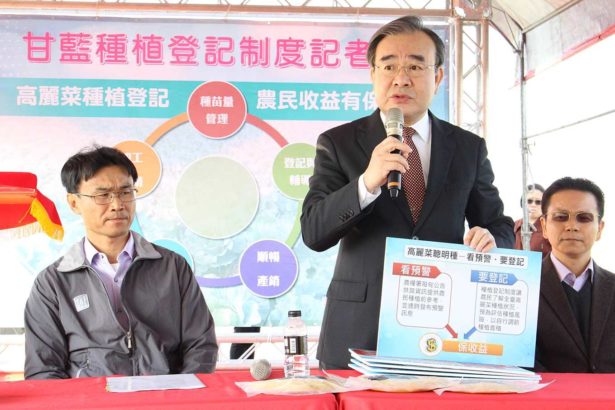
Cabbage registration system guarantees 6 yuan per kilogram, with a subsidy of 100,000 per hectare when production surges
Growing cabbage no longer means fearing a market collapse. The Council of Agriculture is promoting a registration system: with registration, the price is guaranteed at 6 yuan per kilogram, and when production surges, a subsidy of 100,000 per hectare is provided.
条件筛选