-

Causes of and Solutions for Hollow Roots in Phalaenopsis (Moth Orchids)
The worst thing when growing Phalaenopsis is discovering hollow roots! A perfectly healthy orchid, and when you pull it open to take a look, the roots are all hollow - what a heartbreak. In fact, hollow roots are always the result of care details that were not done properly. Below is a summary of several common causes. 1. Watering - watering is absolutely the "number one killer" behind hollow roots in Phalaenopsis! Water too frequently, and the medium stays constantly soggy,
-
What is the difference between Phalaenopsis roots and crystal tips?
Beginners at growing flowers often can't tell Phalaenopsis roots and crystal tips apart. In fact, as long as you remember these few little tips, you can distinguish them at a glance. 1. Notable differences in position. The roots of Phalaenopsis are distributed quite flexibly on the plant, with no fixed growth points. They sprout from multiple parts such as the base of the stem, extending freely around the plant, searching for suitable
-

Why does my Phalaenopsis orchid have no aerial roots, and can it survive?
As a typical epiphytic orchid, the Phalaenopsis orchid's aerial roots are not only important organs for absorbing water and nutrients and for photosynthesis, but also a direct reflection of whether the plant is healthy. When you find that your Phalaenopsis has no aerial roots, what exactly is going on? Can a Phalaenopsis without aerial roots still survive? If a Phalaenopsis has no aerial roots, it may
-

What Should Be Used to Disinfect Phalaenopsis After Root Pruning? Is Alcohol Okay?
In the care of Phalaenopsis, pruning the root system is a common operation. Whether dealing with rotten roots, hollow roots, or carrying out division propagation, the wounds need to be disinfected after root pruning to prevent infection by pathogens and ensure healthy plant growth. So, what should be used to disinfect Phalaenopsis after root pruning? Can alcohol be used for disinfection? First
-

Do Phalaenopsis orchids need root pruning and disinfection with chlorothalonil?
In the process of caring for Phalaenopsis orchids, the health of the root system directly affects the plant's growth and flowering quality. Whether Phalaenopsis orchids need root pruning, and whether chlorothalonil disinfection is required after pruning, are care points worth understanding in depth, as they help keep Phalaenopsis orchids in good growing condition. First, let's talk about whether Phalaenopsis orchids need pruning
-

What are the signs of underwatering in Phalaenopsis orchids? Learn to tell from the roots
As an epiphyte, the Phalaenopsis orchid's roots not only absorb nutrients and water but also carry out photosynthesis. Correctly judging whether the roots are short of water is a key skill in orchid care. Only by understanding the signs of underwatering in Phalaenopsis can you supply water in time and keep the plant growing healthily. Judging by the appearance of the roots
-

How long should a Phalaenopsis orchid be left to dry after root pruning, and how long until new roots grow?
As a popular ornamental flower, the Phalaenopsis orchid's root system not only takes on the important duty of absorbing water and nutrients, but also plays a key role in anchoring the plant. In daily care, when problems such as root rot or aging occur, pruning is often needed. And the drying time after root pruning and the new root growth cycle
-

After trimming the roots of a Phalaenopsis orchid, should you dry the roots first or water immediately?
In the daily care of Phalaenopsis orchids, pruning the roots is a common management task. Whether due to root aging, rot, or repotting and transplanting, the roots need appropriate trimming. However, after pruning the roots of a Phalaenopsis orchid, is it necessary to dry the roots, and can you water immediately? Understanding these care details
-

Reasons Why Phalaenopsis Produces No New Roots and How to Fix It
Phalaenopsis, an orchid native to the tropics. However, sometimes we encounter the problem of a Phalaenopsis producing no new roots, which not only affects the health of the plant but may also lead to weak subsequent growth, difficulty blooming, gradual decline, and even death. Understanding the reasons behind this and taking effective measures is the key to saving the Phalaenopsis. Phalaenopsis
-
Is the Phalaenopsis Rome Lover worth getting? Here's how to save it after root rot
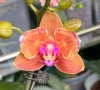
Today I'd like to introduce you to a fantastic Phalaenopsis variety, Rome Lover. Bred by Shiina, Phalaenopsis Rome Lover can be called the ceiling of beauty in the Phalaenopsis world. The bright orange petals are bold and striking, paired with the gentle accent of a rose-red lip; the collision of these two colors creates a sense of sophistication. Each flower measures a full 5cm across, and when in bloom they look like a flock of little butterflies,
条件筛选