-

What preparation work needs to be done for artificially rearing queen bees?
Before artificial queen rearing, the following preparation work needs to be done: (1) Selecting parent colonies. Select healthy, disease-free colonies whose honey or royal jelly yield exceeds the average yield of the whole apiary, with weak swarming tendency and rapid colony development, as parent colonies. The drone colony is the colony that provides drones, and the queen mother colony is the colony that provides queens. Whether drone colony or queen mother colony, both are used to rear bee larvae. The same drone colony can also rear thousands of drones. If only one or two breeding colonies are used every year to rear virgin queens and drones, the whole apiary's colonies will undergo inbreeding, causing productivity and
-
Introduction to the Guican No. 1 Silkworm Variety and Key Rearing Points
1. Silkworm eggs are incubated using the high-temperature photoperiod method. In the early incubation period (days 1-4), maintain 26°C with a wet-dry difference of 1.5; in the late period (days 5-10), maintain 28°C with a wet-dry difference of 1.5-1. Provide 16 hours of light per day. After the appearance of blue dots, keep in darkness to promote uniform hatching. 2. Carefully carry out disease prevention and disinfection before, during, and after rearing. During the rearing period, strengthen disease prevention, hygiene, and technical management to eliminate sources of disease and reduce the occurrence of diseased silkworms. 3. For newly hatched silkworms and their first feeding, carefully select fresh, suitably mature mulberry leaves for feeding. 4. During the late larval stage, especially during the peak feeding period of the fifth instar,
-
How important is the rearing environment in chicken farming?
With the deepening of agricultural industrial structure adjustment and the internal structural adjustment of the livestock industry, the construction of breeding communities has developed rapidly, but because most poultry farmers do not have sufficient understanding of the rearing environment for chickens, the rearing efficiency of chickens is relatively poor. Several key issues in broiler rearing are briefly discussed below. 1 The harm of poor ventilation. Because broilers grow quickly, have vigorous metabolism, and are raised at high density, as the chickens continue to grow, the amount of fresh air needed increases more and more, more and more feces are excreted, and more and more harmful gases are produced.
-
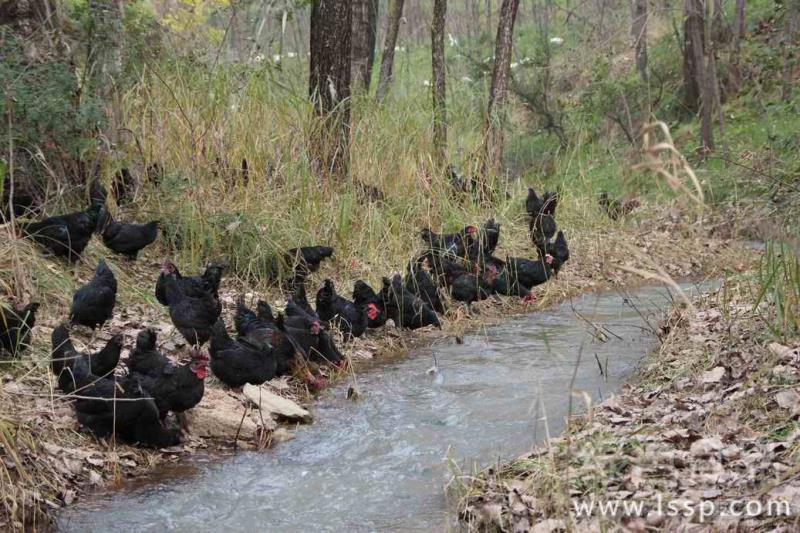
Silkie chickens are not suited to indoor cage-free rearing on wire netting; how can they be raised free-range at scale in woodland?
How to raise Silkie chickens, which are not suited to indoor wire-net rearing, free-range at scale in woodland
-
Detailed Explanation of Key Technical Points for Rearing Large Silkworms in Autumn
The main reason for the instability of autumn silkworm production is the damage caused by silkworm diseases. As the number of silkworm rearings increases, the number of pathogens increases, the spread area expands, and the viruses are fresh and multiply quickly, resulting in a high disease rate. After repeated use of silkworm rooms and silkworm tools, if disinfection is not thorough and rearing management is relaxed, combined with the harsh environment of high temperature and high humidity or high temperature and dryness in autumn, as well as the poor quality of mulberry leaves, the silkworms have weak disease resistance, all of which are the main reasons for the easy outbreak of silkworm diseases during the large silkworm stage in autumn. 1. Strengthen disinfection and disease prevention, eliminate pathogens. The effective measure to prevent silkworm diseases is disinfection, eliminating
-
What time and conditions are needed for artificially rearing queen bees?
When the new bees reared by the colony that year have completely replaced the old overwintering bees and the colony has entered its growth and expansion period with a relatively strong population, you can prepare for artificial queen rearing. In the north, it is best to rear queens in early summer when the daytime temperature is stable above 20°C and there is a nectar source, especially when there is an abundant pollen source and drones also begin to emerge one after another. In North China this is generally in May. This can ensure the quality of the queen bee, and also allows the early replacement of aging queens with new queens. Colonies with a queen from the current year will not undergo natural swarming. Use the new queens reared early to carry out artificial colony splitting
-
What is the one-year-old fish fingerling rearing model in the Guangdong-Guangxi region?
The method of rearing one-year-old fish fingerlings in the Guangdong-Guangxi region differs from that in Jiangsu and Zhejiang. Rather than starting with polyculture of multiple species, monoculture is carried out in the early stage, and after the fish grow to 5-6 cm, polyculture is then carried out according to a ratio. The advantages of this method of rearing one-year-old fish fingerlings in Guangdong and Guangxi are: (1) The survival rate of fish in early-stage monoculture is relatively high, generally 80%-90%. (2) When stocking in proportion in the later stage, "eliminating the inferior and selecting the superior" can be applied. Selecting fish with strong constitutions for polyculture can correspondingly increase the survival rate
-
Autumn Snake Rearing Methods and Key Technical Points
As the saying goes: "When the autumn wind blows, the three snakes grow fat." This accurately reflects the growth of snakes. In autumn and winter, snake farms should pay attention to the following points: 1. September to October is the peak predation season for snakes, during which they store large amounts of fat to safely survive the severe winter and maintain their nutritional needs until they emerge from their burrows the following year, so large amounts of food should be provided. 2. For snakes in relatively poor health, they can be sold on the market early rather than kept for overwintering. 3. In autumn, snakes are busy foraging and have more opportunities to emerge from their burrows, making them easier to capture in the wild, so precautions should be taken against predators.
-
Conditions Required and Main Technical Requirements for Collective Rearing of Young Silkworms
I. The Purpose of Collective Rearing of Young Silkworms. As the saying goes, "Rearing young silkworms well is half the harvest," which fully illustrates the importance of rearing young silkworms. The purpose of collective rearing of young silkworms is to strengthen the constitution of young silkworms, ensure the safety of grown silkworms, and achieve high-quality and high-yield cocoons. Advantages of collective rearing of young silkworms: (1) It facilitates scientific silkworm rearing, adopts advanced silkworm rearing techniques and facilities, promotes uniform development and strong constitution of young silkworms, provides a guarantee for grown silkworm rearing, and lays the foundation for high and stable cocoon yields. (2) It facilitates disinfection and disease prevention. It overcomes the difficulties of young silkworms' weak resistance to adverse environments and susceptibility to pathogen infection, reduces lost silkworms, and ensures the number of silkworms. Collective rearing of young silkworms can achieve comprehensive disinfection of rearing rooms and equipment and strict disease prevention measures, reducing opportunities for pathogen infection and effectively controlling the occurrence of silkworm diseases. (3) It helps improve work efficiency. Collective rearing of young silkworms can save mulberry leaves, labor, fuel, equipment and housing, reduce silkworm rearing production costs, and improve economic benefits.
-
Key Technical Points for Rearing Chicken Feed and Feeding Management
Rearing chickens have a relatively strong digestive capacity. Switching from chick feed to rearing chicken feed mainly involves lowering the protein level of the diet to prevent premature laying, and also to reduce non-productive feed costs. The feed change should have a 1-week transition period, gradually transitioning from chick feed to rearing feed, so that the chickens have an adaptation process. Since rearing chickens are in a period of vigorous development of muscles, bones, respiratory system, digestive system and reproductive system, although the feed quality can be slightly reduced, the proportions of various nutrients must be balanced.
条件筛选