-

How to tell a rabbit's age? Practical tips to help you judge
Check the incisors and claws. A rabbit's incisors and claws change with age. Young rabbits have white, short incisors that are neatly aligned; older rabbits have dull yellow, thick and long incisors that are unevenly aligned, sometimes with damage. White rabbits have small toes, with a red base and a white tip. In a 1-year-old rabbit, the red and white sections of the toes are equal in length; under 1 year old, the red is longer than the white; over 1 year old, the white is longer than the red. For colored rabbits, you can distinguish by the length and degree of curvature of the toenails. Young rabbits' nails are shorter, straight and flat, hidden in the foot fur. Check the eyes. Young rabbits have bright eyes
-
Prevention and Treatment Methods and Practical Tips for Chicken Cloacitis
I. Disease Overview: Cloacitis, commonly known as leukorrhea or post-anal gonorrhea, is an ulcerative inflammation occurring in the cloaca and anus. A white viscous discharge flows from the anus of diseased chickens, with a pungent odor. This disease is a venereal disease of chicken flocks. II. Epidemiological Characteristics: Its pathogen has not yet been isolated. Experiments show that cloacitis cannot necessarily be considered an infectious or contagious disease. During natural outbreaks (even if lasting for several months), healthy chickens do not become infected. Even when lesion tissue is smeared
-
How to identify the quality of fish feed? These practical tips are a must-know
The quality of pelleted feed for fish is closely related to farming profitability and should be given great attention. Its quality is mainly judged by five aspects: "look, smell, twist, soak, and chew," introduced as follows: First, look. Pelleted feed for fish is made by uniformly mixing and pelletizing several main raw materials such as fishmeal, soybean meal, cottonseed meal, rapeseed meal, wheat middlings, and meat-and-bone meal in a certain proportion. If there is more fishmeal and soybean meal, the feed color is slightly yellow; when there is more miscellaneous meal, the feed color is dark red; when there is more wheat middlings, the feed color is slightly grayish white, and so on.
-
Efficient Apiary Management Methods and Practical Tips
In spring, the apiary should be set up in a dry, sunny, sheltered place, and should not be set up in open fields, because cold winds blow, heat escapes from the hive, which is unfavorable for reproduction and forces the bees to generate heat, consuming large amounts of stored honey. For dense colony heat in early spring reproduction, the bees and combs should be kept in proportion to promote egg laying. As the temperature gradually rises and the colony strength develops, this can be appropriately relaxed. When the climate is warm and the colony is strong, each frame should still maintain 60% bees. In box-splitting management, two weak colonies or medium colonies are separated in the middle by a partition board and kept together in one box, each with its own entrance. This
-
Practical tips to prevent sprouting during potato storage
To prevent potatoes from sprouting during storage, the following methods can be used. (1) In the late growth stage (2-3 weeks before harvest), spray 2-3g/kg of maleic hydrazide in the field: (2) 1 week before harvest, spray the whole plant with 0.5-1g/kg of 2,4,5-T to extend the dormancy period and storage period: (3) 2-3 weeks before harvest, mix 3g/kg of maleic hydrazide with 0.3g/kg of 2,4,5-T and spray the whole plant for a better sprout-prevention effect. (4) After the potatoes are harvested, spray methyl naphthaleneacetate onto dry soil, then mix the potatoes with the dry soil
-
How to prevent potatoes from sprouting during storage? Practical tips shared
To prevent potatoes from sprouting during storage, you can spray the field with maleic hydrazide at a concentration of 2-3 g/kg in the late growth stage (that is, 2 to 3 weeks before harvest); you can also spray the whole plant with 2,4,5-T at a concentration of 0.5-1 g/kg 1 week before harvest to extend the dormancy period and storage period; in the late growth stage, mixed spraying of the whole plant with maleic hydrazide at a concentration of 3 g/kg and 2,4,5-T at a concentration of 0.3 g/kg has a better effect on preventing sprouting. In addition, after the potatoes are harvested,
-
Practical Tips for Potato Planting, Management and Harvesting
(1) Site selection and fertilization: Choose deep, loose, fertile sandy loam soil, plow and break up the soil, level it, and then cultivate. Potatoes need a relatively large amount of fertilizer in the early and middle growth stages. To ensure normal growth and development, a heavy base fertilizer must be applied. Generally, apply 2500-3000 kg of farmyard manure, 50 kg of phosphate fertilizer, and 15 kg of potassium fertilizer (or 100-200 kg of plant ash) per mu. After thorough mixing, apply in holes or furrows at transplanting. (2) Sowing: 1. Choose improved varieties: It is advisable to choose high-
-
How to choose and care for tulips? Here are some practical tips
Buy plants that have not yet bloomed but have already grown green buds, so you can enjoy the entire flowering period; choose a pot with multiple bulbs planted in it, so you can enjoy a longer flowering period; if you rearrange the plants after purchase, water immediately after transplanting; when rearranging, be sure to transplant the soil in the pot together with the tulips or hyacinths as a whole into a new container, and then combine them with flowers from other pots. Never try to separate flowers originally planted in the same container, to avoid damaging the tangled roots; water frequently
-

How do you prevent sweet potatoes from rotting in storage pits? Practical new tips are here
New tips for preventing sweet potatoes from rotting in storage pits
-
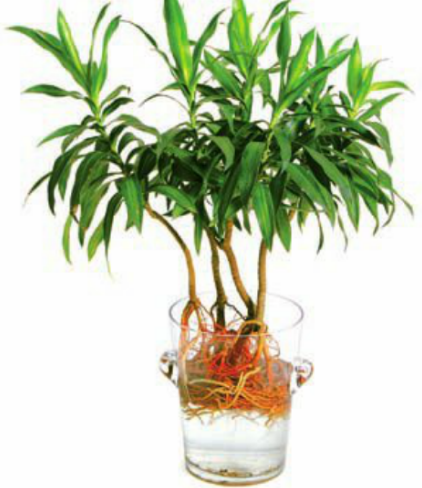
What to Do When Dracaena reflexa Leaves Turn Yellow in Water Culture? Practical Care Tips Shared
Dracaena reflexa, also called short-leaved dragon tree, loves a hot, humid, semi-shaded environment. It is highly shade-tolerant and afraid of harsh sun exposure. It carries the meaning of longevity and eternal youth. How to grow Dracaena reflexa in water; other name, short-leaved dragon tree; habits, loves a hot, humid, semi-shaded environment. Highly shade-tolerant, afraid of harsh sun exposure
条件筛选