-
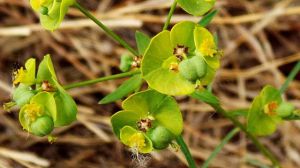
How to identify Euphorbia esula? A simple and practical identification guide
Root and stem: The root is cylindrical and can grow to more than 20cm, with a diameter of 3-6mm, and the stem can reach 30-60cm tall. Leaves: Linear to ovate, with a relatively pointed or bluntly pointed tip, no petiole, 2-7cm long. Flowers: The inflorescence is solitary, stalkless at the base, with campanulate involucral bracts.
-

Here is your practical guide to chrysanthemums, as autumn is the perfect time to admire them
Wait until autumn comes on the eighth day of the ninth month, when my flowers bloom all others are slain. The soaring fragrance pierces through Chang'an, the whole city wears golden armor. - Huang Chao, "Ode to the Chrysanthemum" The chrysanthemum is born in the early autumn of harvest and blooms in the late autumn when all things wither. The sky is high and the clouds are pale, gazing alone at the south-flying geese, it has...
-

Can azaleas also monitor ammonia? A practical care guide
Azalea, also known as yingshanhong, shanjuan and so on, is one of China's top ten famous flowers, with extremely high ornamental value. It also has the function of monitoring toxic gases
-

Peach Tree Technology Home-Study Manual: A Practical Guide for Fruit Growers
1. Variety Introduction 1.1 Early Red Flat Peach (Zaohong Pantao): single fruit weight 110-200 g; the fruit surface is pink-red, beautiful and vivid, firm-fleshed, crisp and juicy, intensely sweet and fragrant, of the highest quality, storage- and transport-tolerant, ripening in mid-June. 1.2 Okubo: average single fruit weight 250 g, large fruit weight 700 g, good flavor, sweet-tart and palatable, freestone, ripening at the end of July. 1.3 Jingyu (Beijing No. 14): fruit elliptical or nearly round. Single fruit weight 195 g, maximum fruit weight 233 g, fruit surface light
-
How to prevent and control gummosis in greenhouse apricots? A detailed practical guide
Apricot gummosis is a typical physiological disease caused by many factors, such as hail injury, insect injury, frost injury, sunscald, mechanical wounds, etc. It is often easily triggered during top grafting for variety change or large branch renewal, and heavy summer pruning, improper fertilization, heavy clay soil, excessive acidity, improper pesticide use and the resulting phytotoxicity can all induce gummosis. Only by understanding the disease's occurrence pattern can effective prevention and control be achieved. The symptoms, occurrence pattern and control techniques are described below: Symptoms Gummosis mainly occurs on
-
A Detailed Guide to Selecting and Using Fishery Drugs: A Practical Guide for Farmers
When selecting fishery drugs, the "three certificates" must be complete (production license, production approval certificate, execution standard number), and there must be a product quality certificate. Legitimate fishery drug manufacturers have applied for registered trademarks; the trademark design, image, text, etc. are indicated on the packaging, labels, and instructions, and are marked with the words "registered trademark" or a registration mark. The quality of the inner and outer packaging materials of fishery drugs should be good. Generally, the packaging is marked with instructions for use, trade name, chemical name, drug composition, content, production approval number, manufacturer name, address, production batch number, production date, validity period, indications or functions and main treatments,
-
Practical Guide to Fresh-keeping and Processing Techniques for Shiitake Mushrooms
1. Drying equipment: Although shiitake drying equipment at home and abroad differs in form, scale and technical level, its principle is basically the same. Generally there are the following models: (1) forced circulation dryer; (2) forced ventilation parallel-flow dryer; (3) heat pump dryer. 2. Drying methods (1) Raw material handling Before drying, trim off the mushroom stalks or stem bases from the freshly picked mushrooms, remove impurities, and process after grading. Mushrooms picked on rainy days or with high moisture content should first be spread out to air-dry so that
-
How to grow Schisandra seedlings? A detailed practical guide
Schisandra is the berry of Schisandra chinensis (Turcz.) Baill., a plant in the magnolia family. It has a wide suitable growing range and can be grown in both north and south. Because it is mainly produced in the Northeast region, it is also often called northern schisandra. Its fruit is used as medicine and has the effects of benefiting qi and astringing the lungs, nourishing the kidneys and warming essence, and promoting fluid production and quenching thirst. Its medicinal value and economic value are relatively high. In recent years, with the expansion of its processing and application scope, international trade volume has increased year after year, product value has steadily risen, and development prospects are very broad. In production,
-
What Are the New Cotton Varieties? A Practical Guide to Seed Selection for Cotton Growers
1. Hongtaiyang 2, a new conventional cotton variety. In 2005 it was approved by the **Uyghur Autonomous Region Crop Variety Approval Committee (approval number: Xinshenmian 2005027), and in the same year was listed by the Ministry of Agriculture's National Agricultural Technology Extension Service Center as a "National Cotton Display Variety" (demonstration number: Guoshifan 2005022). Characteristics: growth period 135-140 days, an early-to-mid maturing type variety; strong growth vigor, open plant architecture, medium-sized leaves, relatively abundant leaf hairs, strong boll setting
-
Cotton Variety Introductions and a Practical Guide to Seed Selection
Xinqiu 1 has a whole growth period of about 130 days. It emerges well, grows vigorously in the early and middle stages, and its leaves function well in the late stage. The plant type is relatively compact, the fruiting branch node position is high, and there are few superfluous buds, making it easy to manage. It has good yield potential, strong and concentrated boll setting, and large, oval bolls weighing 6.4 grams. Boll opening is smooth and concentrated, the lint percentage is 41%, and the pre-frost boll rate is 93.5%. It is highly resistant to cotton bollworm, resistant to fusarium wilt, and tolerant to verticillium wilt, with few useless branches, making it easy to manage. The average yield is about 400 kg per mu. The usual planting density is 2500-3000 plants per mu.
条件筛选