Here is your practical guide to chrysanthemums, as autumn is the perfect time to admire them
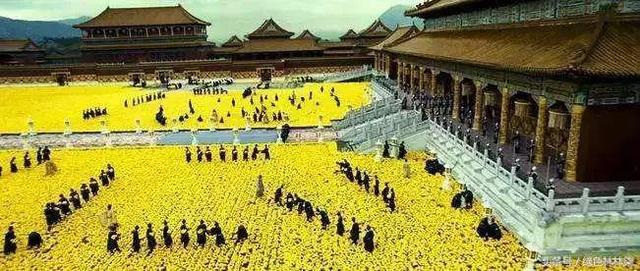
Wait until autumn comes on the eighth day of the ninth month, when my flowers bloom all others are slain.
The soaring fragrance pierces through Chang'an, the whole city wears golden armor.
- Huang Chao, "Ode to the Chrysanthemum"
The chrysanthemum is born in the early autumn of harvest and blooms in the late autumn when all things wither. The sky is high and the clouds are pale, gazing alone at the south-flying geese, it has the noble purity of not competing with other flowers; it has the strength of character to brave the wind and defy the frost, and the steadfastness to hold its fragrance even in death upon the branch.
The gentleman among flowers
Picking chrysanthemums by the eastern fence
Gazing leisurely at the southern mountains
Once Tao Yuanming's famous lines appeared
The chrysanthemum
became for scholars
a symbol of aloof and transcendent spirit
imbued with endless sentiment
The chrysanthemum
is a magical plant
When all flowers wither, it blooms alone
In nature, few plants are like the chrysanthemum
so patient and restrained
not competing with spring flowers, not shining like summer blooms
only for the golden autumn of October
From a scientific perspective, the chrysanthemum blooms in autumn not because of sentiment, but because of its physiological and ecological characteristics.
The chrysanthemum is a short-day plant.Only when the daily sunshine is shorter than a certain length and lasts for a certain number of days can it stimulate flower bud differentiation and carry out reproductive growth.
From the perspective of traditional Chinese medicine, the chrysanthemum is also a medicinal herb, widely used in medical treatment and health care. The chrysanthemum is used medicinally after its flower head is dried. It is mainly produced in Zhejiang, Anhui, Henan and other places. According to different origins and processing methods, it is divided into Bo chrysanthemum, Chu chrysanthemum, Gong chrysanthemum, Hang chrysanthemum, etc. It is also divided into yellow chrysanthemum and white chrysanthemum according to flower color.
Differences in efficacy
Yellow chrysanthemum
Its efficacy focuses on clearing the lungs and stopping cough, dispelling wind and dispersing heat, clearing the liver and improving eyesight
White chrysanthemum
focuses on soothing the liver and relieving depression, clearing the liver and improving eyesightWild chrysanthemum
is more prominent in clearing heat and detoxifying, sterilizing and reducing inflammation
The 35th Wuhan Golden Autumn Chrysanthemum Exhibition is coming soon
(Exhibition dates: October 18 - November 18)
Now get the following knowledge points
and you will never be called a "chrysanthemum idiot" when visiting the exhibition again~
?
01
The chrysanthemum that Tao Yuanming liked was the "Jiuhua chrysanthemum"
According to "Guang Qun Fang Pu - Flower Spectrum 27 - Chrysanthemum 1": "The Jiuhua chrysanthemum, this variety was appreciated by Yuanming. The one with two layers of petals is called Jiuhua, with white petals and a yellow center, and an extremely large flower head, some as wide as two cun four or five fen. Its appearance is extraordinary, and it is the crown of white varieties."
02
A considerable number of chrysanthemums worldwide originated in China
China has a history of cultivating chrysanthemums for more than 3000 years, first recorded in the "Zhou Guan" and "Bu Ya". Around the 8th century AD it spread to Japan, at the end of the 17th century it was introduced to Europe by Dutch merchants, in the 18th century it spread to France, and in the mid-19th century it spread to North America. Since then, Chinese chrysanthemums have spread across the globe.
03
Cosmos actually has nothing to do with "Persia"
Plants are conventionally named after their place of origin, but cosmos is native to Mexico, not Persia (that is, the Middle East region of Iran). The reason it got the name "Persia" is that it is a transliteration close to the English name "Cosmos".
04
The world's first monograph on chrysanthemums is "Liu's Chrysanthemum Spectrum"
During the Chongning Jiashen years of Emperor Huizong of Song, "Liu's Chrysanthemum Spectrum" written by Liu Mengquan was the earliest in Chinese history and also the world's first monograph on chrysanthemums. The book classifies chrysanthemums by color and includes 35 chrysanthemum varieties. It also appends 4 varieties heard of but not seen, as well as two wild species.
05
Although Japanese cherry blossoms are the most famous, Japanese people also love chrysanthemums
In Japan, cherry blossoms are called the flower of warriors, symbolizing that warriors would not hesitate even to die for a moment of brilliance, while chrysanthemums are a symbol of wealth and are exclusively used by the Japanese imperial family. The family emblem of the Japanese imperial family is the "sixteen-petal double chrysanthemum crest" designed after the chrysanthemum.
06
The "yellow flower" in "yellow flower maiden" refers to the chrysanthemum
In ancient times, unmarried women liked to "paste yellow flowers" when dressing up, using yellow color to draw various patterns on the forehead or both cheeks of the face. Yellow flower also refers to the chrysanthemum, often used to metaphorize a person's moral integrity. Therefore, adding the two characters "yellow flower" before maiden indicates that the woman is not yet married.
07
Pyrethrum can very likely kill cats
Pyrethrum is a toxic crop harmless to humans. Its pyrethrin is fatally toxic to the vast majority of insects and can effectively kill pests such as mosquitoes and flies. At the same time, pyrethrum is an important extraction source of natural pyrethroids, and pyrethroids are also fatally toxic to domestic cats.
In addition to the above
Chrysanthemums can also be used in food
(You can brew them as tea, and naturally you can also use them for stir-frying~)
Most chrysanthemums are edible
Chrysanthemums contain a variety of vitamins and trace elements
and have the effects of reducing inflammation, improving eyesight, lowering blood pressure, lowering blood lipids, and strengthening the body
It is exactly the season when chrysanthemums are in full bloom
Go to the flower market
and buy two pots of chrysanthemums with both ornamental and edible value
Under high-pressure life
steal a little of life's leisurely remoteness
......
Key points for selecting chrysanthemums
Mainly choose potted chrysanthemums with robust plants, plump terminal buds and strong resistance
Stems:The stems should be upright and straight, and the leaves complete with no signs of drying out. Note that bent stems indicate unstable quality and belong to a lower grade.
Precautions:Control the growth of chrysanthemums, and pay attention to repotting in time the next year to avoid competition for nutrients and space
Home care for potted chrysanthemums
Preparation of growing soil
PART/01
The substrate for chrysanthemums is preferably well-drained, loose, fertile, slightly acidic sandy loam. Generally, river sand with good water permeability and air permeability is selected, mixed with garden soil and humus soil. The ratio ishumus soil : garden soil : river sand = 4:4:2. If conditions permit, it is best to use disinfectants and fungicides such as formalin or carbendazim at the concentration specified in the instructions to spray the growing soil for disinfection.
Water management
PART/02
Water management during the chrysanthemum growing period must be carried out according to the principle of "water promptly when dry, drain promptly when waterlogged." And around the bud stage, sufficient water must be ensured. Watering can also be combined with fertilizing, and attention should be paid to achieving "wet then dry," that is, it should not be half-dry and half-wet, nor too dry or too wet. Also, spray the leaves with water once each morning and evening.
Controlling fertilization
PART/03
Chrysanthemum growth requires sufficient organic fertilizer (generally used as base fertilizer).
During thevegetative growth period, the topdressing should mainly be nitrogen fertilizer, and some phosphorus, potassium and trace element fertilizers can be applied along with it. This can promote thick and straight chrysanthemum branches and also make the leaves larger.
In the middle and late stages of chrysanthemum growth, topdressing should mainly be phosphorus and potassium fertilizers, and special flower fertilizer can also be applied. The fertilization method can combine soil topdressing and foliar topdressing, and water promptly after fertilizing. Note that if chrysanthemum leaves are small and thin and the leaf color turns yellow, a 0.1% urea solution can be sprayed multiple times.
Placement and light
PART/04
In the daily management of potted chrysanthemums, in addition to doing well in the above soil, fertilizer and water management, management measures such as turning pots and spreading pots should also be carried out in time according to the growth and environmental conditions of the potted chrysanthemums, so as to avoid affecting the growth and development of potted chrysanthemums due to light and other reasons.
It should be noted that chrysanthemums are short-day plants. Experiments show that chrysanthemums carry out vegetative growth under long-day conditions of 14.5 hours per day, and darkness of more than 12 hours per day with a night temperature of 10°C is suitable for flower bud development.
Shaping and pruning
PART/05
The spatial distribution and crown shape of potted chrysanthemums directly affect their ornamental value. Shaping and pruning during the chrysanthemum growing period is very important. Potted chrysanthemums can be made into fan-shaped crowns, umbrella-shaped crowns, semicircular crowns, triangular crowns, etc. according to need.
Bud removal and bud thinning
PART/06
During the vigorous seedling stage of chrysanthemums, many axillary buds will sprout, and they must be pinched off in time, otherwise they will consume a large amount of nutrients. During the bud stage, side buds sometimes appear on the small branches below the terminal bud. Except for those that need to be retained, the side buds should also be removed early to promote the enlargement of the terminal bud. Also note that in the late growth and flowering stages, branches that affect flowering and flower quality can be removed as needed, and spent flowers should be cut off in time to save nutrients and meet the nutrient needs of later-blooming flowers.
Pest and disease control
PART/07
The main pests and diseases of potted chrysanthemums include powdery mildew, brown spot disease, aphids, mite pests, etc. Many diseases mostly occur in environments with high air humidity, insufficient light, poor ventilation and large temperature differences between day and night. Therefore, reasonably controlling air humidity, moisture and temperature is the main means of preventing these diseases.
Agents such as carbendazim and thiophanate-methyl can be used as the main physical methods of control.
After cultivation
chrysanthemums now have more than 7000 varieties
Many varieties are not only beautiful in appearance
their names are also antique and full of Chinese style
(Want to know them all? That is impossible~)
The countdown to the 35th Golden Autumn Chrysanthemum Exhibition in 2018 has begun
In golden October, nothing is better than admiring chrysanthemums~
Golden Back with Great Red
Red Line and Golden Hook
Flat Peach Immortal Dew
Chang Red
Long Wind Ten Thousand Li
Red Clouds Supporting Osmanthus
Fairy of the Waves
Golden Pearls Adorning Dancing Robes
Golden Osmanthus Support
Sunward Blooming
Image source: internet - copyright belongs to the original author