-

Used coffee grounds have many uses, and can be used as compost to grow flowers
Do you like drinking coffee? If you love coffee, you surely have no idea what benefits coffee grounds have, right? Would you like to find out? Actually, coffee grounds have many clever uses, and the most common one is making compost! If you do not need to fertilize right away, you can turn your coffee
-
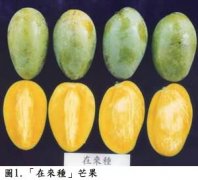
Post-harvest Field Management Methods and Pruning Precautions for Mango
Do you know about Taiwan mango and native mango? According to the cultivation calendar for the Taiwan region, the mango harvest season is about May to October. During this period, the farmers' hard work of the whole year finally pays off. However, the 1 to 2 months immediately after harvest are a critical period for future mango production
-

Chu Orange's listing plan postponed by one year: can a fruit-growing company successfully land on the capital market?
Recently, according to a report by The Paper, Chu Yibin, general manager of Chu's Agriculture, the company behind Chu Orange, revealed the company's listing ideas and plans at a press conference. According to Chu Yibin, 4 advisory institutions have already moved in, but due to the impact of the epidemic, the listing plan will be delayed by one year
-

What Is High-Temperature Composting? A Full Breakdown of the Key Technical Points
Compost is a kind of organic fertilizer with relatively rich nutrients and a long-lasting, stable fertilizing effect, and it can also increase the soil's ability to retain water, hold heat, allow air through, and retain fertilizer. Ordinary compost is made by decomposing under anaerobic conditions, and the compost temperature does not exceed 50°C; during decomposition
-
When is the right time to apply wheat herbicide: before the New Year, in winter, or post-emergence?
Abstract: Wheat weeding generally targets 2 periods, before the New Year and just after the New Year, that is, the wheat seedling stage and the wheat green-up stage, 2 time windows. In most regions, the wheat seedling stage is around late November, and the wheat green-up stage is between late February and early March. These 2
-
When is the best and safest time to apply post-emergence herbicide to corn seedlings?
Abstract: The suitable time to apply herbicide is after 6 PM in the evening. Because the temperature is lower and the humidity is higher at this time, the liquid will remain on the weed leaves for a longer period, allowing the weeds to fully absorb the herbicide components, which helps improve the weeding effect and also improves
-
How to Grow Ruixiang Flowers? Master the Cultivation Methods and Post-Bloom Care Techniques
Summary Soil selection: Ruixiang flowers bloom from February to March and can be grown in fertile, slightly acidic soil. Suitable temperature: Ruixiang flowers love a warm and shaded environment, with an ideal temperature between 15°C-25°C. Proper watering: keep the soil in a moist state. Reasonable fertilizing
-
Can vermicompost be used directly to grow grapes?
Summary Vermicompost cannot be used directly to grow grapes; it needs to go through a decomposition process before it can be applied, and during decomposition a large amount of moisture must be maintained for it to ferment completely. Vermicompost after fermentation is very suitable as fertilizer for grapes, and its low cost can save money on buying fertilizer.
-
Freesia Post-Bloom Care Methods: What to Do After Freesia Flowers
Freesia is a flower variety with high ornamental value, and it is currently distributed in many places in our country. The leaves of freesia are relatively slender, and the flower is Hu Zhengyao's ornamental point, with its flowers commonly seen in orange, white, pink, etc. Many people are unclear about the care of freesia after it blooms ⟦4 <p>Freesia is a flower variety with high ornamental value, and it is currently distributed in many places in our country. The leaves of freesia are relatively slender, and the flower is Hu Zhengyao's ornamental point, with its flowers commonly seen in orange, white, pink, etc. Many people are unclear about the care of freesia after it blooms, so let's take a look together below!</p><p></p><p><strong>Freesia Post-Bloom Care Methods</strong></p><p>After freesia blooms, the first stage of work to be done is to nourish the bulb. After freesia blooms, first cut off the spent faded flowers, and then you can enter the normal care stage. At this time, gradually reduce the amount of watering, keeping the soil slightly moist is enough, and you can also appropriately apply some phosphorus fertilizer or potassium fertilizer, which can promote the growth of the bulb, but when fertilizing, note that thin fertilizer should be applied, not too concentrated. The work at this stage is mainly to nourish the bulb; when the bulb is well nourished, the flowering next year will be better.</p><p></p><p><strong>What to Do After Freesia Blooms</strong></p><p>1. Basically, after freesia blooms, after a period of bulb nourishment, in May or June, the leaves will naturally wither. After the leaves have completely withered, the bulbs can be lifted out for storage.</p><p>2. First place the lifted freesia bulbs in a cool place to dry, then wrap them well with newspaper or a net bag or the like, and store them in a cool, ventilated place. Why do freesia bulbs need to be lifted out for storage? Because in summer, freesia enters a dormant period, and lifting out its bulbs for storage is the best method.</p><p></p><p>3. Replanting freesia bulbs: after the summer dormancy, autumn gradually arrives, and at this time the freesia bulbs can be replanted. Generally, the time for replanting freesia bulbs is around October, and although it may differ from place to place, it is basically around National Day; in northern regions, they can be planted at the end of September.</p><p></p><p><strong>How to Prevent Freesia from Growing Leggy</strong></p><p>1. Control water during the growth period. After planting, water thoroughly, place the potted plant in a cool place, and before sprouting, water by the principle of dry-wet alternation; after sprouting, gradually increase light. Heavy water and high temperatures will cause freesia to grow too fast, with seedlings weak, thin, and slender; if this happens, appropriate pruning can be done. When pruning, do not cut flatly; maintain a certain slant so that the plant's growth tends to be natural.</p><p>2. Give plenty of sun. During the growth period, freesia needs sufficient light, and whether in golden autumn or severe winter, the plant should enjoy a “sunbath.” Full exposure can slow the plant's growth speed and is the fastest way to control legginess. However, at noon in summer, avoid full exposure to prevent the plant from being scorched. In addition, stop the sunbath during the flowering period; appropriate shading helps extend the flowering period.</p><p>3. Keep temperatures low during the growth period. Freesia can tolerate low temperatures, and in a low-temperature environment it grows slowly, which can cultivate a short, sturdy plant shape. In winter, the plant can be kept outdoors for care (temperature above 0°C), and the plant will grow well.</p><p></p><p><strong>Common Freesia Diseases and Their Control</strong></p><p>1. Sclerotinia disease. Control method: check the health status of the bulbs in time, and promptly remove and destroy any found disease. Contaminated soil should be heated and disinfected in time, and in severe cases it can be directly thrown away and replaced with new soil. When planting, sprinkle quintozene powder around the bulbs, then cover with soil, which can reduce the occurrence of sclerotinia disease to a certain extent. When the disease occurs, spray with 50% iprodione wettable powder 800-fold solution.</p><p>2. Root rot. Control method: once the plant is infected, in mild cases spray 500-fold zineb solution. If the rot is severe and the bulbs have seriously degenerated, directly throw them away.</p><p></p><p>Freesia can undergo bulb nourishment after blooming, and as long as it is cultivated well, it will continue to bloom the next year! When freesia is cultivated, legginess may occur; if so, measures need to be taken in time, and timely sun exposure and strict water control can both effectively prevent legginess.</p>
-
Cyclamen Propagation Methods and Post-Bloom Care Tips
Cyclamen is a flower variety introduced and cultivated in China from abroad. It is currently distributed in many places across China and is a plant with very high ornamental value. Cyclamen flowers are commonly seen in pink, white, and rose red, and are very beautiful. However, after its flowers fade
条件筛选