-

Key Points and Detailed Operation Methods of Softwood Cutting Propagation of Goji Berry
Softwood cutting is a new technique that has emerged in recent years. Its biggest feature is a high propagation rate, saving cuttings and land. 200 cuttings can be planted per sq m, with a survival rate above 70%. Therefore, this propagation method is widely adopted in production. 1. Cutting time: In production, cuttings are mostly taken from May to July. Cuttings taken after August have a short growth period, and the seedlings are too small to leave the nursery that same year; they can be kept in the bed the following year and cultivated into large seedlings, and the side branches they produce are also very good cuttings. 2. Cutting collection: From excellent varieties or excellent individual plants
-
What are the propagation methods for goji berry (Lycium barbarum)? Detailed explanation of the key operation points
I. Site selection and land preparation. Generally, non-farmland is used for cultivation, and loose, fertile, well-drained sandy loam is best. When preparing the land, it is best to apply base fertilizer, then after deep plowing, harrow finely and level, and make beds 1.2-1.5 m wide. On sloping land, drainage ditches can be opened and no beds made. II. Propagation methods. (1) Sexual propagation. Sowing can be done in spring, summer, and autumn, with a sowing rate of 1-1.5 kg per mu. Open furrows at a row spacing of 40 cm for drilling, with a sowing depth of 1.5-3 cm, and after sowing cover with 1-3 cm of soil. (2) Asexual propagation. Can
-
Key Points and Operation Methods of Goji Berry Pruning Techniques Explained
I. Pruning during the young stage 1. Trunk-establishing pruning: Before the seedlings sprout, cut off the sprouts below 40 cm (branching zone) on the main trunk base stem, and cut the top at a plant height of 60 cm to 70 cm. 2. Summer pruning: From late April to late July, at intervals of 15 days, cut off the sprouting shoots within the branching zone of the main trunk, and cut back the lateral branches retained on the branching zone at 20 cm to 25 cm to promote the sprouting of secondary fruiting branches; among the vigorous branches growing upward from the lateral branches, select and retain 2 to 3 branches growing in different directions from the main branch, and cut them at 30 cm
-
Detailed Explanation of Primary Processing Methods and Operating Steps for Gastrodia elata
When Gastrodia elata is sold fresh or delivered for sale, after harvest it should be kept from being bumped, knocked about, or mechanically damaged, then the soil and sand on the tubers should be gently brushed off with a soft brush, and they can be packed into soft-lined wooden boxes or plastic crates. If processing dried Gastrodia elata, it takes longer; generally the boiling method and the steamer method are used for cooking, followed by oven drying or sun drying. In actual production, the steamer method and heated kang drying method are generally used for drying, and the operational process flow is: grading Gastrodia elata -> washing with clean water -> steaming until cooked over high heat -> heated kang drying at 50°C for 60 minutes, at 60°C for 60 minutes, at 70°C for 6
-
Schisandra Hybrid Seed Production Method and Key Operating Points
First, select in the mountains trees with good tree shape, large fruit yield, large clusters, large berries, and abundant overall fruiting, uniform; harvest the seeds and sow them directly for seedling raising; when they enter the full fruiting stage, go into the orchard and select by the same standards. Sow directly in spring, select during the full fruiting stage, and from these select 2 trees with outstanding performance; label them respectively as the male parent and the female parent, keep them far from the production orchard, and arrange pollinator trees in a 2:1 ratio; when the fruit ripens, go into the orchard to observe whether the overall fruiting across the whole orchard is consistent, whether the cluster ratio is standard, and whether there is any phenomenon of large and small berries; the yield per plant should be more than 5 kg, meeting the above standards.
-
Detailed Explanation of GAP Standardized Planting Operation Procedures for Asarum heterotropoides
I. Site Selection and Land Preparation 1. Site Selection Select a natural forest cutover site that meets the Grade II standards of GB5618-1995, with an irrigation water source, and water quality that complies with the "Farmland Irrigation Water Quality Standard GB15084-92," far from main traffic roads, surrounded by natural forest and planted forest on all sides, where a dust-proof forest belt may be established, with no pollution sources nearby. 2. Land Preparation Clear debris from the field, plow twice with a tractor to a depth not exceeding 30 cm, then harrow 5 times, leveling and pulverizing the soil. Make raised beds by hand; seedbeds 1.2 m wide, 25 cm
-
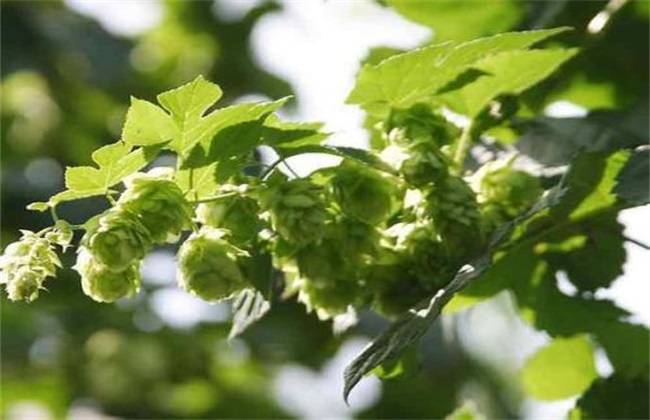
How to Propagate Hops? Detailed Explanation of Propagation Methods and Key Operation Points
Propagation Methods of Hops
条件筛选