-
Are Hybrid Seeds Good? Open-Pollinated Seeds: Meaning and Differences Explained
There are three types of seeds: hybrid, open-pollinated, and heirloom. Stark Bros carries only non-GMO heirloom seeds, and all of them are open-pollinated. Below are the definitions and examples of each seed type, to clear up the common confusion surrounding them. Hybrid
-
Can Lycopene Help with Weight Loss and Skin Whitening? Sharing Tomato Drink Recipes
After tomatoes topped the list of the "Top Ten Trendy Foods" in the American magazine Time long ago, they caught consumers' attention, and together with the promotion of their cancer-preventing and weight-loss benefits, they became the hottest product for a time. So what nutritional value do tomatoes have? In the
-
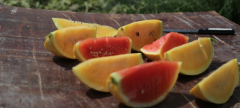
What are the two colors of the flesh of the new open-field watermelon variety Golden Melon watermelon?
Introduction to new watermelon varieties. Do you know of a watermelon variety called Golden Melon? This type of watermelon has a golden-yellow rind, so everyone calls it Golden Melon. You would never guess that the flesh of the Golden Melon comes in two colors: one is yellow rind with yellow flesh, and the other is
-
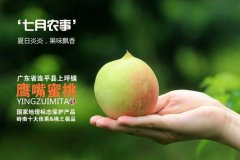
Lianping Shangping eagle-beak honey peach opens for picking and goes on the market in July, 10 yuan per jin, reachable by navigation
If you look for the Lianping eagle-beak honey peach base on your phone's map and navigation apps, you will find three results, but in fact the results are not accurate; two of the places, when you get there, have only a few mu of peach trees past their season. If you search for Lianping Shangping eagle-beak honey peach on your phone, you will find that it is still 12 km after getting off the expressway. In fact, as soon as you exit the expressway, you get the feeling of having entered the eagle-beak honey peach production area. Right away the roadside is lined with eagle-beak peaches, and you do not really need to enter the base itself; just find one or two orchards right by the roadside, 10 yuan per jin, while the price on the Guangzhou market at the same time is 11.8, but in the market you will find that in fact many are not from Lianping eagle-beak honey peaches and are replaced with those from other places.<br /> <img alt="Lianping Shangping eagle-beak peach" src="/uploads/allimg/190730/1-1ZI0142GLY.jpg" style="width: 730px; height: 487px;" /><br /> <br /> <div> The soil in Lianping County, Heyuan City is acidic, and winter is not very cold and not long, an environment relatively suitable for honey peach growth. Each town, based on this natural resource advantage and combined with the local farmers' traditional habit of growing honey peaches, put forward the rural economic development idea of “hope lies in the mountains, wealth lies in the mountains”. Among the many fruits of Lianping, the eagle-beak honey peach is famous both inside and outside the county for its large fruit, clear sweetness, crispness and honey flavor, and is favored by consumers. Through extensive market surveys and research by agricultural experts from the province, it was confirmed that the honey peaches of Shangping Town and Beitou Town are rare fine varieties in the whole province. Therefore, honey peach planting was vigorously promoted, and honey peach production was designated as the characteristic economy of Lianping County's “one town, one product”.</div> <div> </div> <div> Before 2002, Shangping Town, Lianping County, Heyuan City had 4,000 mu of honey peach base. In 2003, Shangping Town completed the land preparation and planting task for 6,000 mu of eagle-beak peaches and began preparing to build the 10,000-mu honey peach base in the Jiulian Mountains. In order to give full play to the brand effect and realize industrialized operation, Shangping Town, with strong support from the county party committee, county government and relevant departments, set off a boom in honey peach planting throughout the town. Starting in September 2003, in less than three months, Shangping Town completed 4,350 mu of land preparation and hole digging, and base construction was unprecedentedly fast. The masses' enthusiasm for planting honey peaches ran high; in Zhongcun and Gukeng of Shangping, nearly 1,000 people went up the hills every day to prepare land and dig holes. From 2003 to 2005, Shangping Town mobilized the masses to expand planting by more than 10,000 mu. The honey peach planting project in Shangping Town implemented the policy of unified planning, contiguous development and household operation, which fully mobilized the enthusiasm of farmers. With the Jiulian Mountain eagle-beak honey peach base as the center, it spread to surrounding villages, forming a pattern of “every village has a base, every household has an orchard”, reaching more than 1 mu of peach orchard per person, making Shangping Town a veritable honey peach specialized town.<br /> </div> <div> At the same time, at the end of 2002, Beitou Town, Lianping County, Heyuan City also began planting eagle-beak peaches, and by 2005 several hundred mu of fields or hillside land had also been planted with eagle-beak peach trees. To this day, planting in Beitou Town has also reached over a thousand mu. This completed the goal of the eagle-beak peach base radiating toward the northwest of the Jiulian Mountains.</div> <div> In 2005, Shangping Town was rated by the relevant national departments as “China's Hometown of Eagle-Beak Honey Peach”. In October 2011, at the “Top Ten Excellent Fruits of Lingnan” award ceremony held in Deqing, Zhaoqing, the Lianping eagle-beak honey peach received this honor. The “Lianping eagle-beak honey peach” is currently the best peach variety in Guangdong and even southern China, and has been praised by agricultural experts as the “best of peaches”.</div> <br /> <br />
-

How to Grow Lettuce in Open Fields? A Detailed Guide to Cultivation Techniques
Lettuce is a vegetable we often eat; it is usually stir-fried or used as a side ingredient in soups, and it can also be cooked in hot pot. So do you know the cultivation techniques for open-field lettuce? 1. Cultivation techniques for open-field lettuce. When cultivating lettuce in the open field, soak the seeds before arranging planting. After the seedlings
-
How to grow celtuce (stem lettuce) in open fields? Detailed growing techniques
Summary Variety selection: In early spring, choose cold-tolerant varieties, while in summer and autumn, choose heat-tolerant and bolt-resistant varieties. Growing method: Raise seedlings first, then transplant; per mu, apply an appropriate amount of decomposed manure, NPK compound fertilizer, and potassium sulfate. Water management: Keep the soil moist
-
Key Technical Points and Management Methods for Open-Field Vegetable Cultivation
Abstract Select vegetable varieties suitable for local cultivation, then carry out land preparation. Nutrient-pot seedling raising, substrate seedling raising, and vegetable grafting techniques may be used, and the succession of crops should be arranged reasonably during this period. Apply organic and inorganic compound fertilizers and vegetable-specific fertilizers, and strengthen comprehensive pest and disease control.
-
How to grow muskmelon in open fields? Detailed explanation of key cultivation techniques
Summary Time: South of the Huai River, the sowing period is from early to mid-February to early March, while in Guangdong, Guangxi, Hainan, Yunnan and Guizhou the sowing period is from early July to July 25. Soil: fertile, loose, high-lying plots. Varieties: Xialong, Ruoren, Xuefengmi No. 2, etc. can be selected. Planting
-
Fruit Radish Planting Time and Cultivation Techniques
Summary Open-field planting time: spring from mid-to-late March to late April, or autumn from early August to early October. Greenhouse planting time: mid-October to early March. Open-field cultivation techniques for fruit radish: choose fertile, well-drained sandy loam soil for planting, deep plow the soil
-
Taro Planting Time and Methods: When Is the Best Time to Plant
Summary Planting time: open-field cultivation can be done in early March, while plastic-film cultivation can be done before February. Planting method: it is best planted in fertile, deep, clayey soil with strong water retention; apply 2000 kg of organic fertilizer and 60 kg of 48% potassium sulfate compound fertilizer as base fertilizer; then sow the seed taro
条件筛选