-

What should be noted in mechanized potato harvesting
When harvesting potatoes mechanically, in order to save time, labor and effort, improve the economic benefits of machine use and the marketable rate of potatoes, the following issues should be noted. (1) About 10 days before the determined harvest date, the vines should first be rolled or cut (the method of rolling vines is to thread old tires onto an axle in a string and pull them with a tractor to roll the vines), so that the potato skins age and are prevented from being damaged during harvest, which would affect the quality of marketable potatoes. (2) The number of potato pickers matched to each machine unit should be reasonable. Small harvesters are generally matched with
-
What technical points should be noted for indoor cultivation of oyster mushrooms?
Oyster mushrooms are welcomed by people for their delicious taste, short production cycle and ease of cultivation. Especially in Northeast China, where the climate is cold in winter and spring and fresh vegetables are scarce, growing oyster mushrooms indoors to supply the market is truly a good way to make money. However, a prominent problem in indoor cultivation of oyster mushrooms is that the air temperature is not easy to control and the surface layer of the substrate dries out easily, affecting oyster mushroom production. After repeated trials, the author believes that casing soil cultivation gives good results. 1. Mushroom house selection. Abandoned or temporarily unused houses can be chosen as the mushroom house (they must be repainted with limewater), and heating and ventilation facilities are required.
-
What key points should be noted for late-planted rice when transplanting into fields prepared with stored water?
The general requirement for transplanting late-planted rice into fields prepared with stored water is to seize the water, prepare the field, and transplant the seedlings, increasing the number of hills, seedlings, and panicles. For rice fields transplanted with stored water, as soon as rainfall occurs or another water source becomes available, measures such as blocking, diverting, and pumping water should be taken immediately to seize the water, prepare the field, and transplant the seedlings. For late-planted fields, planting density should be increased. For seedlings aged 60-70 days, transplant more than 13,000 hills per mu (8 x 6 cun), with two seedlings per hill (2 grains of rice); for seedlings aged over 70 days, transplant more than 15,000 hills per mu (8 x 5 cun), with about 10 seedlings per hill, so that the number of seedlings planted per mu reaches 150,000
-
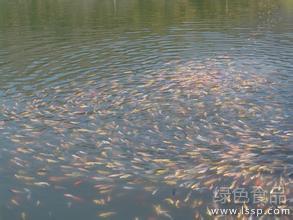
What should be noted when cultivating fish fingerlings in summer? Good-quality fingerlings are the foundation of successful fish farming
Good-quality fingerlings are the foundation of successful fish farming: precautions for cultivating fish fingerlings in summer
-
What technical points should be noted when introducing tea plants?
Tea plant introduction is simple and easy to achieve results. Since the 1950s, the area planted with improved varieties has been expanded. For example, the Yunnan large-leaf variety was introduced to Guangdong, Guangxi, Sichuan, Guizhou and other provinces and autonomous regions, and the area has reached more than 1 million mu. Fujian, Zhejiang and other provinces used introduced and acclimatized Yunnan large-leaf varieties as original material to breed a group of excellent high-yield new varieties. New progress has been made in introducing tea from the south to the north. The northernmost boundary of tea plant distribution in China has shifted from about 34°40'N to near 37°49'N, advancing northward by more than 350 km. Tea varieties have also been introduced successively from the former Soviet Union, Ja
-
What issues should be noted in the efficient cultivation of kernel apricots?
Kernel apricot is one of the main dried fruits in northern China, with excellent economic returns. In recent years, due to the development of almonds, the comparative benefit of kernel apricots has somewhat declined. To improve the production efficiency of kernel apricots, comprehensive measures should be adopted. 1) Develop in suitable sites. Kernel apricots are drought-tolerant, tolerant of poor soil, and widely adaptable, but for efficient production, orchards must be established in locations with deep soil layers, fertile soil, and sheltered, south-facing slopes. Because kernel apricots bloom early and are susceptible to late frost damage, avoid establishing orchards on mountain ridges, wind gaps, and low-lying areas. 2) Pay attention to configuring pollinizer trees.
-
What should be noted when mixing chicken daily rations?
There are many kinds of chicken feed; which feed should be the main one? How can it be mixed scientifically and rationally while also being low in price? 1. First, you must understand what nutrients the chickens you raise need. Because the requirements of various chickens differ, such as light-layer chickens, heavy-layer chickens, or meat chickens, chicks, older chickens, or breeding chickens, the nutrients needed by various chickens are not completely the same in quantity and quality. Chicken farmers should consult the corresponding materials according to chicken breed and size to determine the required nutrients. 2. You need to know which type of feed produced locally is more abundant and lower in price
-
What points should be noted when selecting a Cairn Terrier?
(1) First look at some materials introducing this breed of dog, to understand its appearance characteristics and basic traits, so as to have a clear target and avoid being cheated by inferior goods, causing financial loss. (2) Cairn Terriers are mostly purchased as pets, so special attention should be paid to the choice of coat color, with red, black-brown, gray or tawny being preferable. (3) The coat on all parts of the body should also meet the following requirements: the hair on the ears should preferably be dark brown, and the hair on the muzzle should preferably be
-
What should be noted when processing dog skin
1. Remove all meat and greasy matter from the dog skin, lay it flat on a wooden board and rub it with coarse sandcloth or a brick until the roots of the coarse hairs are slightly visible. Take 250 g of tea-oil bran and add 2500 ml of water, bring to a boil and pour into a basin. After it cools, put in the dog skin and soak for 12 hours, then take it out and scrub it repeatedly with soap to remove the odor. 2. Take 500 g of alum and add 2500 ml of water, bring to a boil and pour into a basin. After it cools, fully immerse the dog skin, take it out after about 24 hours, place it hair-side down on a wooden board and stretch it tight,
-
What should be noted when harvesting garlic scapes?
Generally, when the garlic scape emerges from the leaf sheath and begins to bend, it is the suitable time to harvest the garlic scape. Harvesting early or late has a great impact on the yield and quality of the garlic scape. If harvested too early, the yield is not high, it breaks easily, and its marketability is poor. If harvested too late, although the yield can be increased, it consumes too many nutrients and affects the growth and development of the garlic bulb, and the garlic scape tissue ages and its fiber increases; especially the base of the garlic scape ages and becomes inedible. Therefore, it is best to harvest garlic scapes at noon and in the afternoon on sunny days. At this time the plants are somewhat wilted, the leaf sheath and the garlic scape separate easily, and the leaves are tough and not easy to break, which can
条件筛选