-
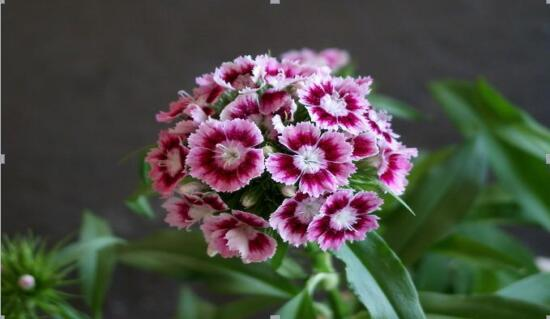
How to grow Dianthus chinensis and things to note
1. Light: Dianthus chinensis needs 6 to 8 hours of light every day. In midsummer, full sun should be avoided, and exposure to blazing sun should be avoided. 2. Soil: Dianthus chinensis should be planted in fertile, alkaline clay soil that drains well and has small holes in the base. It can be grown in a mixed soil of garden soil, compost and sand at a ratio of 6 to 2 to 2.
-

-

What care points should be noted when growing Dracaena reflexa?
1. Fertilizer: Dracaena reflexa is not demanding when it comes to fertilizer. During the growing season, either chemical fertilizer or liquid organic fertilizer can be applied as a top dressing, but when applying chemical fertilizer, use small amounts at a time and apply frequently, and water promptly after fertilizing. In addition, when repotting and changing the soil each year, a certain amount of well-rotted organic fertilizer can be added as a base fertilizer to ensure good growth.
-
How to grow Ornithogalum caudatum and things to note
Obtaining seeds: First we need to obtain the seeds of Ornithogalum caudatum. We can select mature seeds from the outside of the rhizome of a mature plant; mature seeds grow to about the size of a coin. Planting and cultivation: Bury the seeds in flower soil, spray an appropriate amount of water, and after about a month the seedlings will break through the soil.
-
What are the key points to note when growing Schefflera?
Pruning: To promote the growth of Schefflera and adjust its plant shape, it needs to be pruned frequently. Diseased branches, dead branches and rotted branches that appear on Schefflera should also be cut off. Pests and diseases: Schefflera is susceptible to leaf spot and anthracnose; when the air is dry, scale insects may also appear, and when spring meets summer, red spider mites are likely to appear.
-
What are the key points to note when growing Strelitzia (bird of paradise)?
Light requirements vary with the seasons. In spring and autumn, the pot should be placed in a sunny spot to grow, while in winter it should receive more sunlight, otherwise it will directly affect leaf growth and flower color. But in summer, because the sunlight is too intense, the plant should be kept under a shade awning to prevent the leaves from being scorched by the burning sun
-

What are the key points to note when transplanting watermelons? Key points explained clearly in one article
Points to note when transplanting watermelons
-
What are the key points to note when growing Calathea makoyana?
Calathea makoyana has relatively shallow roots, so it is best to choose a wide, shallow pot; this way root growth is not hindered, and when the leaves spread out during the day the plant does not look top-heavy. The potting soil should be loose, breathable, well-draining, nutrient-rich and slightly acidic. Calathea makoyana is generally repotted in spring when it is divided, once every 1 to 2 years.
-

What points should be noted when planting Asparagus cochinchinensis?
Points to note when planting Asparagus cochinchinensis
-
What are the key points to note when growing Myrtus? These few points are crucial
First of all, Myrtus has certain temperature requirements, because its place of origin is in the tropics and it likes a high-temperature, high-humidity environment. The surrounding temperature must not be lower than ten degrees, so in summer we can move Myrtus outdoors and place it in a semi-shaded spot to enhance air convection, and spray it two to three times a day. When winter comes
条件筛选