-

What are the biological characteristics of the nameko mushroom? A detailed explanation
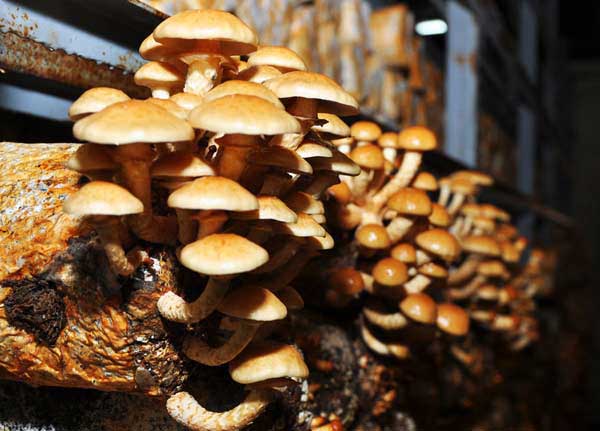
The nameko mushroom, also known as sliding mushroom and shiny cap pholiota, is called nameko in Japan. Scientific name pholiotanamekio. In botanical classification, it belongs to the Fungi kingdom, Basidiomycota, Basidiomycetes, Agaricales, Cortinariaceae, and the genus Pholiota. It is a rare variety, originally from Japan; since the mid-1970s, it began in the southern region of Liaoning Province, and the current main production areas are northern Hebei, Liaoning, Heilongjiang, and other places. Since our county began large-scale production in 1989, utilizing local resource advantages and climatic advantages, and through continuous technological innovation by the broad ranks of scientific and technical personnel, the nameko
-
Special Lecture on Cultivation and Management Techniques for Nameko Mushrooms
The Chinese name for the nameko mushroom is Pholiota microspora or Pholiota nameko. Nameko is its common name, given because its cap surface has a layer of slime, making it slippery when eaten and difficult to pick up with chopsticks. In some provinces it is called huazi mushroom. Nameko mushrooms are nutritious and delicious, and have an inhibitory effect on tumors. Varieties and spawn Varieties: classified by fruiting temperature into: extremely early-maturing variety, fruiting temperature around 20°C, light brown in color. Early-maturing variety, fruiting temperature around 15°C, brown. Medium-maturing variety, fruiting temperature around 10°C
-
Detailed explanation of the production process and technical operations at each stage for the nameko mushroom
Production process: ingredient mixing - sterilization - tray filling - cooling and inoculation - mycelial growth - summering - mushroom management - harvesting and processing - flush transition - insulation for fruiting. 1. Ingredient mixing: the most critical requirement for ingredient mixing is to mix raw materials of different compositions evenly, mix dry and wet materials evenly, so that the nutritional ratio of each tray of substrate is uniform, with a water content of 60%. 2. Sterilization: there are mainly two sterilization methods for nameko mushroom substrate: bag steaming and loose material steaming. The vast majority of growers in all areas of the county still follow these two methods, but each has its advantages and disadvantages, and attention should be paid when choosing.
-
Comprehensive Control Methods and Technical Key Points for Mold Contamination in Nameko Mushroom Cultivation
Nameko mushroom, also known as slippery mushroom, has a delicious flavor and is rich in nutrients, enjoying a high reputation on the international market. In recent years, the nameko mushroom industry in our county has developed rapidly, but mold contamination occurs commonly, causing reduced yields in mild cases and total crop failure in severe cases. Therefore, whether mold contamination can be effectively prevented is the key to improving the quality and yield of nameko mushrooms. 1. Types of mold and their damage In nameko mushroom cultivation, common contaminating molds include Trichoderma, Penicillium, Neurospora, and Aspergillus. These molds rapidly reproduce and spread under conditions of high temperature, high humidity, and poor ventilation, and in the later stage form green
-
Detailed Explanation of Harvesting and Processing Techniques for Nameko Mushrooms
7-10 days after the mushroom buds emerge, when the stems are 4-5 cm long and the caps are about to open, they should be harvested promptly. The harvested mushrooms should immediately have their aged root portions cut off, then be sold fresh or sent to a factory to be made into canned products or processed into brine mushrooms. If processing into brine mushrooms, a 10% salt solution can be used; after bringing it to a boil, pour in the fresh mushrooms and stir them up and down for about 10 minutes. When the pot is boiling and rolling, quickly scoop them out, place them in cold water to cool, and finally pickle them in a saturated salt solution of 20 degrees Baume. Alternatively, use salt equal to 35% of the mushroom weight to layer mushrooms and salt in a jar, one layer of mushrooms and one layer of salt. After filling, sprinkle 2
-
Key Technical Points for Over-summering Management of Semi-cooked Substrate Cultivation of Nameko Mushrooms
In the Dandong area, from mid-June each year, the weather shifts from dry and muggy to the continuous rain season, with persistent drizzle and no adequate sunlight for more than 10 days, high temperatures and high humidity, resembling "sauna" weather. From mid-July until the opening of the beds, there is again scorching sun, and the spawn bags in a high-temperature, high-humidity environment are highly prone to spawn degeneration or invasion by pests and diseases, causing the spawn beds (bags) to become soft and rotten after opening or after the first watering, resulting in varying degrees of economic loss for mushroom growers. Based on our cultivation practice in recent years, we have mastered a set of over-summering management methods. The key management points are introduced as follows:1
-
Detailed Explanation of Key Points for High-Yield Cultivation Techniques of Nameko Mushroom
Nameko mushroom, also known as Pholiota microspora, is mainly cultivated using sawdust as the substrate, though log cultivation is also used, and the cultivation methods are diverse. Developing Nameko mushroom production is a wealth-building project with low investment, quick returns, high yield, good benefits, and low risk. The finished Nameko mushroom products can be sold domestically and also exported to earn foreign exchange, making it a path to wealth for mountain farmers to escape poverty and achieve moderate prosperity. 1. Site: Choose a flat terrain, well-ventilated, clean environment, and pollution-free location for cultivation. The mushroom house can use wooden poles as the frame, surrounded by plastic film or straw curtains
-
Key Technical Points and Detailed Methods for Block Cultivation of Nameko Mushroom
Nameko mushroom, also known as Pholiota nameko, is a low-temperature wood-rotting edible fungus. It contains nutrients such as protein, fat, carbohydrates, and amino acids. When eaten fresh, its flesh is tender and its flavor is delicious. At the same time, nameko polysaccharides have a certain inhibitory effect on tumors. Therefore, nameko is a fungus with both edible and medicinal value. The key technical points for nameko cultivation are briefly described as follows. 1 Growth and development conditions 1.1 Temperature The optimum temperature for the mycelial stage is 20-24°C. During the fruiting stage, different temperature-type varieties have different fruiting temperature requirements. Early
-
Detailed Explanation of Key Techniques for High-Yield Cultivation of Nameko Mushrooms
High-Yield Cultivation Techniques for Nameko Mushrooms
条件筛选