Detailed Explanation of Key Techniques for High-Yield Cultivation of Nameko Mushrooms
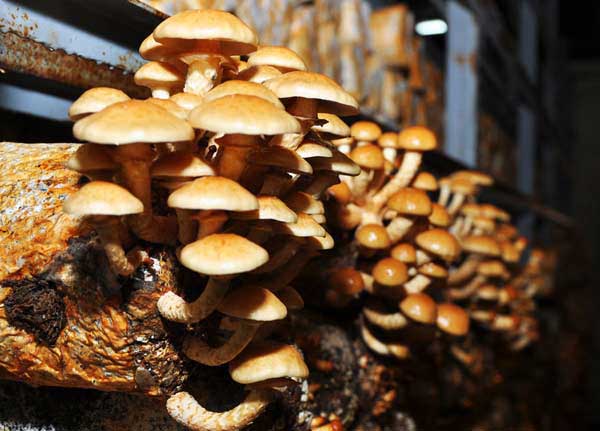
The nameko mushroom, also known as huagu or guangmao linsan, is called nami mushroom in Japan. In botanical classification, it belongs to the kingdom Fungi, subphylum Basidiomycotina, class Basidiomycetes, order Agaricales, family Cortinariaceae, genus Pholiota. It is a rare variety, originally from Japan. Since the mid-1970s, it began to be cultivated in southern Liaoning Province, and the current main production areas are northern Hebei, Liaoning, Heilongjiang and other places.
Biological Characteristics
1. Nutrition. The nameko mushroom is a wood-rotting fungus. In nature, it mostly grows on broadleaf trees, especially on stumps and fallen logs of Fagaceae. For artificial cultivation of nameko mushrooms, agricultural and sideline products rich in lignin, cellulose, hemicellulose and protein, such as sawdust, straw, rice bran and wheat bran, are used as the culture material. As for the nameko mushroom's requirement for growth factors, no additional supplementation is needed in commonly used formulas with rice bran and wheat bran as the substrate.
2. Temperature. The mycelium of the nameko mushroom can grow between 5°C and 32°C, with the optimum temperature being 22°C to 25°C. The fruiting body can grow between 5°C and 18°C; above 20°C, the fruiting body cap is thin, the stipe is slender, and the cap opens early; below 5°C, growth is slow and basically does not occur.
3. Light. Nameko mushroom cultivation does not require direct light, but there must be sufficient scattered light. The mycelium can grow normally in a dark environment, but light has an effect on inducing fruiting in physiologically mature nameko mycelium. During the fruiting stage, a certain amount of scattered light should be provided. If the light is too dim, the cap color is pale, the stipe is slender, the quality is poor, and the yield will also be affected.
4. Humidity. The water content of the mycelium culture material is preferably 60% to 65%. During the fruiting body formation stage, the water content of the culture material is best at 75% to 80%, and the relative air humidity should be 85% to 95%.
5. Air. The nameko mushroom is also an aerobic fungus, and its oxygen demand is related to respiratory intensity. In early spring, at the beginning of inoculation, the temperature is low and the mycelium grows slowly, so a small amount of oxygen can meet the need; as the temperature rises, mycelial metabolism accelerates, respiration increases, and mycelial mass increases, so attention must be paid to ventilation of the mushroom house and air exchange inside and outside the culture bags. During the fruiting stage, the fruiting body has very vigorous metabolism and needs fresh air even more. If the carbon dioxide concentration in the environment exceeds 1%, the fruiting body cap will be small, the stipe slender, and the cap will open early.
6. pH. The pH of the culture material directly affects the activity of cellular enzymes. The mycelial growth of the nameko mushroom requires a pH value of 5 to 6. The culture material made from sawdust, wheat bran and rice bran generally has a pH of 6 to 7, but after heating and sterilization the pH value will decrease, so there is no need to adjust the pH value again.
High-Yield Cultivation Techniques
1. Cultivation Season
The nameko mushroom is a low-temperature, variable-temperature fruiting fungus. In northern China, spring planting and autumn fruiting are generally adopted. Semi-cooked material cultivation is suitable, and it is best to choose the early spring season when the temperature is below 8°C. The optimal sowing period is from mid-February to mid-March.
2. Selection of Excellent Spawn
① Variety selection. According to differences in fruiting temperature, nameko mushrooms are divided into very early-maturing varieties (optimum fruiting temperature 7°C to 20°C), early-maturing varieties (5°C-15°C), mid-maturing varieties (7°C-12°C) and late-maturing varieties (5°C-10°C). Producers should choose excellent varieties according to local climate, cultivation method and purpose. At present, the main varieties cultivated in the main production areas mainly include Zaofeng 112, c3-1, etc.
② Spawn selection. When selecting spawn, it is required that it is not degenerated and not mixed. In appearance, the mycelium should be white, fluffy, dense, uniform and robust; the spawn age should be 50-60 days, not aged, not shriveled, and without water accumulation. When selecting spawn, different varieties should be used in combination, and a single variety should not be used alone, so as to prevent fruiting from being too concentrated and affecting product sales.
3. Construction of the Fruiting Shed for Nameko Mushrooms
A good cultivation site is the basic condition for the normal growth and development of nameko mushrooms. Under the current production level and economic conditions in rural areas, idle houses and sheds are generally used as mushroom houses in a simple way, and nameko mushrooms are also cultivated in air-raid shelters, caves and other places, and most adopt dual use of one site, that is, it is both a mycelium culture room and a fruiting room for the growth and development of fruiting bodies.
At present, standardized production generally uses louver-type fruiting sheds, with a shed height of 3.5 m. The cultivation racks in the shed can be built in layers with wooden poles or bamboo poles. Generally, the rack height is 1.7 m to 1.8 m, the width is 0.6 m, the bottom layer is 0.2 m from the ground, and the spacing between shelf layers is 0.3 m to 0.4 m. It is advisable to set seven layers, with a 0.8 m aisle left in the middle. A structure using cement as upright posts and four No. 8 iron wires stretched as crossbars can also be used.
4. Commonly Used Formulas
① Sawdust 77%, wheat bran (or rice bran) 20%, gypsum 2%, superphosphate 1%, pH 6.0-6.5, water content 60%-65%.
② Currently promoted formula: sawdust 84%, wheat bran or rice bran 12%, corn flour 2.5%, gypsum 1%, lime 0.5%, pH 6.0-6.5, water content 60%-65%.
5. Mixing Materials
Weigh the culture material according to the proportion, mix it evenly, and add water according to the dryness or wetness of the raw materials so that the water content reaches 60%-65%, then pile it and let it sit for 30 minutes.
6. Sterilization
① Use the bulk material sterilization steam type (aerated boiler) layer-by-layer material scattering sterilization method. First spread a layer of gunny bags on the steamer tray to prevent material leakage. After the steam rises, evenly spread the culture material on the steamer tray to a thickness of about 6 cm to 8 cm (do not press it with hands or shovels). When the steam rises strongly, use a shovel to scatter the material in layers, ensuring even scattering, and press down the steam. Load layer by layer in this way, filling to 8/10 full, that is, the material surface should be 20 cm from the upper opening. Cover, press firmly, apply high heat until reaching 100°C, then maintain for 2 hours, then let it sit for 30 to 40 minutes, and then take it out of the pot while hot. Sterilization must be thorough. Each pot is suitable for sterilizing 200-500 trays (note: when coarse sawdust is used as the main material, the sterilization time should be extended).
② Tray wrapping. First place the mold on the pallet, soak the pre-cut film in a 800-fold dilution of Bali solution or in a 0.1% potassium permanganate solution for 10 minutes, then place it on the mold and spread it well. Put the sterilized culture material into the tray while hot. The temperature of the culture material must not be lower than 80°C. Press the culture material in the spawn tray tightly, compact it, and wrap it well.
7. Inoculation
① Disinfection of the inoculation room and preparations. First, disinfect the inoculation room well. Use 5 g to 8 g of disinfectant box per cubic meter for key disinfection. Operators should make preparations before inoculation according to operational requirements, spray the culture trays and all tools for handling and inoculation with 5% Lysol; close doors and windows to keep the indoor air still.
② Inoculation method. When the material temperature drops to about 25°C, inoculation can be carried out according to aseptic operation requirements. Use 200 g or 250 g of spawn per standard tray. Remove the old skin and primordia, break the spawn into pieces the size of apricot kernels, open the film, sprinkle the spawn on the material surface, press it appropriately with a sterilized pressing board, fold the film in half and roll both ends upward tightly to prevent water evaporation. Production practice has shown that appropriately increasing the inoculation amount allows the mycelium to grow rapidly and can prevent the early occurrence of contaminating microorganisms.
8. Mycelium Growth Management
① Management during the mycelial germination and colonization period. In northern China, inoculation of nameko mushrooms is generally arranged to be completed from mid-February to mid-March. At this time, the daily average temperature is about -6°C to 5°C, which has not reached the minimum temperature above 5°C required for mycelial growth. At this time, artificial heating is needed. If trays are stacked outdoors for mycelial growth, the mushroom stacks should be surrounded with corn stalks or rice straw at night. Promote mycelial colonization, and measure the material temperature once every three or four days. When the temperature of the spawn block is above 12°C, the spawn trays should be placed on racks individually.
② Management during the mycelial expansion and surface-covering period. The colonized mycelium gradually turns white and extends to the surroundings. As the temperature rises, the mycelium grows faster and grows into the material, but as the temperature rises, contaminating microorganisms will also spread and cause contamination. At this stage, prevention of contamination should be the focus. Spawn trays that have not been put on racks should be arranged in a “pin” shape, with stack height below 8 layers. The temperature in the shed should be controlled at 8°C to 12°C. Turn and restack the trays once every five to seven days, and increase ventilation.
③ Management during the mycelium full-growth period. Entering mid-April, the temperature rises, and the mycelium has grown over the entire tray. At this time, mycelial respiration strengthens, oxygen demand increases, and heat is released, so the temperature needs to be controlled at about 18°C, and ventilation should also be increased.
④ Summering management. When the high-temperature season arrives in July and August, the nameko mushroom has generally formed a yellow-brown waxy layer, the spawn block is elastic, and its resistance to adverse environments is enhanced. However, if the temperature exceeds 30°C, the mycelium in the spawn block will die due to high temperature and insufficient oxygen supply. Therefore, at this stage, shading should be strengthened, and ventilation should be provided day and night. In addition to opening skylights or ventilation tubes on the shed roof, double-layer shade nets or water-spraying cooling facilities should also be installed. In addition, insect-proof nets should be installed at all ventilation openings to prevent adult insects from flying in or larvae from causing damage. When necessary, low-toxicity, residue-free biological pesticides can be sprayed, such as 20% deltamethrin or cypermethrin, etc.
9. Management during the Fruiting Period
In mid-August, when the temperature stabilizes at about 18°C, the nameko mushroom has reached physiological maturity, and tray-opening and fruiting management can be carried out.
① Scoring the mycelium. If the mycelial film on the spawn block is too thick, it is not conducive to fruiting. A bamboo knife or iron nail should be used to score lines on the surface of the spawn block, cutting vertical and horizontal lines into squares about 2 cm wide. Cut through the mycelial film, with moderate depth, generally about 1 cm deep is sufficient. If the scoring is too deep, the spawn block is prone to breakage. Then place it flat or upright on the rack, spray water, and adjust the room temperature to about 15°C to promote fruiting body formation.
② Temperature management. The nameko mushroom is a low-temperature species. Under conditions of 10-15°C, the fruiting body grows more suitably. Above 20°C, fruiting body formation is slow, the cap is small, the stipe is slender, the flesh is thin, and the cap opens easily. The fruiting body has strong resistance to low temperature and can also grow at about 5°C, but not vigorously. Under variable temperature conditions, the fruiting body grows extremely well, with more mushrooms produced, larger fruiting bodies, thicker flesh, good quality, and robustness without contaminating microorganisms. After September, in late autumn, the natural temperature difference is large, so the natural temperature difference should be fully utilized, management should be strengthened, and more mushrooms should be promoted. At night, when the temperature is low, the temperature of the fruiting room should not be lower than 10°C; at noon, when the temperature is high, attention should be paid to ventilation so that the temperature of the fruiting room does not exceed 20°C.
③ Humidity management. Water is one of the important conditions for high yield of nameko mushrooms. To ensure the water needed for the growth and development of nameko fruiting bodies, water should be sprayed appropriately to increase the water content of the spawn block (about 70%) and the air humidity (about 90%). Water should be sprayed at least 2 times a day. The amount of water applied should be determined according to the indoor humidity level and the growth of the fruiting bodies. Air humidity should be maintained between 85% and 95%. In dry weather with excessive airflow, the number of water sprays can be appropriately increased. The more fruiting bodies occur, the more vigorously the fruiting bodies grow, the greater the metabolic capacity, and the more the water application should be increased. Points to note when spraying water: when spraying water on the spawn trays, use a sprayer to spray finely and frequently, so that water slowly penetrates into the spawn block through the surface scoring lines. Do not spray rushing water or large amounts of water. When spraying water, hold the sprayer head higher to prevent water from impacting the fruiting bodies. In winter, if heating equipment is used in the fruiting room, do not spray water before heating; spray water 2 hours after the room temperature rises.
④ Ventilation management. During the fruiting period, mycelial respiration increases, and oxygen demand increases significantly. Therefore, the indoor air must be kept fresh. When ventilating, pay attention to changes in temperature and humidity. During the fruiting period, if the natural temperature is relatively high and indoor ventilation is poor, it will cause failure to fruit or an increase in deformed mushrooms. In addition, when fruiting occurs in seasons with higher temperatures, ventilation openings and exhaust holes must be opened day and night to make the air convect and ensure sufficient oxygen indoors for the needs of the fruiting bodies.
⑤ Light management. The fruiting bodies of nameko mushrooms need scattered light during growth. The spawn blocks should not be placed too densely, and the room should not be too dark. If there is not enough scattered light, the fruiting body color will be pale and the stipe slender.
10. Management during the Harvest Period
Nameko mushrooms should be harvested before the cap opens. Harvesting after the cap opens not only reduces the commercial quality of the nameko mushrooms, but also causes infection of the spawn tray because spores fall on the spawn tray after the cap opens. The harvest standard is determined according to the requirements of the buyer. After harvesting the first flush of mushrooms, water should be stopped for 2 to 3 days to allow the mycelium on the mushroom tray to recover and accumulate nutrients, so that the water content of the mushroom tray reaches 70%, the air humidity in the shed reaches 85%, ventilation is strengthened, and the day-night temperature difference is increased to promote the formation of the second flush of mushrooms.