-

What are the characteristics of miniature bonsai, and which plants are suitable for growing them?
Miniature bonsai is also called palm bonsai, named so because the pot does not exceed the size of a palm. The height is generally less than 10 cm, making it an extremely small bonsai. Because of its small size and ease of display and arrangement, it is deeply welcomed by people at home and abroad. At present, the style of miniature bonsai has become popular throughout the world. Miniature bonsai already existed in ancient China. In 1972, on the corridor mural of the tomb of Li Xian, Crown Prince Zhanghuai of the Tang Dynasty (son of Wu Zetian), unearthed at Qianling in Shaanxi, there are two palace ladies holding potted plants. This is the prototype of ancient Chinese palm potted plants, which shows
-
Soilless Cultivation Methods and Techniques for Miniature Ficus Bonsai
Ficus is native to China, India and other places, and is commonly cultivated in Guangdong, Fujian and other areas of China. Ficus is very easy to propagate by cuttings. During the growing season, in combination with shaping, cut off a portion of a branch, disinfect it with plant ash, and after the sap has drained, insert the cutting into sand; after one and a half months it will survive and take root. Once the root system grows normally, it can be potted for cultivation and care. After potting, with careful management, after one year of growth the tree shape will be full with luxuriant branches and leaves. In the spring of the second year, soilless cultivation can be carried out to cultivate a miniature bonsai. First, the soil
-
What are the common diseases of miniature pigs? Detailed explanation of prevention and treatment methods
Miniature pigs in China generally belong to relatively old local extensive-type breeds, with characteristics such as strong adaptability, tolerance to coarse feed, and strong stress resistance. As long as vaccines are injected regularly and feeding management is strengthened, the occurrence of infectious diseases can be avoided. Prevention of common infectious diseases: There are no longer many common infectious diseases in China, and most have been brought under control, with only occasional outbreaks and epidemics, which are generally handled by culling. Since the economic value of treatment is not great, preventing the occurrence of diseases is one of the three key links in doing a good job in miniature pig breeding production. Doing a good job in the immunization of several common infectious diseases in the pig herd
-
Miniature bonsai are petite and exquisite, revealing the beauty of nature within a tiny space.
For the selection of small stumps, choose plants with strong vitality that are easy to tame into trunks and twisted, varied forms. Also pay attention to selecting varieties with small leaves, strong sprouting ability and shade tolerance. 1. Seek out old trunks and small branches of varied forms on a certain tree stump for air layering (that is, sleeve propagation), mostly carried out in early to mid-March during the plum rain season. 2. Seek out tree stumps with well-developed bare roots, and near their root area select crooked, ancient-looking, robust ones with small branches and bare roots, and separate them from the tree stump (best done in late autumn), but do not transplant them immediately; wait until the following spring when the separated plants sprout and grow branches.
-
How do potted miniature chrysanthemums overwinter? Master these overwintering methods
1. Soil burial, or burying the lower part in soil while covering the upper part with dry leaves. Before the frost season arrives, potted miniature chrysanthemums can be kept in their pots or removed from them, and for the burial covering use plain wet soil. First, it is forbidden to use fertilized soil or soil mixed with firewood, grass or leaves, because plain soil will not mold or generate heat that harms the chrysanthemum roots and plants. If the lower part is buried in plain wet soil and the upper part is then covered with dry leaves, even if the leaves become wet from snow they will dry out in the wind after sunny weather, and will not cause great harm to the chrysanthemum plants. Second, it is forbidden to keep watering after burying, because they are already buried in wet soil, and the miniature chrysanthemums lie dormant under the soil, neither growing nor consuming water,
-

How to grow miniature roses? Growing methods and points to note
Propagation is mostly done by cuttings, though division and layering can also be used. Cuttings can be taken in all four seasons, but hardwood cuttings in winter or autumn are preferable; for softwood cuttings in summer, pay attention to water management and temperature control. Otherwise rooting is difficult. Winter cuttings are generally taken in a greenhouse or polytunnel
-
What are the precautions for growing miniature roses?
Miniature roses are prone to pests and diseases during cultivation, with the main diseases being powdery mildew, gray mold, and black spot. At this point, we can carry out scientific cultivation to prevent and control them, spraying 5 degrees Baume lime sulfur mixture before budding to enhance the plant's disease resistance, and promptly removing dead branches and fallen leaves.
-
How to grow miniature roses? Understand the care methods in one article
Watering: Miniature roses have small plants and shallow roots. In summer, water once in the morning and once in the evening; do not water at night. Before budding in spring, keep the potting soil moist, and do not water unless the soil is dry. After budding, gradually increase the amount of watering. Repotting: Repotting is mostly done before spring budding, once every 1 to 2 years, removing about 2/3 of the old soil
-
How to Grow and Care for Miniature Roses
Miniature roses love light, and giving them appropriate light during the day helps them grow. They also quite like fertilizer, and we need to fertilize them regularly every month to ensure they have sufficient nutrients. In summer, avoid excessive heat; once the temperature exceeds 33°C, shade them appropriately. If you want to care for them better in summer
-
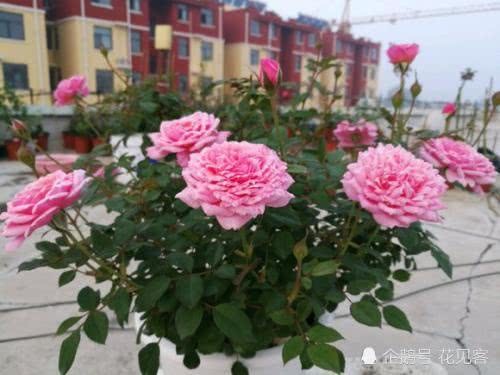
The miniature rose 'Dwarf Queen' is easy to grow and beautiful, blooming all year round with abundant, large flowers
The rose is one of the top ten famous flowers, known as the "Queen of Flowers". The plant has graceful blooms, comes in diverse purple shades, and can flower all year round, making it deeply loved by many flower enthusiasts. There are also especially many varieties of roses. Today, Hua'er will introduce one kind of rose to everyone...
条件筛选