-
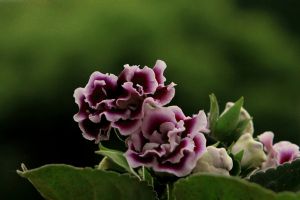
Care Methods and Management Tips After Gloxinia Blooms
Because this flower has such brilliant, eye-catching colors, many people like to keep one on their desk or at home, and they feel happy when it blooms. But then a new question arises: what should we do with it after it blooms? There are two ways, as follows!
-
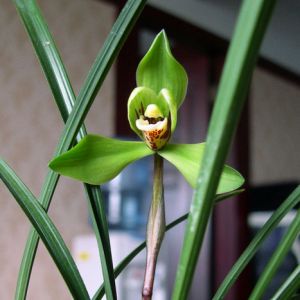
Ningbo Narcissus Cymbidium Variety Characteristics and Care Methods
This Cymbidium variety was selected and bred by Li Zhaohua, a native of Ningbo, Zhejiang, in 1986, and is also a famous Cymbidium cultivar. Its leaves are slightly drooping and slanted upright, the bud sheaths are brownish purple, and it has narcissus petals. The three outer petals have constricted bases, flared angles and tightly rolled edges; the soft silkworm-moth stamens and large round lip are emerald green in color with a translucent quality. The whole flower is delicate and exquisite, like a colorful butterfly dancing, or like a bluebird frolicking in spring.
-
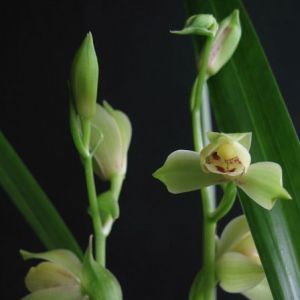
Introduction to the Characteristics and Care Methods of the Yingyu Jianlan (Cymbidium ensifolium) Variety
The color is like jade, with flat, one-character shoulders and a large round lip, and the color is extremely pure. Good color, neat form, flat one-character shoulders, excellent fragrance - a rather eye-catching little flower.
-
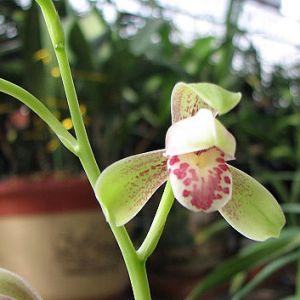
Characteristics and Care Methods of the Minxi Dacaihe Cymbidium ensifolium Variety
*Minxi Dacaihe*: Originating from western Fujian, the leaves are medium-arching, thick in texture, with leaf tips shaped like a fish belly. The flowers are large, with three thick petals, tightly edged, narrowed at the base, clam-shell-shaped sepals, and a large red lip hanging downward (slightly curled if water control is poor), strongly fragrant! It barely qualifies as a lotus-petal type!
-
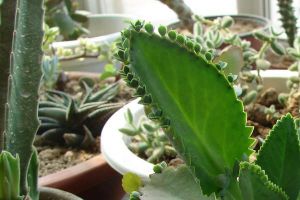
What are the cultivation methods for Kalanchoe daigremontiana?
With its rather strange name, it mainly grows in tropical regions, and its leaves come in an endless variety of forms, so there is plenty of fun to be had in admiring it. Next, let's talk about how to grow this interesting plant!
-

How to plant Cymbidium goeringii so it grows well? Master these planting methods
Generally, the suitable growing temperature for Cymbidium goeringii is 15°C to 25°C, of which 18°C to 25°C from March to October, and 10°C to 18°C from October to March of the following year. In winter, it can even bloom normally at a short period of 0°C, and can withstand low temperatures of -5°C to -8°C, but it is best to keep the room temperature at 3°C to 8°C, or keep the potting soil from freezing...
-

How to make flower stalks taller? These methods you need to master
As the saying goes: only when it gets difficult to grow do you truly understand orchids. However, among the four seasons, growing orchids in summer is especially difficult, and the difficulty lies in the summer's "rot disease" being impossible to guard against. Experienced orchid growers all know that in the hot and humid summer, the frequent occurrence of soft rot and stem rot is a major worry for orchid growers! If "bai lashi" is the cancer of orchids,...
-
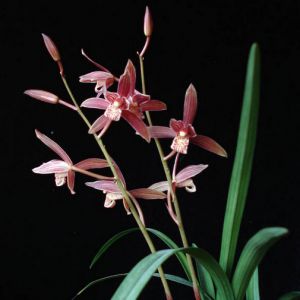
Introduction to the Characteristics and Care Methods of the Cymbidium ensifolium 'Bixuejian' Variety
Bixuejian: A Cymbidium ensifolium with red silk-like petals and a silver-edged double rim on the outer three petals. Namer: Yang Bin. Year collected from the wild: 2004. Origin: Mount Emei, Sichuan.
-
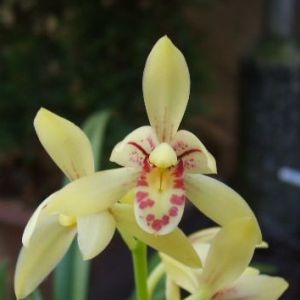
Introduction to the Characteristics and Care Methods of the Tang Bohu Cymbidium Variety
Traditional variety Cymbidium 'Hupan' (Tiger Spot), a Cymbidium from Sichuan, mid-dwarf type bearing lotus-form yellow flowers.
-
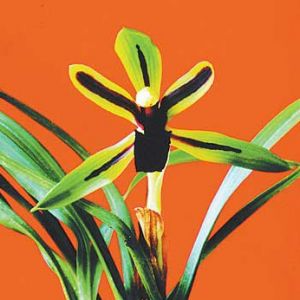
Cymbidium goeringii 'Hu Die Fu Ren' (Butterfly Lady): Variety Characteristics and Care Methods
Number: Orchid No. 0293 Name: Butterfly Lady (Cymbidium goeringii) Latin name: Cymbidium goeringii 'HuDieFuRen' Namer: Li Yinglong Registrant: Li Yinglong (Yunnan Tanyuan Bilong Orchid Garden) Registration date: July 28, 2007 Expert comments: This variety was selected from a native Cymbidium goeringii in Guizhou Province. The petal is entirely purple-black, with vertical purple-black bands in the center of the lip petals and the three outer petals, while the perianth is green. It is shaped like a butterfly, hence the name. It is a very precious variation with a plain-colored center, and its traits are stable. Registration is approved.
条件筛选