-
Identification and Control Methods for Non-pathogenic Diseases of Edible Fungi
II. Non-pathogenic diseases. Unsuitable living conditions, improper cultivation management measures, or genetic variation can all cause growth and development disorders and physiological disorders in edible fungi...
-

Cultivation Season and Spawn Selection Methods for Straw Mushrooms
I. Cultivation Season The optimum temperature for the mycelial growth of straw mushrooms is 30°C-35°C, and the optimum temperature for fruiting body growth is 28°C-30°C. It takes more than 1 month from stacking the substrate to the end of fruiting. Among the currently artificially cultivated edible fungi, it is the mushroom type with the higher temperature requirement and the shortest growth cycle. An appropriate cultivation period can be chosen according to the temperature requirements of straw mushrooms and the different cultivation conditions in each region. II. Spawn Selection It is very important to select high-quality, high-yield varieties according to local conditions and actual circumstances. The criteria for variety selection are high yield, good quality, and strong stress resistance.
-
A Complete Guide to New Summer Cultivation Methods for Straw Mushrooms
Straw mushrooms are the only high-temperature, fast-growing variety among edible fungi. The cultivation substrate is mainly rice straw and wheat straw. They are delicious and nutritious. The summer cultivation techniques are introduced as follows: Preparation of mushroom beds. The mushroom beds are set up inside a plastic greenhouse, and the greenhouse is covered with plastic film and straw mats to retain warmth and moisture. The mushroom beds are 1 m wide, with unlimited length, and the spacing between beds is 30 cm, which can serve both as walkways and as water storage ditches. On the beds, sunken mushroom troughs are dug crosswise. The troughs are 30 cm wide and 20 cm deep, with a 20 cm small soil ridge left between troughs. Within the troughs, spray 0.2
-
Detailed Explanation of Straw Mushroom Harvesting Methods and Technical Key Points
Under normal conditions, 7-10 days after spawning, small mushroom buds can be seen on the surface of the compost. When the buds first emerge, they appear grayish-white; after one or two days they rapidly grow to the size of a bird's egg, and after 3-4 days they become as large as a quail's egg. When the straw mushroom changes from a pagoda shape with a wider base and slightly pointed top into an oval shape, with the fruiting body plump and smooth, changing from firm to loose, and the color changing from dark to light, with the wrapper membrane unbroken and the cap and stipe not yet protruding, it is best to harvest. At this time the mushroom is delicious, high in protein content, and of the best quality. Therefore, straw mushrooms should be harvested at the egg-shaped stage before the wrapper has broken
-
Detailed Explanation of Straw Mushroom Bag Cultivation Methods and Technical Key Points
1 Soaking rice straw: Select dry, mold-free rice straw and place it in a 5% lime water pool to soak for 10-12h. When soaking the straw, press it down firmly so that the lime water in the pool completely submerges the straw. 2 Cutting rice straw: Take out the soaked straw, drain off the remaining water, and cut it into straw segments about 20cm long with a straw cutter or chopper. Note that if too long, it is difficult to bag; if too short, it takes more labor and is also not conducive to mycelial knotting. 3 Culture medium formula: rice straw 50kg, rice bran 7.5-10kg, peanut cake 1-1.5kg, phosphate fertilizer 1kg, gypsum
-
Detailed Guide to Straw Mushroom Sowing: Key Points on Sowing Time and Methods
1. Sowing period. When using a sun-heated bed for cultivation, the bed should be prepared in advance and covered with plastic film in May. The specific sowing period should be determined by the bed temperature, which should generally reach a stable 22°C or above. Sowing cannot be done if this is not reached. In central and southern North China, sowing is generally done in late May or early June. 2. Sowing rate. Generally, each square meter of sun-heated bed can take 15-20 kg of rice straw or 15-25 kg of cottonseed hulls, with the spawn amount being 6-8% of the weight of the cultivation substrate, that is, 1.2-1.5 kg of spawn per square meter. For first-time cultivation, the spawn amount should be appropriately increased
-
Detailed Explanation of the Production Techniques and Methods for Candied Straw Mushrooms
1. Material selection and processing. Choose straw mushrooms with plump fruiting bodies, unopened caps, and no mechanical damage. Immediately after harvest, place them in a 0.03% sodium metabisulfite solution and treat for 6-8 h (hours), then rinse clean with clear water. 2. Blanching and hardening. Put the treated straw mushrooms into boiling water and blanch for 2-3 min (minutes) to destroy enzyme activity. After blanching, immediately remove them, place them in cold water to cool, then after cooling remove them and place them in a 0.5%-1% calcium chloride solution to soak for 10-12 h (hours
-
How can you tell good straw mushroom spawn from bad? You need to know these few methods
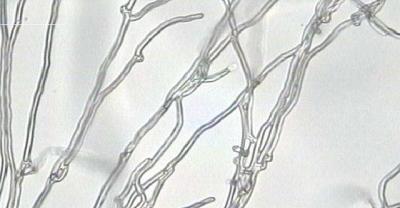
Before cultivating straw mushrooms, the quality of the spawn must be assessed, and high-quality spawn should be selected whenever possible. The appearance of high-quality spawn is: thick and sturdy hyphae, uniform development of the upper and lower hyphae, and aerial hyphae that are white or semi-transparent. The specific identification methods are: 1. For spawn used for cultivation, the spawn age is around 30 days, the hyphae are thick, sturdy and dense white, there are light brown chlamydospores on the hyphae, and after removing the cotton plug, the aroma of straw mushrooms can be smelled. This kind of spawn is high-quality spawn; after sowing, it colonises the substrate quickly and grows vigorously. If there are very few chlamydospores, it means the hyphae are still young and tender, and it can be left to continue growing
-
What to Do When Straw Mushroom Mycelium Shrinks? Causes and Control Methods
1. Using inferior spawn: Spawn that is too old or too young, degenerated spawn, weak mycelial vitality, poor stress resistance, or spawn stored for a long time in environments with temperatures that are too low or too high can all lead to failure to germinate after spawning and shrinkage of mycelium in the spawn blocks. Control: Select spawn of the appropriate age and high quality, and ensure the temperature during the cultivation process does not get too low. 2. Improper control of compost temperature: When the air temperature is high, the compost is too thick, and the mushroom house has good insulation, the temperature inside the compost after spawning exceeds 42°C for an extended period, which causes mycelium to shrink and die, resulting in burning of the mycelium.
-
What to Do About Excessive Vegetative Growth of Straw Mushroom Mycelium? Detailed Control Methods
During the mycelial growth stage of straw mushroom, a large amount of white fluffy aerial mycelium forms on the surface of the substrate, sometimes even growing into a white layer of mycelial mat, which delays fruiting and leads to low yields; the cause is excessively high temperature inside the compost heap. Control methods: after inoculating straw mushroom, regularly uncover the plastic film to ventilate and lower both temperature and humidity, and do not cover with too thick a layer of straw, so as to encourage the mycelium to grow into the substrate.
条件筛选