-

What tree is the large-leaf red-flowered black locust? An introduction to its cultivar characteristics
The large-leaf red-flowered black locust is a multi-purpose black locust cultivar bred in Germany. In 1999, Professor Yang Minsheng of Hebei Agricultural University introduced it to China from the Institute of Forest Genetics and Forest Tree Breeding in Germany. After nearly 5 years of introduction trials and demonstration planting, it was proven that the large-leaf red-flowered black locust has strong adaptability, can grow normally in the suitable areas for black locust in North China, and has shown very high economic value. The large-leaf red-flowered black locust has a fast growth rate, with a diameter at breast height reaching 9.5 cm at 3 years old; a large leaf yield, with pinnate leaves 45-60 cm long, longer than tetraploid black locust
-
Using the large-plow furrowing method for clear-cut regeneration of black locust
1. Preparatory work. Large-plow furrowing means using a tractor to pull a large plow to furrow in a clear-cut black locust (Robinia pseudoacacia) site. A tractor with relatively high horsepower must be used. An ordinary iron plow for plowing farmland is sufficient, but a single plow is required. First clear branches and large stones from the site. 2. Plot selection. Large-plow furrowing requires concentrated, contiguous plots, a slope of less than 25 degrees, and a soil layer of more than 30 cm. 3. Technical requirements. The black locust root system is relatively shallow, the main root is not obvious, and the lateral roots are well developed. The main lateral roots are mostly distributed in the surface layer at a soil depth of 20-30 cm.
-
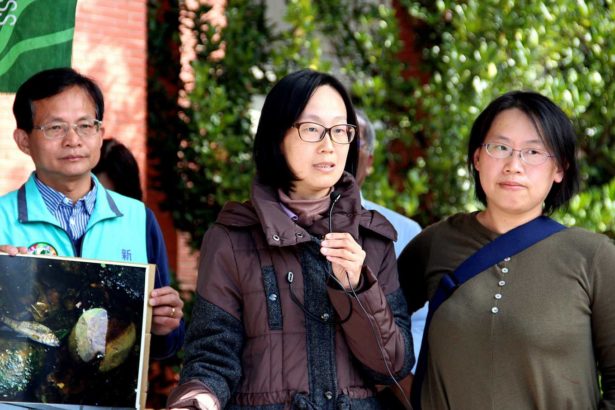
Witnessing the pollution scene! Large numbers of dragonfly nymphs and stream fish die downstream of the factory; the alliance calls on TSMC to keep its partners in line
Witnessing the pollution scene! Large numbers of dragonfly nymphs and stream fish die downstream of the factory; the alliance calls on TSMC to keep its partners in line
-
Detailed Explanation of the Large Icefish Processing Technology Series (Part One)
Large icefish, also known as noodlefish, was originally widely distributed in the main stream and affiliated lakes of the middle and lower reaches of the Yangtze River. Its flesh is tender and delicious, rich in nutrients, and eating it carries a special fresh cucumber aroma. Large icefish generally has a body length of about 20 cm, with no bones or spines. It is a small, precious fish species with high economic value and is highly popular in domestic and international markets. Two processing methods for large icefish are introduced here: I. Processing of quick-frozen large icefish. 1. Preservation and transportation of raw fish. Large icefish has a small body and thin skin, making it extremely prone to spoilage.
-
Several Key Control Points for Large-Specification Hairy Crab Culture in the Yellow River Estuary
In order to build up the "Yellow River Estuary" aquatic product brand and enhance the market competitiveness of "Yellow River Estuary" hairy crab, in 2005 Kenli County, Shandong Province, carried out a large-specification "Yellow River Estuary" hairy crab culture trial in a ten-thousand-mu river crab demonstration park, achieving good economic and social benefits. We now discuss several key technical issues in the culture process with fellow practitioners. 1. Pond ecology. Influenced by traditional concepts, many units follow fish-culture methods when building ponds and rearing crabs, with poor results, low survival rates of "Yellow River Estuary" hairy crab,
-
Large-scale propagation of the new high-quality wheat variety Emai 18 succeeds in Hubei
The new wheat variety "Emai 18", which combines high quality and special purpose, high yield, multi-resistance and early maturity, has been successfully propagated on a large scale in Hubei. This variety fills the gap of the absence of medium-gluten wheat in the middle and lower reaches of the Yangtze River, and won the first prize of the Hubei Provincial Science and Technology Progress Award in 2005. According to Li Meifang, a researcher at the Hubei Academy of Agricultural Sciences who bred "Emai 18", "Emai 18" is Hubei's first wheat variety to organically combine four major target traits: high quality and special purpose (reaching the national medium-gluten standard for special-purpose wheat varieties), high yield (yield increase of 8.75%), multi-resistance (moderate resistance to stripe rust and powdery mildew), and early maturity (
-
What are the disease prevention and control methods for large-scale chicken farms?
Scientific management practices and a strict disease prevention system are the foundation for controlling the occurrence of various infectious diseases. In terms of management, an all-in-all-out system should be adopted, with brooding chickens, growing chickens, and laying hens raised in separate zones. Manure should be concentrated in a manure yard far from the chicken houses, with dedicated personnel, vehicles, and roads assigned. It is strictly forbidden for poultry keepers to cross-contaminate with the manure yard or manure removal personnel. Chicken manure should be removed the same day and transported out of the farm area the same day, strictly controlling pollution caused by chicken manure. At the same time, daily environmental cleaning and disinfection of the chicken farm and disinfection of chicken houses with chickens inside should be maintained. Poultry keepers and management personnel adopt
-
Detailed Explanation of Large Yellow Croaker Fingerling Cage Culture Techniques
I. Cage Setup 1. Selection of Sea Area The water flow velocity in the sea area is generally within 1 m/s, and the flow direction is straight and stable; avoid setting up in sea areas with eddy currents. At low tide, the bottom of the cage should be at least 1.5 m above the seabed. Throughout the year, the surface water temperature in the sea area ranges from 7-30°C, salinity from 12-32, and transparency from 0.2-3.0 m. 2. Selection of Cage Specifications Currently, the cages used for cultivating large yellow croaker fingerlings are all floating cages, that is, the cages are hung on a wooden frame with 10 frame positions of 5 m × 5 m.
-
Detailed Explanation of Cultivation Management and Shaping Techniques for Large Chrysanthemums
With scientific cultivation management, large potted chrysanthemums can reach a shaped diameter of 2-4 m, with dozens, hundreds, or even over a thousand flowers, large and uniform, making them appear noble and magnificent, standing proudly among other flowers. Large chrysanthemums have very strict requirements for cultivation management techniques; if management is even slightly extensive, flowering will be uneven, flowers will be small, and they may even fail to bloom or die midway. Cultivating large chrysanthemums in Guangdong Province is even more difficult, because Guangdong Province has a tropical and subtropical climate, with many storms, and high temperature and humidity. After each storm
-
Prevention and Treatment Methods for Common Diseases in Large Yellow Croaker Aquaculture
Benedenia Disease [Cause] The disease is caused by parasitism of Benedenia.[Symptoms] Benedenia often parasitizes various parts of the body surface of marine fish such as large yellow croaker, yellowfin seabream, red seabream, black seabream, and grouper, especially the front half of the back. When Benedenia parasitizes the fish body, the fish are restless in the water, constantly swim frantically, rub against nets or pond walls; the large and small hooks of the worm's posterior attachment disc tear the epidermis, causing wounds and inflammation on the body surface, secreting large amounts of mucus; in severe cases, anemia, emaciation, localized or large-area ulcers on the body surface, or occurrence of
条件筛选