-
-

Comparative Trial of Six Strains in Substitute-Material Cultivation of Lentinula edodes Using Liquid Spawn
In recent years, China's shiitake (Lentinula edodes) production has developed rapidly, with substitute-material cultivation of shiitake being particularly prominent. The traditional solid spawn production technology for shiitake requires a rather cumbersome three-stage process of mother culture, stock culture and cultivation spawn before it can finally be expanded to the production of cultivation bags. Its high labor intensity, cumbersome process, high rate of contaminant mold infection and long growth cycle all greatly restrict the development of shiitake. In this experiment, liquid spawn of 6 shiitake strains was cultured and compared in cultivation, so as to provide a certain theoretical basis for the promotion and application of liquid spawn for shiitake. 1 Materials and Methods 1
-
Method for making shiitake mushroom (Lentinula edodes) spawn in plastic bags
The method for making spawn using 17 cm × 33 cm polypropylene plastic bags has already been described in the production of spawn for block cultivation. In recent years, substitute-material shiitake mushroom production has developed rapidly in northern China. Due to differences in climatic conditions and other factors, most northern regions adopt large-bag cultivation. Since large-bag cultivation also uses plastic bags as containers for spawn production, its operational precautions and technical key points are the same, but some specific operations differ. Large-bag cultivation uses low-pressure high-density polyethylene plastic tube bags, 0.5-0.6 mm thick and 22-25
-
Detailed Explanation of Key Points of Lentinula edodes (Shiitake) Substrate Cultivation Techniques
1. Production season arrangement. The season for shade-shed open-field cultivation must be arranged according to local climatic conditions, altitude and varietal characteristics. In Zhejiang Province, the shade-shed open-field cultivation season is generally arranged from mid-to-late August to September to early October for loading substrate and inoculation, and from mid-to-late October to early May of the following year for fruiting. 2. Varieties. The shiitake varieties suitable for shade-shed open-field cultivation are mainly medium-temperature-type shiitake strains, such as the CR series and the Shenxiang series. 3. Culture medium formulas. Formula 1: miscellaneous wood sawdust 78%, wheat bran 20%, sugar 1%, gypsum
-
Key Technical Points for Winter Management of Lentinula edodes (Shiitake) Cultivation on Substitute Substrate
After the onset of winter, temperatures drop and relative air humidity is low, so management should center on raising the bed temperature, controlling ventilation, and keeping warm and protecting against cold. Corresponding management measures should be taken for different strains. For medium- and high-temperature-type strains, there is almost no hope of further fruiting below 10°C; at this time, water should be sprayed in the afternoon each day along with brief ventilation, just keeping the logs moist so they can overwinter smoothly. For medium-temperature-type or slightly lower-medium-temperature-type strains, there is still hope of fruiting in provinces where winter is not pronounced. Based on weather forecasts, cold waves can be avoided, and the brief periods when temperatures rise can be used
-
Cultivation Techniques and Management Methods for Inula japonica
Cultivation Techniques for Inula japonica
-
Key Management Techniques for Spring Mushrooms in Bag-Cultivated Shiitake (Lentinula edodes)
Spring management of shiitake mushrooms must be tailored to local climate conditions. The spring climate in Jiangnan is characterized by low temperatures, overcast and rainy weather, and high humidity. Once the daily average temperature exceeds 12°C, spring mushroom management can begin. Spring is the peak season for outdoor shiitake production, accounting for 30%-60% of the annual shiitake yield (depending on the variety and how early or late the substrate logs were made). Before management begins, water supplementation should be carried out separately according to the number of fruiting flushes, the degree of water loss, and contamination conditions. (1) Water supplementation: After 2-3 harvest flushes in autumn, the water content of the substrate logs gradually decreases as the number of fruiting bodies increases, the management period lengthens, and the sawdust decomposes and nutrients are consumed. By early spring, the water content of the substrate logs is only 30%-35%, and the mycelium is in a semi-dormant state. Therefore, water supplementation is essential to meet the moisture demands for primordium formation.
-
The Latest Cultivation Techniques and Methods Tutorial for Inula japonica
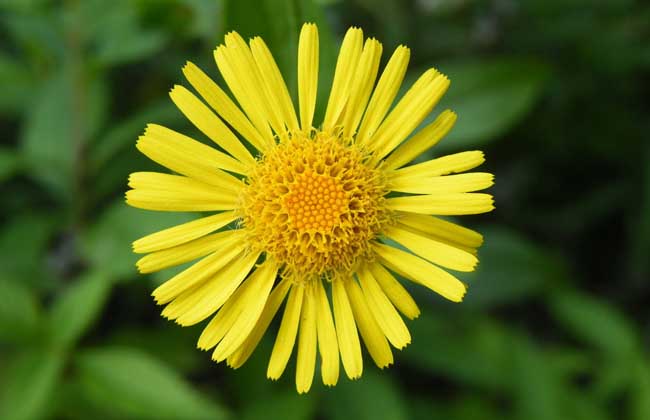
Inula japonica is a perennial herbaceous plant in the Asteraceae family, mainly distributed in the central part of Northeast China, and was originally a wild weed. However, it is also a fairly long-standing Chinese medicinal herb, with the main medicinal part being the flower heads of Inula japonica, mainly used to treat cough and asthma with excessive phlegm, as well as chest and diaphragm distension and fullness. It has effects such as eliminating phlegm and promoting water movement, and treating phlegm-fluid retention. So how should Inula japonica be planted? Below, the editor brings you the cultivation techniques for Inula japonica. Let's take a look together!
-
The Latest Techniques and Methods for Cultivating Elecampane (Inula helenium): A Complete Guide
Elecampane (Inula helenium) is a medicinal herb listed in the Pharmacopoeia of the People's Republic of China, and its main medicinal part is its dried root. Elecampane and costus (Aucklandia lappa) are very similar, but their medicinal effects are different. The main effects of elecampane are strengthening the spleen and stomach, relieving pain, and preventing miscarriage, but it also has anti-inflammatory and antibacterial effects.
-
How to Grow Inula japonica? A Detailed Guide to Cultivation Techniques
Inula japonica, which is good at relieving cough, is usually harvested during the summer and autumn flowering season. Inula japonica, which has good medicinal value, actually comes in many varieties, so its planting and cultivation techniques are well worth studying carefully. So how exactly should Inula japonica be grown?
条件筛选