-
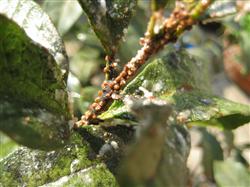
What are the control methods for scale insects on osmanthus?
Adults and nymphs often settle on osmanthus branches, suck sap, causing branches and leaves to wither, and in severe cases the whole plant dies. They often secrete large amounts of honeydew, which leads to sooty mold. Leaves and stems become covered with a black, sticky substance, hindering photosynthesis and affecting ornamental value. The main species are the cottony cushion scale and the white peach scale. Control methods: strictly prohibit the use of seedlings carrying the pest...
-

-

What are the control methods for scale insects on privet hedges?
In recent years, with the widespread use of golden privet (Ligustrum sinense 'Variegatum') and small-leaf privet (Ligustrum quihoui) in urban landscaping, pests and diseases on privet have become a major problem in garden maintenance and management. The scale insect occurring on Ligustrum landscaping plants is mainly the white wax scale (Ericerus pela). It has been reported that comstock mealybug (Pseudococcus comstocki) has occurred on privet hedges in Hebei. The identification characteristics and control measures of the white wax scale are described below: Distribution and damage. The white wax scale Ericerus pela (Chavannes) belongs to the order Homoptera, family Coccidae. It is widely distributed in China. It damages
-
How to treat scale insects on boxwood hedges? Try these clever tips
In recent years, scale insects have become fairly common in landscaping, with boxwood hedges suffering the most severe damage. Through years of exploration and experimentation, the author has mastered the following technical points: (1) Before spring bud break, spray 3 to 5 degrees Baume lime sulfur mixture or 3 to 5% diesel emulsion to eliminate overwintering nymphs. (2) When female scale insects are carrying eggs and their body weight increases sharply, before egg laying, use a high-pressure water hose to wash the insects off the branches, then supplement with chemical protection. (3) Before chemical control during the hatching period, give the hedge a heavy pruning, which helps
-
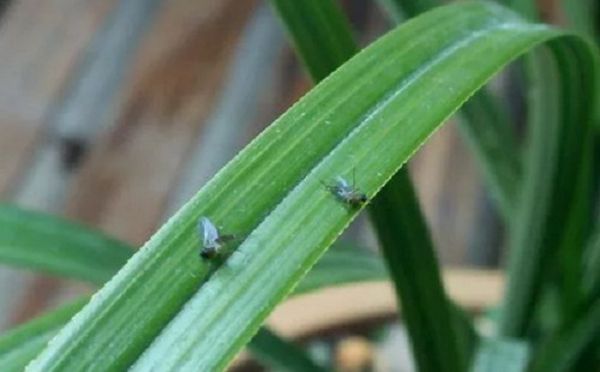
How to Deal with Small Flying Insects in Flower Pots? Effective Methods to Teach You
What to Do If There Are Small Flying Insects in Flower Pots?
条件筛选