-
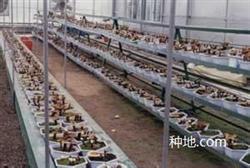
How are lingzhi (Ganoderma lucidum) bonsai cultivated in a greenhouse?
Question: How are lingzhi bonsai cultivated in a greenhouse? Lingzhi bonsai is a shaped handicraft that has emerged in recent years, made by processing dried mature lingzhi. By using foam plastic greenhouse technology to pot living lingzhi at the growth stage, live lingzhi bonsai can be made, just like potted flowers, allowing you to observe the lin...
-

What are the five main causes of low yields in Gastrodia elata (tianma)
Recently, the editor has often received consultation calls from people saying that the Gastrodia elata they cultivate does not yield much, with some even below 3 kg/sq m. The reporter specifically consulted Cao Debing, a Gastrodia elata expert at the Provincial Academy of Agricultural Sciences, about these issues. According to him, based on the growth principles of Gastrodia elata, there are many causes of low yields. He listed the following five causes, and farmers can check their own production conditions to see whether any of the following situations apply: 1. Armillaria mellea has been subcultured many times, becoming aged and degenerated. Armillaria mellea is the only source of nutrition for Gastrodia elata, so the quality of Armillaria mellea directly has an irreversible impact on Gastrodia elata. In general production, it is required to use detoxified, isolated pure strains, or to use such strains to cultivate fungal material before planting, so as to ensure results; however, in order to reduce costs, some farmers either use ordinary strains, or use old fungal material as "starter", mixing in some new linden wood to let it "transfer the fungus". If a pure strain was used the first time, this method can be used the next year, but it must not exceed three years. Unlimited continuous "fungus transfer" will inevitably lead to strain degeneration and reduced vigor, causing reduced Gastrodia elata yields.
-

What to Do About Dead Vines in Chinese Yam? Cause Analysis and Control Methods
Causes of Dead Vines in Chinese Yam and Control Methods
-
Method for building a greenhouse for raising Schisandra chinensis seedlings in nutritional pots
Build a plastic greenhouse of a suitable size according to the number of seedlings to be raised (or use a solar greenhouse). For general vegetable (cucumber) cultivation, a plastic greenhouse is used, with a width of about 12 m, a length of 80-100 m per greenhouse, and a height of more than 2 m, with doors at the front and rear, welded from steel bars. A small shed can also be set up, using materials such as steel bars, bamboo strips or wooden poles. Building a simple shed costs little but has a short service life.
-
How to cultivate lingzhi bonsai? Key points of greenhouse planting techniques
Lingzhi bonsai is a shaped craftwork that has emerged in recent years, made by processing dried mature lingzhi. By using foam plastic greenhouse technology to pot living lingzhi at the growth stage, live lingzhi bonsai are made; just like potted flowers, one can observe a series of growth and development processes such as the elongation of the lingzhi stalk, the unfolding and growing of the cap, the release of spore powder, and finally growing into lingzhi fruiting bodies of various shapes. The key points of its cultivation techniques are as follows: 1. Cultivation substrate. Lingzhi is a wood-rotting fungus and is suitable for growing on substrates such as mixed wood sawdust and cottonseed hulls.
-
What are the culinary uses of Gastrodia elata? Read this article to find out
Gastrodia elata not only has high medicinal value, but also has considerable value as a medicinal dish, health tonic, nourishing food and edible ingredient. In folk practice, Gastrodia elata is commonly used to steam eggs, boil eggs, cook pig brain, steam sheep brain, steam pork, stew chicken, roast duck and so on. Its features are: convenient to eat, pleasant in taste, rich in nutrients and unique in flavor. It satisfies people's enjoyment of tasting Gastrodia elata while also strengthening the body, resisting wind and cold, and can also treat dizziness, migraine and tension headache, high blood pressure and many other conditions. Through centuries of practice and recent years of research and development, dishes using Gastrodia
-

What to Do About Cracked Fruit in Monk Fruit? Causes and Control Methods
What to Do About Cracked Fruit in Monk Fruit
-

What medicinal herb is Bletilla striata? An introduction to its effects and uses
What medicinal herb is Bletilla striata?
-

How to propagate Eucommia ulmoides? A detailed introduction to the commonly used methods
Propagation methods of Eucommia ulmoides
-
Method for ridge cultivation of Gastrodia elata in plastic greenhouses
Cultivating Gastrodia elata in ridges inside plastic greenhouses can be done on either a large or small scale, with low investment, high returns, and savings in labor, effort, and arable land. It requires no fertilizer, no pesticide spraying, and no weeding, and delivers significant economic benefits. The technique is described below: 1. Site selection: It is advisable to choose a shady slope or a gentle slope with half shade and half sun, sandy soil with good permeability, and slightly acidic or neutral soil with a pH of 5.5-6.0 for building the site. 2. Greenhouse construction: Follow the construction method for vegetable greenhouses, facing north and south, with the size determined by the scale of Gastrodia elata cultivation, generally 8 m wide and the length depending on the terrain
条件筛选