-

Sweet potato starch is in high demand in the market, and timely processing yields high returns.
Sweet potato starch occupies an increasingly important position in people's daily diet. Potato-based chemical products have now become the main raw materials for chemical products such as lactic acid, citric acid, disposable tableware and degradable agricultural mulch film. It is understood that the current price of refined white potato starch has risen by nearly 10% compared with last year, and the reason for this price trend is undoubtedly the supply-demand gap for sweet potato starch. Relevant data show that at present, the demand for sweet potato starch in the domestic market alone is more than 1 million tons, while the production volume is far less than this number.
-
Yellow catfish is a high-quality fish species worth recommending
Yellow catfish, also known as jiangsang, gayazi, and angsi fish, has a yellow-green back, yellow flanks with intermittent black patches, a naked scaleless body, and an elongated shape. It is distributed in natural waters in most parts of China. The yellow catfish is a warm-water bottom-dwelling fish that prefers to inhabit still or slow-flowing waters. Its survival temperature is 0°C-38°C, it has extremely strong adaptability, and it has great aquaculture potential, so it can be promoted for farming in most inland waters nationwide. The yellow catfish has tender flesh and a delicious taste. It not only has nourishing effects but also has certain medicinal value, and is deeply favored by consumers
-
What are the causes and stress factors of swine high fever syndrome?
Causes: Swine high fever syndrome is essentially a swine disease caused by mixed infection with multiple viruses, bacteria and protozoa triggered by immunosuppressive swine diseases. Biological factors: mixed infection with pathogens such as classical swine fever virus, circovirus, porcine reproductive and respiratory syndrome virus, pseudorabies virus, Eperythrozoon, Toxoplasma, Streptococcus, Salmonella paratyphi, Mycoplasma, Actinobacillus pleuropneumoniae, Haemophilus parasuis and Pasteurella. There can be more than 15 kinds of pathogens, among which classical swine fever virus has the highest infection rate and is the most typical; mixed infection with Toxoplasma, Eperythrozoon, porcine reproductive and respiratory syndrome virus, circovirus and classical swine fever virus is common, and there is also mixed infection of classical swine fever virus with piglet paratyphoid bacillus, often dominated by classical swine fever virus, together with one or more than two kinds of viruses, bacteria and protozoa, so the mortality rate is high, the cure rate is low, and it may even wipe out the whole herd.
-
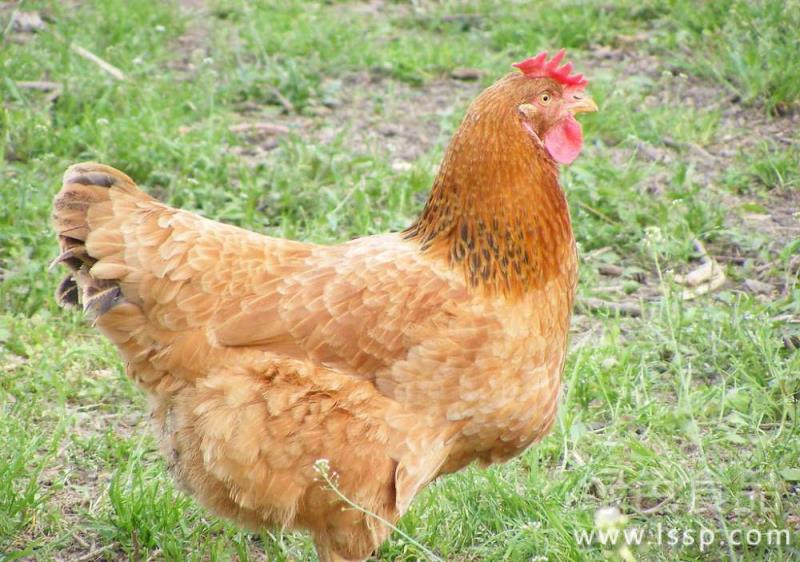
Chicken proventriculitis has many complications and a high mortality rate. How can it be comprehensively prevented and treated?
Proventriculitis has many complications and causes high mortality. Comprehensive prevention and treatment methods for chicken proventriculitis.
-
New Cotton Variety 2019: High-Yield, Insect-Resistant Seeds Bred in Anhui
The Cotton Research Institute of the Chinese Academy of Agricultural Sciences recently bred a new cotton variety (Zhongmiansuo 53) in Hefei that can increase yield by 20%. A single cotton plant can bear more than 50 bolls, and the seed cotton yield per mu can reach 751 jin, which is twice that of ordinary cotton, and it has stronger insect resistance. At present, Zhongmiansuo 53 has been listed as a subsidized variety for the promotion of improved cotton varieties in Anhui Province in 2007. At the same time, Zhongmiansuo 53 is also a dual-gene transgenic insect-resistant cotton.
-
Detailed Explanation of Key Techniques for High-Quality and High-Yield Cultivation of Honeysuckle
Growth Habits Honeysuckle has deep roots and lush leaves, can prevent soil erosion, purify the air, and as a garden and potted flower, it can beautify the environment and cultivate character. It is an excellent plant that combines ecological, economic value and ornamental value. It generally yields about 100 kg of dried flowers per mu, and about 5 kg to 6 kg of fresh flower buds can be processed into 1 kg of dried product. Calculated at 28 yuan per kg, its income per mu is about 2,800 yuan. Plant once, benefit every year. Honeysuckle has strong adaptability to climate and soil. It prefers warm and humid
-
Intercropping honeysuckle yields well, with high returns from multiple harvests on one plot
Honeysuckle is a commonly used bulk Chinese medicinal herb, with wide uses and high value. It is currently in short supply on the market, and there is even a phenomenon of a price with no goods available. According to the growth characteristics of honeysuckle, adopting a high-efficiency intercropping model of widening rows and reducing plant spacing, rational close planting, intercropping medicinal herbs, and using "medicinal herbs" to support "flowers" can achieve the effect of "planting flowers in the current year, seeing results in the current year." Scientific close planting increases yield and income 1. Field cultivation. In autumn, winter or early spring, on the selected plot, apply 5000 kg of organic fertilizer, 100 kg of superphosphate, and 30 kg of sulfur
-
How can honeysuckle achieve high yields under artificial cultivation? A detailed explanation of the key technical points
Honeysuckle is a wild plant commonly found at the edges of mountain forests and in thickets, and its dried flower buds are a valuable Chinese medicinal herb purchased year-round by the state. In recent years, due to increased market demand and a sharp decline in wild resources, the price of honeysuckle has continued to rise. Converting it from wild to domestic cultivation and cultivating it artificially on a large scale has become a reliable way to prosper in mountainous areas. To achieve high yield and high efficiency in artificial cultivation, the following technical points must be mastered: 1. Select superior varieties. Superior varieties can be selected from local wild resources by choosing superior individual plants with thick vines, vigorous growth, many branches, a large number of flowers, concentrated flowering,
-
Technical points for achieving early high yield through close planting of honeysuckle
Honeysuckle (Lonicera japonica) is a perennial semi-evergreen woody vine, also known as erhua or shuanghua, and is a traditional valuable Chinese medicinal herb. The roots, stems, leaves and flowers of honeysuckle can all be used medicinally, but the main medicinal part is the dried flower buds, which have the effects of clearing heat and detoxifying, eliminating chronic inflammation and improving human immunity. In recent years, with the intensification of honeysuckle development and the broadening of application fields, market demand has grown ever larger. Improving cultivation techniques to increase the early-stage yield of honeysuckle and maintain the duration of the full-yield period has become a major problem urgently needing solution in production. In recent years, based on
-
What are the techniques for establishing a high-density, high-yield honeysuckle plantation?
Honeysuckle (Lonicera japonica) is a perennial semi-evergreen woody vine, also known as Erhua or Shuanghua, and is a traditional precious Chinese medicinal herb. The roots, stems, leaves and flowers of honeysuckle can all be used medicinally, but the main medicinal part is the dried flower buds, which have the effects of clearing heat and detoxifying, eliminating chronic inflammation and boosting human immunity. In recent years, with the intensification of honeysuckle development and the broadening of its application fields, market demand has grown ever larger. Improving cultivation techniques to raise the early-stage yield of honeysuckle and maintain the duration of its full-production period has become a major problem urgently needing solution in production. In recent years we
条件筛选