-

What other names does the Chinese herbal medicine Banxia have? A list of common names
[Aliases] Diwen, Dixing, Shuiyu, Shoutian, Shigu, Yangyan Banxia, Hegu, Xiezi Cao, Yanzai Wei, Dizhu Banxia, Mayu Guo, Mayu Guo, Sanbu Tiao, Sanye Lao, Sanye Banxia, Fanshizi, Di Zhegu, Di Cigu, Lao Huangzui, Lao Heshang Tou, Ye Yutou, Lao Guatou, Lao Guayan, Lao Yayan, Zhuozui Douzi, Di Badou, Wuxin Cai Gen, Tianluo Xing, Mayu Zi, Mayu Gen, Dilei Gong, Lao Guasuan, Gou Yutou, Zhu Banxia, Liedao Cai, Macao Zi, Yao Gou Dan. [Trade name] Banxia. Those that are large, round in shape, white in color, clean-skinned
-
What disease does a chicken have if it passes white watery droppings?
Based on your description, it may be pullorum disease. Pullorum disease is an infectious disease caused by Salmonella pullorum. After newly hatched chicks are infected, they show listlessness, sensitivity to cold, drowsiness, refusal to eat, and difficulty breathing. The vent is often blocked by white pasty droppings, making defecation difficult. If not treated promptly, most die within 2 weeks. Chicks that recover become carrier birds. Adult chickens often have latent infection and generally show no clinical symptoms; in hens, only reduced egg laying or no egg laying is seen, the ova are shrunken, and the contents are greasy in appearance, with severe cases turning pale bluish or lead-black, and sometimes yolk peritonitis also occurs;
-
What temperature requirements does Gastrodia elata have for cultivation?
Temperature is an important factor affecting the growth and development of Gastrodia elata, and besides the influence of seasons, temperature is also affected by latitude and altitude. Generally speaking, for every 10° increase in latitude, the average temperature drops by 0.5°C, and for every 1000 m increase in altitude, the climate drops by about 6.5°C. Therefore, wild Gastrodia elata mostly grows in mountainous areas and has an ecological preference for cool, humid conditions. During artificial cultivation, we found that: when the temperature of the planting layer rises above 10°C, the terminal buds of Gastrodia elata begin to sprout and start to grow; when the temperature rises above 20°C, it grows rapid
-
How to Cleverly Identify Whether Fish Have Eaten Their Fill
1. Pay close attention to how long the fish take to eat at the feeding tray or feeding ground. If, after a certain amount of feed is put in (the normal feeding amount), the fish finish the feed in less than 2 hours, it means the feed is insufficient and some fish have not eaten or have not eaten their fill, so an appropriate amount should be added. If the feeding amount per ten-day period is fixed and the daily feeding amount within the period is the same, but by the end of the period the feed put in is finished by the fish in less than 2 hours, it means the fish have gained weight and the feed amount should be increased. When feeding compound pellet feed, if the feed has already been finished but the school of fish is still swimming rapidly on the surface layer searching for food and is unwilling to sink into the "second layer of water," it indicates the fish have not eaten their fill. If the school of fish has already dispersed from the feeding tray or feeding ground and there is still leftover bait, the fish have eaten more than their fill, and the feeding amount can be appropriately reduced next time.
-
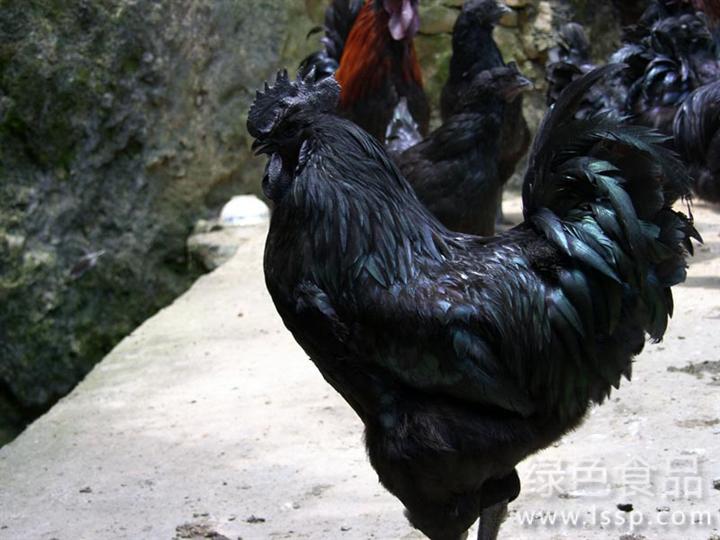
Silkie chickens have poor vitality and disease resistance; how can their survival rate be improved?
Silkie chickens have poor vitality and disease resistance; how can their survival rate be improved?
-
What effect does low winter temperature have on Gastrodia elata
The tubers of Gastrodia elata are buried underground and overwinter in a dormant state; the stable low temperature they can tolerate is 0-5°C. However, if winter temperatures fluctuate frequently, with large swings in temperature difference, sudden warmth followed by sudden cold, Gastrodia elata is prone to cold damage. Therefore, special attention should be paid to cold protection and heat preservation for overwintering Gastrodia elata, especially for box-cultivated Gastrodia elata, which should be covered even more carefully to preserve warmth and prevent cold damage. But Gastrodia elata has a certain low-temperature cycle and requires an appropriate stable low temperature in winter, otherwise its sprouting will be adversely affected.
-
Bagged pears have good quality, and managing them well after bag removal is key
In recent years, pear bagging technology has developed rapidly and has played an important role in improving pear fruit quality and economic returns. However, in production, a small number of bagged pear orchards have not achieved the expected results, mainly because the timing of bag removal is not accurately determined and management after bag removal is neglected, rather than poor management before and during bagging. In view of this, bag removal and post-removal management should be strengthened. Timely bag removal: the time to remove fruit bags should be determined according to variety and climatic conditions. In order to prevent obvious fruit dots on the fruit surface, sunburn, fruit dehydration, fruit surface contamination
-
What agricultural benefits does garlic extract have?
Garlic is rich in natural antibacterial substances, the main component of which is allicin. It has been reported that applying garlic extract to crop cultivation can not only control pests and diseases, but also help promote crop growth and development; when applied to plant tissue culture, it can effectively prevent tissue culture materials from contamination; when applied to the preservation and freshness-keeping of agricultural products, it is both reliable and safe. Its application methods and effects are introduced as follows: 1. Controlling crop pests and diseases. According to relevant domestic research, using 1%-3% garlic extract to treat peanut seeds by soaking
-
How to Give First Aid to Fish Fry That Have Fainted During Transport
During transport, fish fry often faint and "turn belly-up" because excessive jolting drains too much of their strength, and if they are not rescued in time this can very easily cause their death. Here is an effective and simple bare-handed first-aid method: when you find that the fry have fainted and turned belly-up, immediately place them in clear water at a temperature of 10°C--20°C, in a wind-sheltered, sunny spot, and frequently splash water into the water body so that the spray falls evenly on the fish's belly, which can restore the fry to normal. The splashing frequency should be close to the breathing rate of the fry.
-
The dove tree blooms like a flock of dancing doves. Have you ever seen such a beautiful sight?
The dove tree, also known as the dove tree, originally grows in the cold high mountain areas at an altitude of 1000 to 2000 m. It prefers shady, moist, slightly acidic or neutral soil and is a national first-class protected tree species. It blooms in spring, and its flowers resemble doves, hence the name "dove tree." The Xiangfan City Forestry Research Institute in Hubei Province introduced and cultivated it in 1980, and more than 200 trees are now preserved. The largest one is 13 m tall with a diameter at breast height of 14 cm. On April 10, this 27-year-old dove tree was already covered in flowers, about more than 800 of them, like a flock of dancing doves. The Xiangfan City Forestry Research Institute is located in the Ancient Longzhong Scenic
条件筛选