-

What to Do When Cyclamen Leaves Turn Yellow? Teach You the Correct Way to Handle It
1. Solution for curled and yellowing cyclamen leaves: it is lacking nutrients, so fertilize promptly. Buy special fertilizer from a flower shop, but do not give the plant too much nutrients. Usually you can bury a small amount of cooked soybeans, cooked peanuts, soybean cake, moldy steamed buns, etc. in the pot, so you will not need to worry about nutrient deficiency. 2. Cyclamen growing problems
-
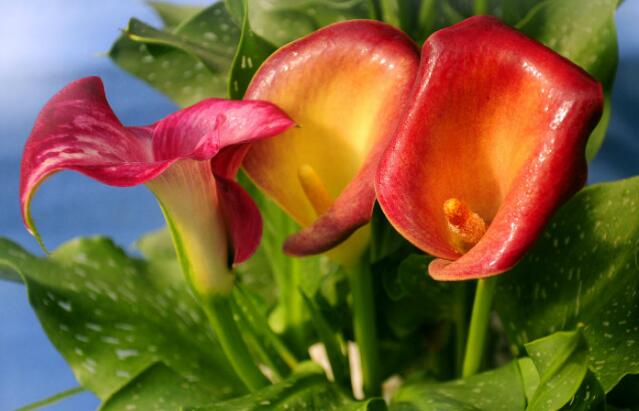
How to handle colored calla lilies after flowering? Growing methods and key points on avoiding waterlogged hearts
When people talk about calla lilies, everyone thinks of their pure white, lovely flowers. In fact, besides white, colored calla lilies are also very beautiful. It is said that colored calla lilies are also called colored arum lilies. Their flower colors are vivid and their symbolic meaning is beautiful, making them a favorite of many flower lovers. So compared with white calla lilies,
-
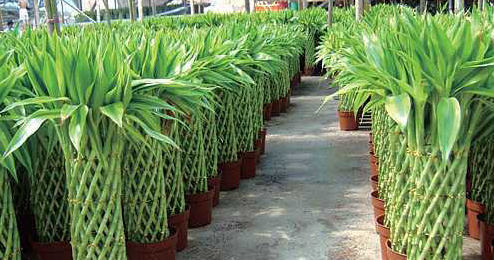
What to Do When Lucky Bamboo Leaves Turn Yellow? Teaching You the Correct Way to Handle It
Hydroponic Lucky Bamboo: When yellowing leaves appear on Lucky Bamboo, you can look for the cause from the following two aspects: First, check the water quality, mainly to see whether the roots are fresh. If the roots have rotted due to water quality, then switch to cooled boiled water. Second, check the lighting conditions of the placement location.
-

What to Do When Asparagus Fern Leaves Turn Yellow? Teach You the Correct Way to Handle It
Some readers have asked what to do when asparagus fern leaves turn yellow and how to deal with yellowing asparagus fern leaves. First, you need to find out the cause of the yellowing, then treat it accordingly: when asparagus fern leaves turn yellow, or even dry up and drop off, the main causes are: ① Too much light. Asparagus fern likes semi-shade and dislikes strong light, especially in summer it must be kept away from direct sunlight
-

What to do when the leaves of a money tree turn yellow and fall off? Here's the correct way to handle it
A reader asked: what should I do when the leaves of my money tree turn yellow? When money tree leaves turn yellow, first identify the cause and treat it accordingly: 1. Water-yellow: caused by watering too frequently; its characteristic is that the old leaves show no obvious change while the young leaves turn yellow, and watering should be stopped immediately. 2. Drought-yellow: caused by lack of water and drought
-
How should a sick rabbit be handled correctly after it is discovered?
(1) Detect promptly and handle as soon as possible. Each rabbit should be examined 1-2 times every day, and any disease found should be dealt with immediately; delaying will lose the opportunity for treatment. Therefore, the earlier a diseased rabbit is treated, the better. (2) Make a rough judgment and use medication as soon as possible. In addition to being able to make a clear judgment, targeted treatment measures can be taken for conditions such as sarcoptic mange, ringworm, and mastitis; for diseased rabbits with uncertain causes such as diarrhea, fever, and poor appetite, certain drug treatment should be given first. For diarrheal disease, oral or injectable anti-
-
How to handle a sick pig that shows no improvement after multiple drug injections
In daily veterinary practice, it is common to encounter sick pigs that have been given multiple symptomatic injections of penicillin, streptomycin, analgin and other drugs without any improvement. We suggest handling the situation as follows: Basic method: calculated per 30 kg of pig body weight per dose (the same below), dexamethasone sodium phosphate 6 ml, nikethamide 2 ampoules, kanamycin hydrochloride 10 ml, each injected intramuscularly separately. If coughing and gasping do not stop, use the basic formula plus 3% ephedrine 2 mg injected intramuscularly. After 10 minutes, inject sulfadiazine sodium 0.5 mg intramuscularly
-
How to Process and Handle Stropharia rugosoannulata After Harvest
Stropharia rugosoannulata, also known as the wine cap stropharia, is a domesticated wild mushroom species, and in recent years there has been a trend of gradual expansion. Its mushrooms have a delicate fragrance, crisp and tender flesh, good palatability, high yield, high selling price, and very considerable economic benefits. However, its fresh product has a short storage life and is not easy to store, and if not sold fresh in time, huge losses will be caused. In order to ensure that economic benefits are not lost, the salt-preservation processing and dried-product processing techniques for Stropharia rugosoannulata are now introduced. I. Salt-preservation processing of Stropharia rugosoannulata 1. Harvesting. The fruiting bodies of Stropharia rugosoannulata used for salt-preserved export should be at 6~7 maturity, that is,
-
How to Handle Heat Stress in Chickens? Detailed Relief Measures for Summer and Autumn
Effects of Heat Stress on Broiler Chickens 1. Physiological and biochemical changes in broiler chickens under heat stress. When the ambient temperature rises, the body temperature of chickens rises along with the ambient temperature; at this point the heart rate speeds up, blood pressure drops, breathing accelerates and panting occurs, and in severe cases respiratory alkalosis develops. In addition, heat stress can also cause endocrine disorders: the adrenal corticosterone concentration increases significantly in the early stage of heat stress, but gradually declines as the stress period is prolonged; thyroxine secretion decreases, and the decline in its activity leads to a lower metabolic rate. 2. Effects of heat stress on broiler
-
How should the timing and method of cotton chemical growth control be handled?
Although cotton was sown late, the cotton seedlings also developed late. By early June, well-growing cotton fields in the north had already produced 7-8 true leaves, and some had already produced squares. Around June 10, most cotton fields will successively enter the squaring stage. In previous years on June 10, most cotton fields had already produced 3 fruiting branches; this year there will be two fewer fruiting branches, with no pre-dog-days bolls or few pre-dog-days bolls. This is not necessarily a bad thing: it can save the operations of removing early squares and removing the lower 1-2 fruiting branches, and it helps reduce rotten bolls and hard-walled bolls. According to the fixed-plant survey results of Guoxin Cotton Institute: June 10 to July 10 is the main
条件筛选