-

A Detailed Guide to the Fragrance and Blooming Period of the Golden-Edged Cranberry Phalaenopsis
In the vast and complex world of plants, the Golden-Edged Cranberry Phalaenopsis has become a favorite of many flower enthusiasts thanks to its unique leaf variegation and charming blooms. However, for those encountering this flower for the first time, questions may arise about whether it has a fragrance and how long its blooming period lasts. Today, let us together
-

How Many Flower Spikes Can a Cranberry Phalaenopsis Grow? A Detailed Guide to Care
Regarding the growth habits of the Cranberry Phalaenopsis, especially how many flower spikes it can grow and how to care for it, these are questions many flower lovers care about. Below, these questions will be answered in detail to help flower lovers better understand and care for the Cranberry Phalaenopsis. The number of flower spikes on a Cranberry Phalaenopsis is closely related to its growing environment, care methods, and
-

How Cold Can Sweet Alyssum Tolerate? Detailed Care and Growing Guide
Today I want to share a super cute flower with you - sweet alyssum. Although the sweet alyssum plant is relatively short, usually only 15 to 30 cm tall, it is super prolific at "exploding with blooms." Its flowers are tiny, just like mini snowballs, clustered together densely. Common flower colors include white and pale
-

Is the Sweet Princess Phalaenopsis a single-spike or double-spike variety? A detailed guide to its care
As a highly popular ornamental plant, the Sweet Princess Phalaenopsis (Phalaenopsis 'Sweet Princess') is favored by many flower enthusiasts. As for the question of whether the Sweet Princess Phalaenopsis is a single-spike or double-spike variety, this mainly depends on its growing conditions and care methods. Under normal circumstances, the Sweet Princess Phalaenopsis is mostly a single-spike variety, meaning that each plant
-
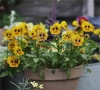
What is the difference between Viola cornuta and pansy? A detailed guide to Viola cornuta sowing time
In the colorful world of flowers, Viola cornuta stands out with its unique charm, becoming a favorite of many gardening enthusiasts. Viola cornuta, belonging to the genus Viola in the family Violaceae, is a herbaceous plant that is perennial but often cultivated as an annual. Its plants are petite and exquisite, usually only 10 to 30 cm in height, appearing compact
-
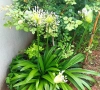
How Many Times a Year Does Agapanthus Bloom? Detailed Guide to Growing Methods and Precautions
Today I'm introducing you to a super beautiful flower, the agapanthus (Agapanthus)! The agapanthus is truly a representative of fresh, refined elegance in the floral world! Its flower stems are slender and graceful, and its blooms open in umbel-like clusters, with each small flower looking like a carefully carved work of art. The petals come in elegant blue-purple or pure white, as if
-

A Detailed Guide to the Blooming Period, Cultivation Methods and Precautions for China Asters
Recently, a popular saying has been spreading widely in overseas circles: "Have you been astered today?" It uses a homophone pun on "China aster" (cuiju) to mean "resolutely rejected (cui ju)". In fact, the China aster is a chrysanthemum that fills people with joy once it blooms, because every one of its colors is extremely eye-catching, and placing it in the home gives a sense of
-

How Cold-Tolerant Is the Rosary Vine? Detailed Guide to Cultivation Methods and Precautions
The rosary vine, also known as the collar of hearts, is a succulent plant belonging to the genus Ceropegia in the family Apocynaceae, and it is much loved for its unique growth form and heart-shaped leaves. However, this plant is relatively weak in cold tolerance, and its most suitable growth temperature is 15°C to 25°C. When the temperature stays below 10°C for a long time, the growth of the rosary vine will be
-
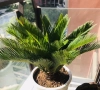
How to grow a sago palm in a pot? Detailed guide to care methods and precautions
The sago palm, botanically known as Cycas revoluta, is an ancient and unique potted plant. With its tenacious vitality and distinctive ornamental value, it is favored by many plant enthusiasts and holds a place in home gardening. The sago palm has a highly recognizable plant form, with a thick trunk whose bark presents an ancient
-

Beginner's Guide to Sowing Herbaceous Plants: Improving Germination Rates and Solving Common Sowing and Growing Problems
Herbaceous plants, as the name suggests, are plants with soft stems that do not become woody. They come in a wide variety, from delicate flowers to spice plants and medicinal herbs, there is everything you could want. For gardening beginners, growing herbaceous plants is an excellent entry-level choice. Below are some tips for improving the germination rate of herbaceous plants
条件筛选