-

Can yew bark be used to cultivate lingzhi (Ganoderma lucidum)?
Lingzhi is a traditional fungal medicine of ancient China, with good health-care and medicinal effects. Paclitaxel is considered a natural anticancer drug discovered through research over the past 30 years. It is now used in more than 40 countries for the treatment of various cancer diseases. Yew has become the main tree species for paclitaxel drug production. The bark of yew is the organ with the highest paclitaxel content. Cultivating lingzhi mycelium and fruiting bodies using the sterilized-substrate production method with yew bark as the culture material can achieve relatively good results. 1. Process flow
-
High-yield Cultivation Techniques for Lingzhi (Ganoderma lucidum) Grown on Sterilized Linden Wood Logs
I. Production Season: Based on the suitable temperatures for the growth of lingzhi mycelium and fruiting bodies, in both northern and southern regions, wood can be felled in early December of the lunar calendar, cut and bagged in mid-December, sterilized, and inoculation completed by late December. Around Qingming (Tomb-Sweeping Day) of the following year, the logs are buried in the field, and 2-3 batches of lingzhi can be harvested that same year. However, felling must not be later than Qingming, because wood felled after Qingming has high moisture content, the bark tends to fall off, and nutrient loss makes it unsuitable for production. Logs inoculated around Qingming can only produce 1-2 batches of lingzhi that year. II. Wood Requirements: All tree species suitable for log cultivation of shiitake mushrooms and wood ear mushrooms can be used
-
Short-log sterilized-substrate cultivation techniques for reishi (Ganoderma lucidum)
Short-log sterilized-substrate cultivation is a new reishi cultivation technique that has developed rapidly in recent years. On average, each cubic meter of wood yields more than 20 kg of dried reishi, with high yields reaching more than 30 kg, an increase of 20% over conventional cultivation methods. The reishi is firm and thick in texture with a glossy surface, and its acid content is higher than that of bag-cultivated reishi. More than 90% of the product meets export requirements. 1. Cultivation season: Reishi is a medium-to-high temperature type fungus, and its yield is related to the tree species of the logs, the cultivation time and the cultivation technique. Inoculation time can be arranged from late October to December, or from early February to
-
What are the key points to note in the styling of lingzhi (Ganoderma) bonsai?
1. Proceed step by step, and treat every bonsai as a masterpiece. In addition to the quick wit and clever ideas needed when cultivating and shaping lingzhi, the later assembly stage demands even more patience and care: the first step is to dry and tidy the shaped lingzhi, and to select the rocks, coarse sand grains, tree stumps, and sun-dried companion materials such as moss, branched ground cover and Selaginella (spikemoss), the raw gypsum powder used for fixing, and small accessories such as pavilions and towers; the second step is the actual shaping work, starting with the imagery of a single lingzhi such as "a single branch standing out in beauty", "auspicious herb bringing good fortune" and "good luck and happiness", then
-
What to do when white ants (termites) infest Ganoderma lucidum?
The white ant (Coptotermes formosanus Shiraki), also known as the termite or house termite, belongs to the class Insecta, order Isoptera. 1. Morphology and habits: Each colony contains three morphological forms and different functional types of termites. The large-winged ant (a type of reproductive ant), also called the flying ant, has a body length of 7.5-8.5 mm, wing length of 11 mm, a nearly round brown head, inconspicuous secretory pores, and 21 antennal segments. The thorax and abdomen are yellowish-brown. The wings are grayish-white and transparent, with the wings and front margins pale yellowish-brown. The soldier ant has a body
-
What are the causes of contamination in Lingzhi (Ganoderma) spawning?
1. Damage contamination (1) Container damage: mechanical damage caused by failure to handle with care during filling, sterilization, inoculation, transport and cultivation. (2) Air-pocket damage: rapid heating, pressure rise or rapid cooling during sterilization; excessive exhaust speed, causing bags to swell with air and rupture. 2. Cotton plug contamination (1) Cotton plug contamination: the test tube mouth is stained with culture medium or the bottle (bag) mouth is not clean, or the culture medium comes into contact with the cotton plug. (2) Cotton plug dampened: improper stacking during sterilization, too much water added, or unreasonably built sterilization stove, or culture
-
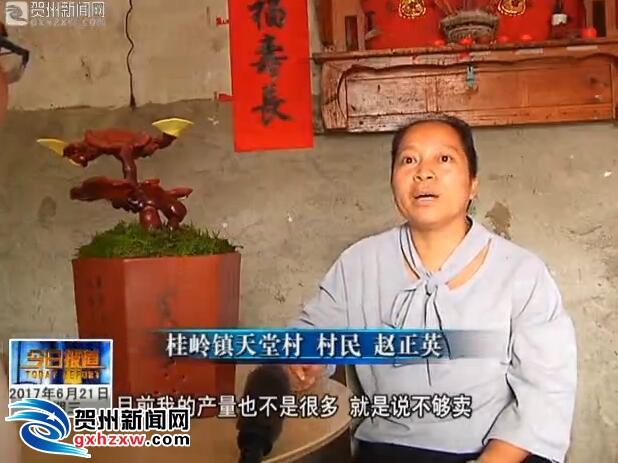
Lingzhi (Ganoderma lucidum) becomes a money-making "fairy herb" - how did Zhao Zhengying do it?
Zhao Zhengying: Making lingzhi (Ganoderma lucidum) a "money-making fairy herb"
-
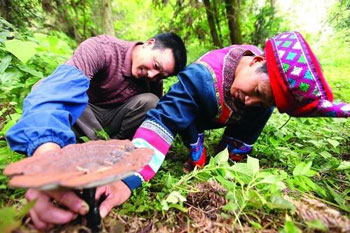
Understory imitation-wild Ganoderma cultivation fulfills the dream of escaping poverty
Understory imitation-wild Ganoderma, the immortal herb, fulfills the dream of escaping poverty
-
-
条件筛选