-
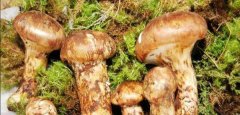
Can matsutake be cultivated artificially? Differences from wild ones and how much per jin
Can matsutake be cultivated artificially? Yes, it can, but artificially cultivated matsutake is very different from wild matsutake, so let's take a look at their differences below. Also, the prices of fresh and dried matsutake. Differences between artificial matsutake and wild matsutake: the color is different; wild matsutake
-
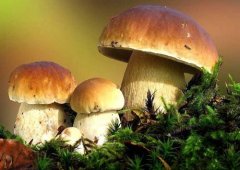
Is the porcini mushroom poisonous? Why does eating porcini cause poisoning, and how much does fresh porcini cost per jin?
Porcini mushrooms are mainly produced in Yunnan, so the price of porcini in Yunnan is somewhat cheaper than porcini from other places; the market price of Yunnan porcini is around 25 to 50 yuan per kilogram. As for the claim that porcini is poisonous, what is your view? If it really is toxic,
-

Key Points and Detailed Methods of Fresh Mushroom Salting Technology
1. Selection of fresh mushrooms: Fresh mushrooms to be salted should be harvested at the right time, and impurities, diseased, insect-damaged and moldy parts should be removed. The caps of the fresh mushrooms are required to be intact, the roots of the fresh mushrooms should be removed, and for oyster mushrooms the clustered fruiting bodies should be separated one by one, discarding deformed mushrooms; for nameko mushrooms and lion's mane mushrooms, the aged stipes should be cut off. It is worth noting that fresh mushrooms harvested on the same day should be processed on the same day, and must never be left overnight. 2. Rinsing of fresh mushrooms: Put 0.3 kg of table salt into 50 kg of water. (Do not make it too concentrated, otherwise the mushroom bodies will turn red.) Dissolve to make a 0.6% salt solution, and wash off the surface of the fresh mushrooms.
-
Key Technical Points and Detailed Methods for Salt-Preserving Fresh Mushrooms
1. Mushroom selection: Mushrooms to be salt-preserved should be harvested at the right time, cleaned of impurities, and any diseased, pest-damaged, or moldy specimens removed. For button mushrooms (Agaricus bisporus), the caps should be intact and the base of the stem trimmed off; for oyster mushrooms (Pleurotus ostreatus), the clustered fruiting bodies should be separated one by one and deformed mushrooms discarded; for lion's mane (Hericium erinaceus) and nameko (Pholiota microspora), the aged stipes should be cut off. Harvest and process on the same day; do not leave overnight. 2. Rinsing: First wash off dirt and other impurities from the surface of the mushrooms with a 0.6% salt solution (too strong a solution will turn the mushrooms red), then rinse with a citric acid solution (pH 4.5)
-
What is the fresh-keeping principle for edible fungi? This article will help you understand it clearly
Fresh-keeping for edible fungi (theprincipleoffresh-keepingforediblefungi): Mushroom bodies separated from the culture substrate still have vitality, and living organisms have resistance to adverse external environments and microbial infection. However, the stronger the life activity, the faster the rate of freshness decline. Therefore, without destroying the normal physiological functions of the organism, by controlling various factors that affect the physiological and biochemical changes of fresh mushroom products, the life activity of the mushroom body can be kept as low as
-
How to Keep Edible Mushrooms Fresh? These 4 New Methods Are Worth Trying
Edible mushroom fruiting bodies are prone to browning and rotting and are difficult to store, which affects their commercial value. Here is a brief introduction to several new methods for keeping edible mushrooms fresh. 1. A new chemical preservation method for oyster mushrooms: Remove impurities from fresh oyster mushrooms and spread them flat on a clean plastic film. Prepare a chemical compound preservative solution of a certain concentration (calcium propionate at 0.3% concentration, potassium sorbate at 0.1% concentration, sodium sulfite at 0.25% concentration), use a sprayer to evenly spray both sides of the oyster mushrooms, then place them in fully sealed plastic bags and store them in a clean and hygienic place. This can make
-
Many Methods for Keeping Edible Mushrooms Fresh: A Few Practical Tips for You
Edible mushrooms generally have a high moisture content, are rich in nutrients, have a tender texture, and undergo intense physiological and biochemical activity, so if they are not sold and processed promptly after harvest, their commercial quality will be seriously affected, causing considerable economic loss. To prevent losses when harvested edible mushrooms cannot be sold or processed in time, mushroom growers must master edible mushroom preservation techniques. Preserving edible mushrooms keeps the flavor of the fresh product basically unchanged, preserves its nutritional value to the greatest extent possible, and offers advantages such as easier storage, processing and transport.
-
How to keep edible mushrooms fresh? Ten practical methods shared
1. Cold storage preservation: After harvesting, the fresh mushrooms are sorted and placed in baskets, covered with multiple layers of wet gauze or burlap. In a cool place, place a vat containing a small amount of clean water, set a wooden rack above the water, place the baskets on the rack, and seal the vat opening with plastic film. 2. Dormancy preservation: After harvesting, place them indoors at above 25°C for 3-5 hours to encourage vigorous respiration, then place them in cold storage at around 0°C for about 12 hours; at around 20°C, the fresh-keeping period is about 4-5 days. 3. Controlled atmosphere preservation: This method artificially controls the temperature of the environment
-
Detailed Guide to Making Edible Mushroom Fresh-keeping Bags
1. Materials: hypophosphorous acid (50% aqueous solution), aluminum silicate (with an alumina content of 28%), gauze bags. 2. Making: ① Prepare the fresh-keeping agent: mix 1 part hypophosphorous acid and 1.2 parts aluminum silicate evenly, dry with hot air (a hot air blower may be used), then grind and pulverize, and finally pass through a 200-mesh sieve to obtain the fresh-keeping agent. ② Bagging: put the required amount of fresh-keeping agent into gauze bags (dosage 0.2-2 grams/bag) and seal them to obtain edible mushroom fresh-keeping bags. ③ Storage: fresh-keeping bags or fresh-keeping agent not used temporarily should be sealed and stored away from light.
-
Stir-fried Tea Tree Mushrooms with Scallops in Teriyaki Sauce: fresh, fragrant and savory, perfect with rice
"Stir-fried Tea Tree Mushrooms with Scallops in Teriyaki Sauce" is a stir-fry with a Japanese touch. The "teriyaki sauce" here is Japanese-style "meat teriyaki sauce," though a Korean-made version can also be used, and the taste will not differ much. Some old friends think this kind of sauce is a "professional" seasoning, so they rarely buy it to use at home. In fact, it is a very widely used sauce; besides Korean and Japanese cuisine, it is also commonly used in Chinese and Western cooking. This teriyaki sauce can be used to cook fish, meat, vegetables and mushrooms, mostly by pan-frying, stir-frying, braising and simmering. At home, you can use teriyaki sauce to make stir-fries and some
条件筛选