-

Gardening Embroidery: Freezing Fresh Flowers in Time, Enjoying a Slow Plant Life
Slow plants. Life. Handicrafts. Living in England, Olga Prinku is a versatile graphic designer and crafting expert, and also a floral...
-
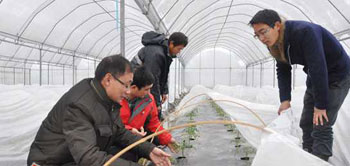
How to prevent cold and freezing damage in agriculture and fisheries? Experts teach you response methods
Experts teach you how to prevent cold and freezing damage in agriculture and fisheries
-

What remedial measures are there after a kiwifruit tree is damaged by freezing?
What to do if a kiwifruit tree is damaged by freezing
-

Detailed Explanation of Key Points in the Quick-Freezing Processing Technology for Icefish
Quick-frozen icefish are exported to Japan, Southeast Asia, Europe and other places, and are especially popular with Japanese consumers. With the continuous increase in icefish yields from reservoirs, quick-frozen icefish has become one of China's export aquatic products with a relatively high foreign exchange earning rate. 1. Preservation and transportation of raw fish. Icefish have small bodies and thin skin, are highly prone to spoilage, and have a strong seasonal production period. To ensure the quality of the icefish, ice can be brought aboard the boat during fishing so that preservation can be carried out immediately. The specific method is to first sort and classify the caught icefish on the boat,
-
Detailed Explanation of Key Operational Points for Peach Quick-Freezing Processing Technology
(1) Process flow: raw material selection → pitting and color protection → blanching and cooling → peeling → packaging and syrup injection → pre-cooling → quick-freezing → frozen storage. (2) Key operational points: Raw material selection. After peaches are harvested, ripe ones must be processed immediately; hard, unripe fruits need to be ripened. Properly ripened peaches have bright color, rich flavor, and are easy to pit and peel. Pitting and color protection: after the raw materials ripen, remove the pits with a small knife or a pitting machine, and immediately place the flesh into cold water to avoid contact with air and prevent discoloration. The pitting machine has flesh fragments attached,
-
Detailed Explanation of Key Technical Points in the Quick-Freezing Process for Exported Shrimp Meat
1. Process flow: Raw material acceptance → Raw material storage → Raw material thawing → Shrimp peeling → Acceptance → Washing → Soaking → Blanching → Cooling → Size grading → Freezing → Ice glazing → Metal detection → Boxing → Refrigerated transport 2. Operational key points 2.1 Raw material acceptance QC (quality control team) must inspect quality to prevent blackened shrimp. If blackened shrimp are found, promptly report back to the importer for handling. Keep a "Raw Material Acceptance Record" for each batch of raw materials. 2.2 Raw material storage: Store by container batch number at
-
Technical key points for restoring tea production after snow disaster and freezing damage to tea plants
This year, some tea regions across the country experienced severe weather such as heavy snow and low-temperature freezing that had not occurred in decades, causing tea branches to break, leaves to discolor and dry up, and branches to die, resulting in varying degrees of snow disaster and freezing damage. In order to restore tea production as quickly as possible and reduce the economic losses of tea farmers, the following technical key points are proposed according to the disaster conditions. 1. Pruning 1. Mild freezing damage (only leaves damaged): do not prune or lightly prune as appropriate. 2. Moderate freezing damage (production branches damaged) and severe freezing damage (framework branches damaged): prune when the boundary between the frozen-dead part and the healthy part is clear,
-
Detailed Explanation of Soft-Packaging Quick-Freezing Fresh-Keeping Technology for Oyster Mushrooms
Oyster mushrooms have a tender and crisp texture, making them inconvenient to transport and store. Especially during high-temperature periods and peak harvest seasons, if the processing capacity at the place of origin cannot keep up, exporting becomes difficult, and the problem of "difficulty in selling mushrooms" often arises. Therefore, the problems of oyster mushroom sales, transportation, storage, and processing should be fundamentally solved. There are three main traditional methods for storing oyster mushrooms: First, processing them into salted mushrooms for export and domestic sale. However, from the perspective of domestic sales, due to the high salt content, they need to be soaked repeatedly many times before consumption, which is not only time-consuming and laborious, but they still taste too salty when eaten, and the flavor deteriorates, making it difficult for consumers to
-
What are the key points of freezing technology for frozen rabbit
1. Freezing facilities Currently, frozen rabbit processing in China mostly uses mechanized or semi-mechanized operations, and its process level and hygiene standards have reached international levels. The freezing processing rooms mainly include cooling rooms, cold storage rooms and freezing rooms, etc. In medium-sized frozen rabbit meat processing plants, since the slaughtering room is generally located on the top floor of the building, the meat cooling room should also be located on the top floor so as to be connected to the slaughtering room, followed in sequence by the cold storage room and the freezing room, while the freezing room should be located on the ground floor so that it can be directly shipped or used for temporary storage by other processing rooms
-
Guidelines for Fishery Reconstruction Measures After Rain, Snow and Freezing Disasters in Southern China
Since early January 2008, rain, snow and freezing weather has severely affected fishery production in multiple provinces and municipalities in southern China. According to incomplete statistics, losses from fish and shrimp killed by freezing in southern provinces and regions exceeded 10 billion yuan. In response, the following measures and suggestions for freshwater fishery reconstruction after rain, snow and freezing disasters in southern regions are proposed for reference. In terms of aquaculture species and regions, the current damage is mainly divided into the following types: 1. Tilapia aquaculture: The tilapia aquaculture industry suffered the most severe losses during this winter's cold wave.
条件筛选