How to prevent cold and freezing damage in agriculture and fisheries? Experts teach you response methods
Original title: Agriculture and fisheries experts go to various places to guide cold and freezing prevention
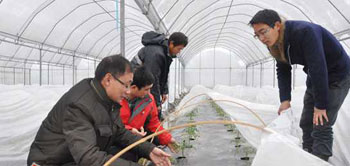
Experts go to the countryside to guide cold and freezing prevention (online illustration)
As temperatures continue to drop, recently, the municipal agriculture and fisheries departments issued cold prevention reminders and sent technical personnel deep into fields and farming areas to carry out guidance work.
At present, the Municipal Agriculture Bureau has issued a notice to agriculture departments in all counties (cities) and districts, requiring that according to disaster prevention and mitigation plans, manpower and materials be scientifically dispatched, and that personnel, supplies, and technology be "in place" in all three aspects, striving to minimize losses caused by disasters. Agriculture experts have gone to all counties (cities) and districts to carry out supervision and guidance for current agricultural cold and freezing prevention work.
Li Wu, head of the Planting Industry Division of the Municipal Agriculture Bureau, reminds: before cold (freezing) damage arrives, growers should adopt measures such as irrigation for warmth, covering with grass to protect seedlings, smoking to raise temperatures, and bagging to protect fruit, so as to reduce harm. Winter-planted potatoes can be protected by measures such as plastic film mulching and rice straw covering; for spring-planted potatoes, sow again after temperatures warm up. For fruit trees susceptible to freezing such as early-maturing loquat, in addition to doing a good job of orchard cleaning, hilling soil, and whitewashing tree trunks, measures such as timely smoking and fruit bagging should also be taken to prevent the effects of low temperatures. Vegetable production can use measures such as plastic film or rice straw mulching, increased application of heat-producing phosphorus and potassium fertilizers, and spraying cold-prevention agents; facility vegetables should be reinforced in shed structures, with moderate ventilation during the day and good insulation at night; where conditions permit, measures such as electric heating can be taken to raise temperatures.
In terms of cold and freezing prevention for animal husbandry, attention should be paid to the inspection and repair of livestock and poultry sheds and power supply systems to ensure electricity supply and maintain shed temperature; pig and cattle sheds should be thickened with bedding material to keep them dry and warm; feed (forage) and drinking water must be guaranteed in supply, and energy feed such as corn should be appropriately increased. At the same time, close attention should be paid to preventing epidemics and diseases to ensure the safety of animal husbandry production.
Farmers should do a good job in advance of reinforcing facility greenhouses and livestock and poultry sheds. In areas where snowfall occurs, snow on facility greenhouses and livestock and poultry sheds should be cleared in a timely manner; after the weather warms up, attention should be paid to pest and disease control.
The fisheries department of our city will organize experts to rush to all counties (cities) and districts to guide farmers in doing a good job of keeping aquaculture water warm and preventing infectious diseases. Experts remind: for artificially pond-cultured species susceptible to freezing damage, sheltering with sheds should be adopted as much as possible for insulation. For natural ponds, the water level should be appropriately raised and the pond water storage capacity increased to avoid large-scale freezing injury and death of cultured organisms. In terms of cage culture, cages can be sunk as much as possible to maintain a water depth of more than 2 m; for cultured species and broodstock whose cold-prevention conditions cannot be improved, they should be promptly transferred to land-based aquaculture. Broodstock of major cultured species should be well protected and cultivated to ensure sufficient broodstock and fry for aquaculture production next year. For cultured products about to reach commercial specifications, harvest them promptly and sell them on the market; at the same time, prevent the occurrence of water mold, ichthyophthiriasis, and bacterial diseases, and do a good job in water quality improvement and regulation, disinfection, and other work. (Reporter Huang Ling)