-
How to Grow Lychee Seeds So They Sprout and Bloom? A Detailed Guide to the Hydroponic Method
Today I'm sharing a step-by-step guide to turning lychee seeds into green plants, covering the whole process from soaking to a full pot, so even beginners can easily get it. Seed selection and soaking: not all lychee seeds can sprout! Give priority to varieties with large seeds and hard, plump shells, such as Lychee King and Bai Tang Ying, which are very suitable. Those shriveled ones or ones with wormholes
-

How to Treat Diseases in Cherry Tomatoes? A Detailed Guide to Pest and Disease Control Methods
Cherry tomatoes are nutritious and have a unique flavor, but they are prone to pest and disease problems during growth. Mastering scientific control methods is the key to ensuring their healthy growth. I. Common Pests and Their Control 1. Leafminer Symptoms: White winding tunnels appear on the leaves, which gradually turn yellow and wither. Control: Hang yellow sticky traps to catch adult flies; choose
-

Should the original sphagnum moss be removed when repotting Phalaenopsis seedlings? A detailed guide to the potting method
Many flower lovers who grow Phalaenopsis seedlings get worried when it comes to repotting: should the original sphagnum moss be removed? How should you pot them so the seedlings survive well? Here are the key points straight away. Should the original sphagnum moss be removed or not? The answer is it must be removed, but not all of it! Phalaenopsis is an aerial-root plant, and in its native environment it relies on loose
-

Detailed Guide to Watering Methods and Techniques for Phalaenopsis in Root-Control Pots
Do beginners always end up with root rot when growing Phalaenopsis? The key may lie in how you water a root-control pot. Today I'm sharing super-detailed care tips, teaching you step by step how to get your orchid's roots to grow in an explosive, pot-busting way. Phalaenopsis is native to growing epiphytically on tree trunks and rocks, nourished by air humidity and rainwater; when growing it in a root-control pot, you need to precisely replicate that wet-dry cycle and refuse to let water accumulate.
-
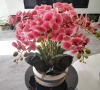
A Detailed Guide to Taboos and the Best Locations for Placing Phalaenopsis Orchids in the Living Room
It is often said that Phalaenopsis orchids symbolize wealth and good fortune, but if you place them in the wrong spot, not only will they fail to grow well, but their symbolic meaning will be greatly diminished. Today, let me share with you a guide to the pitfalls of placing Phalaenopsis orchids in the living room. Follow these tips, and your flowers will bloom abundantly and good fortune will come your way. 1. Missteps to Avoid 1. Do not place them in strong light or dark corners. Phalaenopsis orchids prefer bright, indirect light.
-

Is carbendazim for flowers and plants harmful to humans? A detailed explanation of its effects and uses
For experienced gardeners, the proper use of fungicides is the most ordinary thing. But for novice flower lovers, they are often prone to gullibly trusting online tutorials, and carelessly get the frequency of use wrong, causing the opposite effect. So, regarding the most common methods of using carbendazim, what issues need attention
-

Can Phalaenopsis Roots Photosynthesize? A Detailed Explanation of Their Functions and Roles
Phalaenopsis (moth orchid) is famous for its flowers. People tend to focus their attention on its gorgeous blooms, yet rarely notice its unique root system. So do Phalaenopsis roots photosynthesize? And what functions do they have? Phalaenopsis is an epiphytic plant, and its roots are completely different from the roots of common plants that grow in soil - they are aerial roots.
-

How many types of roots does a Phalaenopsis orchid have? A detailed explanation of root functions
In the vast and diverse world of flowers, beyond its stunning blooms, the Phalaenopsis orchid's root system is equally full of mystery. These roots of varying forms are not only key to the plant's survival but also carry unique biological functions. From appearance and function, Phalaenopsis roots can mainly be divided into aerial roots and underground roots, but as a typical
-

How Does the Phalaenopsis Absorb Nutrients? A Detailed Explanation of Its Nutrient Sources
The Phalaenopsis, the "beauty icon" among orchids. The question of how Phalaenopsis absorbs nutrients and what it relies on to absorb them may not be familiar to everyone. Behind its beautiful blooms, an efficient nutrient absorption mechanism plays a key role. So where exactly does the Phalaenopsis absorb nutrients from? And what does it rely on to complete
-

How Long After Dividing a Phalaenopsis Should You Fertilize? A Detailed Guide to Fertilizing Methods
When it comes to caring for Phalaenopsis orchids, especially fertilizing management after division, many flower lovers may not be very familiar with it. Division propagation is a common method for cultivating new plants, and fertilizing management after division is a key part of ensuring healthy growth of Phalaenopsis orchids. Mastering the correct fertilizing timing and methods can let Phalaenopsis orchids thrive after division
条件筛选