-
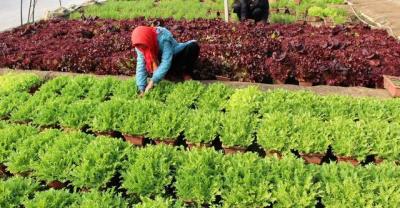
Why do dark-colored vegetables have higher nutritional value than light-colored vegetables?
Dark-colored vegetables, as the name suggests, refer to vegetables with darker colors. Compared with light-colored vegetables, dark-colored vegetables tend to contain more chlorophyll, carotene and other substances...
-

What causes abnormal leaf color in rapeseed? Cause analysis and control methods
Causes of abnormal leaf color in rapeseed and control methods
-

Detailed Guide to Gynura bicolor Cultivation Techniques: Master the Key Points of Cultivation and Management
Gynura bicolor Cultivation Techniques
-

Can Gynura bicolor be grown in the north? Planting time, techniques and people who should avoid it
Gynura bicolor planting techniques
-
Why are potatoes so colorful? Peru has bred new colorful varieties
Have you ever seen "colorful" potatoes? In Peru, besides the most ordinary earth-yellow potatoes, local farmers also grow potatoes in a riot of colors and bizarre shapes, bringing Peru's potato varieties to as many as 3,500. During the potato harvest season in the Andean mountain region, many local farmers are busy harvesting potatoes. The potatoes here are no longer a single earth-yellow, but come in a dazzling array: yellow, red, blue, purple, violet, and pink with yellow spots, and so on. The many-colored
-
Colored potatoes successfully introduced and cultivated in Ningshan County, Shaanxi
From the Zhengzhou Grain Wholesale Market: In a trial field in Jieyan Village, Jifaping Town, Ningshan County, Shaanxi Province, freshly dug potatoes displayed a striking array of colors including bright red, light red, deep purple and pale yellow. These are new specialty-type potato varieties introduced and developed through cooperation between the Ningshan County Agricultural Technology Center, the Ningshan County Seed Company and Northwest A&F University, with 12 new varieties introduced from the United States and Canada for the first time. After successful spring trial planting in 2004 at Xunyangba Town at an altitude of 1300 m
-
Causes and Control Measures of Abnormal Leaf Color in Wheat Seedlings
After wheat is sown and emerges, various abnormal discolored seedlings often form due to the influence of natural conditions and cultivation practices. To facilitate management according to seedling condition and targeted treatment, they are described separately below. Causes of yellowing of leaves in yellow-leaf seedlings. First, soil drought. This situation mostly occurs in wheat fields with insufficient subsoil moisture or where moisture escapes through airy soil. Its characteristics are: slow tiller emergence, grayish-green leaf color, short and small central leaves, slow or stagnant growth (which farmers call "shriveled-heart seedlings"), gradual yellowing and withering of the middle and lower leaves, and few and fine roots. Key management points
-
Detailed explanation of colored bell pepper cultivation techniques, planting methods easy to understand at a glance
Select good varieties. Choose F1 hybrid varieties with large fruit, good quality and strong disease resistance, using 2000 seeds per 667 m2. Cultivate disease-free strong seedlings. Do a good job of seedbed disinfection and seed disinfection; soak seeds in 10% trisodium phosphate for 30 minutes, rinse and then soak to promote germination, preferably raising seedlings in 128-cell trays. When raising seedlings in summer and autumn, cover with shade net at noon, install insect-proof net at the air vents to prevent insects and prevent viral diseases; before transplanting, spray 1-2 times with Zhibingling II, spray 3-4 times with potassium dihydrogen phosphate, to prevent excessive growth, aging and the occurrence of diseased and weak seedlings. Fertilization, soil preparation
-
Selection of Greenhouses for Colorful Bell Peppers and Key Cultivation Techniques
The colors of colorful sweet peppers include red, golden yellow, purple, light purple, cream yellow, and others. The fruit shape is square and large, the skin is smooth, and the flesh is thick, with flesh thickness reaching 5 to 7 mm, single fruit weight 200 to 400 grams, and a maximum of up to 500 grams; the taste is sweet and crisp, the nutritional value is high, and it is suitable for eating raw. Colorful sweet peppers are tolerant of low temperatures and weak light, and have a long growth period. In recent years, China has introduced colorful sweet peppers from countries such as the United States, the Netherlands, and Israel, planting them in the suburbs of Beijing, Shanghai, and other cities, with good results, and they have developed rapidly nationwide. The greenhouse cultivation techniques are now
-
Detailed Explanation of Key Points for Cultivating Colored Rice
Nutritional and health rice, namely red rice, black rice, and fragrant rice, are traditional premium and precious rice varieties in China. I. Fragrant indica rice. It ranks first among the four premium rice varieties first recommended by the Rice and Rice Products Quality Supervision and Testing Center of the Ministry of Agriculture. After testing and evaluation of 12 indicators, all exceed the first-grade rice standards. Its grains are jade-like in color, and the content of trace elements, especially selenium, is very high, making it the best variety for developing pollution-free green food. The fragrant indica rice plant height is 100 cm, about 150 grains per panicle, 1000-grain weight 28 g, usual yield 500-550 kg per mu, and the whole growth period is 136
条件筛选