-
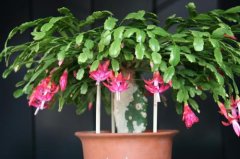
What to Do When Christmas Cactus Drops Its Flower Buds? Causes and the Best Fertilizer Choices
If you grow a Christmas cactus, this potted plant is not the easiest to care for. Would you like to know some tips for growing a Christmas cactus, such as what causes it to drop its flower buds and what to do about it? What fertilizer is best for a Christmas cactus? When a Christmas cactus drops its flower buds,
-

What kind of tree is a Christmas tree? How much does one cost?
The Christmas tree is one of the important elements of Christmas. People generally bring it indoors or place it outdoors, decorate it with Christmas lights and colorful ornaments, and put an angel or a star on top of the tree. So, what kind of tree is a Christmas tree? How much does it cost
-
How to grow grafted Christmas cactus? Cultivation methods and precautions
Summary Methods for cultivating grafted Christmas cactus: in winter, water once every 4-5 days, while in spring, summer and autumn, water once every 2-3 days; during the growing period, apply an appropriate amount of cake fertilizer, phosphorus fertilizer, nitrogen fertilizer, etc.; the suitable growing temperature is 15-25°C, and it can receive 8-10 hours of light per day.
-
How to Grow a Christmas Cactus? A Detailed Guide to Cultivation Methods
Summary Soil: For potting, you can use peat, perlite, and ceramsite mixed in a 2:2:1 ratio. Temperature: It needs plenty of light, and the suitable temperature is 15-32°C. Watering: In summer, water once every 2-3 days; in spring and autumn, water once every 4-5 days; in winter, water once a week. Fertilizing: Apply decomposed liquid fertilizer once every 15 days; in autumn, apply phosphorus and potassium fertilizer; stop fertilizing after flowering. Repotting: Repot once every two years, and this can be done in spring.
-
How to grow and cultivate Christmas cactus (Schlumbergera), the soil should be kept moist
Summary Potting soil: choose a sandy soil that drains well, is airy, and yet retains moisture; place about 2cm of small stones at the bottom of the pot and apply base fertilizer. Watering: the soil needs to be kept moist, water every other day. Fertilizing: apply a dilute liquid fertilizer about once every 15 days, and stop fertilizing during the high-temperature period in summer. ⟦4 <p class="cintro"><span>Summary</span>Potting soil: choose a sandy soil that drains well, is airy, and yet retains moisture; place about 2cm of small stones at the bottom of the pot and apply base fertilizer. Watering: the soil needs to be kept moist, water every other day. Fertilizing: apply a dilute liquid fertilizer about once every 15 days, and stop fertilizing during the high-temperature period in summer. Light and temperature: the suitable temperature is 20-25°C, place it in a well-ventilated shaded spot. Pest and disease control: actively prevent and control red spider mite damage.</p> <p></p> <p>Christmas cactus is a beloved plant; it can effectively absorb carbon dioxide from the air and purify the air. The flower colors of Christmas cactus are divided into red, yellow, purple, orange, pink, etc., but red flowers are the most common.</p><p></p><p><strong>1. Potting soil</strong></p><p>Choose a sandy soil that drains well, retains moisture, and is airy. You can mix sandy soil, leaf mold, compost soil, and sand in a 3:4:2:1 ratio to make a soil suitable for Christmas cactus growth. When planting in a pot, you can place about 2cm of small stones at the bottom of the pot, then spread a layer of thin soil, then sprinkle some decomposed chicken manure, bone meal, and hoof and horn shavings on the thin soil as base fertilizer, then add another thin layer of potting soil over the base fertilizer. Then place the Christmas cactus in the center of the pot, add the previously prepared soil to maintain the original depth, then press the soil firmly. After watering thoroughly, place it in a semi-shaded spot.</p><p></p><p><strong>2. Watering</strong></p><p>Christmas cactus likes to grow in a semi-shaded, moist environment, and during its growing period the soil should be kept moist. You can water once a day or every other day, and you can spray from top to bottom to wet the plant. About every 4 days you can water the soil thoroughly. This kind of watering can maintain the moisture level of the soil without becoming too dry or too wet. Christmas cactus has two periods when growth stops: after flowering and during the high temperatures of summer. At these times, water appropriately, and water thoroughly only after the soil has dried out. During high temperatures, you can spray water, which can lower the temperature, but be careful not to water at noon, when moisture evaporates relatively quickly.</p><p></p><p><strong>3. Fertilizing</strong></p><p>During the growing period of Christmas cactus, apply a dilute liquid fertilizer about once every 15 days. You can mix 30 grams of potassium fertilizer, 15 grams of nitrogen fertilizer, and 20 grams of phosphorus fertilizer. During the high-temperature period in summer, fertilizing can be stopped. In autumn, you can fertilize Christmas cactus every week, which can provide sufficient nutrients and help flower bud formation, while in winter you can spray a 1000-fold potassium dihydrogen phosphate liquid fertilizer on the leaf surface once a week.</p><p></p><p><strong>4. Light and temperature</strong></p><p>During the growing period, Christmas cactus should be placed in a well-ventilated shaded spot. By mid-October, Christmas cactus has already produced flower buds, and it can be moved indoors or placed in a spot with ample sunlight to avoid frost. The suitable growing temperature for Christmas cactus is 20°C-25°C. If the temperature is above 22°C, place Christmas cactus in a ventilated shaded spot. In winter, the indoor temperature for Christmas cactus needs to be maintained above 10°C, because when the temperature is above 35°C or below 2°C, the plant will stop growing.</p><p></p><p><strong>5. Pest and disease control</strong></p><p>In hot weather, red spider mites are most likely to occur and spread. Small yellow-brown spots will appear on the stems, and in severe cases the stem color will turn yellow and cause wilting. Red spider mites are most likely to appear when there is no ventilation. If only a few are found, they can be washed off with clean water. In severe cases, you can spray a 0.2-degree lime sulfur mixture or a 40% dicofol emulsifiable concentrate 2000-fold solution.</p>
-
A Detailed Guide to Pruning Methods and Cultivation Techniques for Christmas Cactus
It is autumn once again, and many plants that lay dormant in summer begin to grow one after another in this season. Autumn is also the growing season for the Christmas cactus, and this season is a worrying time for gardeners who grow Christmas cactus. Not only must they strengthen its routine care, but the Christmas cactus also
-
How to water a Christmas cactus without root rot? Detailed watering methods and tips
For growing a Christmas cactus, choose a soil that is loose, airy and well-draining. Because when growing a Christmas cactus, water is an issue that needs special attention. Especially during the bud stage, overwatering will not only cause the hard-won buds to drop, but can also cause the Christmas cactus
-
A Detailed Guide to Grafting and Leaf Cuttings Propagation Methods for Christmas Cactus
The Christmas cactus (Schlumbergera) belongs to the cactus family. It is not only especially easy to grow, but by November it begins to produce very beautiful rose-red flowers, and its blooming period is particularly long. Many friends want to use grafting to make their potted plants more compact and beautiful, but grafting a Christmas cactus also requires
-
Why Doesn't the Christmas Cactus Bloom? Detailed Guide to Growing Methods and Precautions
Among cacti there are some unique varieties that look somewhat different from what we usually think of as cacti, yet they are indeed covered in spines and have a certain cactus feel, so people took this unique cactus, along with some of its appearance features, and created
-
How to Grow a Christmas Cactus? Care Methods and Precautions
The Christmas cactus is also called crab claw lotus or crab claw orchid. Its flowers are very beautiful and its flowering period is long, from October to February of the following year, making it an ornamental plant. So, how do you grow a Christmas cactus? 1. Soil: The potting soil should be loose, fertile, well-draining, and slightly acidic. First place a layer of fine sand at the bottom of the pot
条件筛选