-

UMBELLIFERAE Centella asiatica Cultivation Methods and Precautions, and the Feng Shui Significance of Yellowing Leaves
Centella asiatica is slender and easy to grow, with a lovely form; the plants cluster together into a clump, dotted with emerald green leaves, giving it good ornamental value, making it very suitable for household pot cultivation. So, how do you grow Centella asiatica? Below is an introduction to the cultivation methods and precautions
-
How to Grow Centella asiatica? Detailed Guide to the Latest Cultivation Techniques and Methods
Centella asiatica is a perennial herb of the Apiaceae family, also known as Shiba Que, Bengda Wan, Mati Cao, Tongqian Cao, and so on. It often grows in damp, shaded wasteland, near villages, along roadsides, and by ditches. The whole plant of Centella asiatica can be used as medicine; it has the effects of clearing heat and draining dampness, reducing swelling and detoxifying, and can treat summer diarrhea,
-
How to Propagate Centella asiatica? A Detailed Guide to the Latest Propagation Methods
Centella asiatica is a perennial herbaceous plant with a very unusual appearance. It is a common foliage plant in our daily lives, and many people like to grow it. At the same time, its whole plant can be used as medicine, with the effects of clearing heat and draining dampness, reducing swelling and detoxifying. As more and more people grow it
-
Efficacy and Effects of Centella asiatica (Gotu Kola) from the Apiaceae Family and How to Brew It as Herbal Tea
There is a wild vegetable commonly found in the grass piles and thickets of rural Kaiping, with leaves that look like copper coins, bright green. Its name is Leigonggen, also known as Centella asiatica (gotu kola), horse-hoof herb, Bengdawan, blood clam shell herb, lamp grass, old ear, and copper coin grass. Now, the efficacy and effects of Leigonggen
-
A Detailed Guide to the Cultivation Techniques of Centella asiatica (Pennywort)
Centella asiatica, also known as Shibakuai, pennywort, horse-hoof grass, Bengdawan and so on, is widely distributed across many provinces and regions of our country. Centella asiatica has very high medicinal value, with effects such as clearing heat and promoting diuresis, reducing swelling and detoxifying, and it has now been widely developed into an artificially cultivated economic crop. So
-

How to propagate Centella asiatica? A detailed guide to common propagation methods
Propagation methods for Centella asiatica
-

How to Grow Centella asiatica? A Detailed Explanation of the Key Cultivation Techniques
Cultivation Techniques for Centella asiatica
-
A Complete Guide to Growing Pennywort (Centella asiatica) in Soil
1. Soil: Pennywort is not demanding about soil and can even grow in poor soil, but it is not very drought-tolerant. It grows best in slightly acidic, moist soil. A potting mix can be made by blending leaf mold, river mud and garden soil. 2. Fertilizing: Pennywort has a fairly high demand for fertilizer.
-
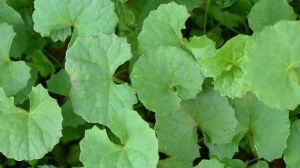
What is the difference between Farfugium japonicum and Centella asiatica? A quick guide to telling them apart
Leaf differences: The leaves of Farfugium japonicum are kidney-shaped, 9-13 cm long; the leaves of Centella asiatica are round, kidney-shaped or horseshoe-shaped, 1-2.8 cm long. Flower differences: The flowers of Farfugium japonicum are pale yellow, oblong or spoon-shaped oblong; the flowers of Centella asiatica are purplish-red or milky white, with ovate petals that are membranous, and a style about 0.6 mm long.
-
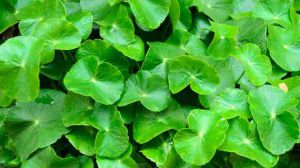
How to Identify Centella asiatica? Master These Identification Features
Leaves: kidney-shaped, round, or horseshoe-shaped, with bluntly toothed margins, petioles about 1.5-27 cm long, green. Flowers: umbels, purplish-red or creamy white. Fruit: spherical, base heart-shaped then becoming flat-topped, compressed on both sides, with longitudinal ridges on each side and small net-like transverse veins.
条件筛选