-

What are the care tips for Calathea roseopicta?
In summer, when temperatures are high, protect the plant from direct sun exposure and provide shade, otherwise the leaves can easily become scorched; if the air humidity is low and the potting soil is dry, the leaf edges will turn yellow and scorch, and direct sunlight will also cause the leaf edges to turn yellow and scorch; for Calathea roseopicta, be sure to repot once every 1-2 years
-
How to Grow Calathea roseopicta? A Full Breakdown of Daily Care Essentials
1. Calathea roseopicta is an excellent shade-loving indoor foliage plant. In the hot summer, protect it from direct sun exposure and shade out 70%-80% of the light, otherwise damage easily occurs. 2. Calathea roseopicta prefers a warm, humid, shaded environment. The optimal growing temperature is 20-30°C, and the overwintering temperature is 15°C.
-
A Detailed Guide to Propagating Calathea lancifolia by Division
This is the most commonly used propagation method for Calathea lancifolia and is well suited to home growing. Division is generally carried out in late spring to early summer when the temperature is around 20°C; however, as long as the temperature and humidity are suitable, it can be done all year round. Division method: First, take the mother plant of Calathea lancifolia out of its pot
-
What are the cultivation methods for Calathea crotalifera?
1. Temperature: Calathea crotalifera is a plant native to the tropics and is fairly tolerant of high temperatures, so if you want to grow it well at home, place it in a growing environment of 20-30 degrees. In winter, the growing temperature should be maintained at around 16-18 degrees.
-
A Detailed Guide to Propagating Calathea lancifolia by Cuttings
The survival rate of the cutting method is far lower than that of division propagation. Cuttings can be taken whenever the temperature is not below 20°C. The cutting method generally uses the tender tips at the top; the cuttings should be about 10-15 cm long, and depending on the size of the leaves, keep one third or one half of them.
-
How to care for Calathea insignis (cat's eye prayer plant) in winter? Master these points to note
Temperature In winter, if the temperature stays below 13°C for a long time, the leaves of Calathea insignis will suffer cold damage. Therefore, the wintering temperature for Calathea insignis must not be lower than 13°C. It is recommended to keep the temperature above 15°C, otherwise the plant's growth will be stunted. Light In winter, because light is relatively scarce
-
What are the precautions for growing Calathea leopardina
1. Repotting: repot once every other year, and it is best to use a fertile, loose, well-aerated and well-drained, slightly acidic soil rich in humus. 2. Pest control: common pests mainly include scale insects, red spider mites, etc. For scale insects, depending on the severity of the infestation
-
What to Do When Calathea (Cat's Eye) Leaves Turn Yellow? Causes and Solutions
Improper Lighting: Calathea (Cat's Eye) prefers shade. Too much light can scorch the leaves, causing yellow spots on the leaf surface, which leads to the leaves drying out and turning yellow. In this case, move the Calathea to a shaded spot indoors. If there is too little light, the leaves cannot receive sufficient sunlight and cannot form chlorophyll.
-
What are the disease and pest control methods for Calathea leopardina?
1. Southern blight. Southern blight has a relatively high incidence rate. When a plant suffers from southern blight, the stems and leaves near the soil will rot and discolor, and a radiating white fungal mycelial infection will appear; then the infection expands and turns dark brown, spreading through the entire pot and eventually causing the plant to die. It should be noted that
-
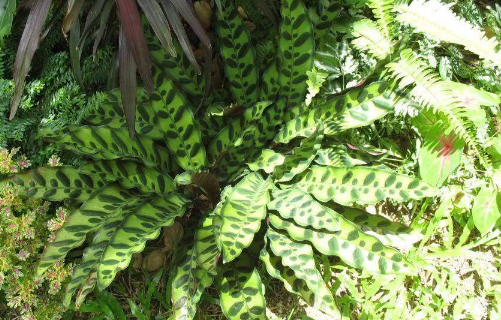
How to propagate Calathea oppenheimiana? A detailed guide to common propagation methods
1. Division. Division propagation has the highest survival rate among the propagation methods for Calathea oppenheimiana, and it is best carried out in spring when everything comes back to life and the weather is warm. Choose a sunny day with a temperature of 18-22°C. Select a robust stem and cut it off together with the root section of the stem and leaves.
条件筛选