-

Ministry of Commerce: The national backbone network for agricultural product circulation is gradually showing results
Summary: Regarding the construction of the national backbone network for agricultural product circulation, including the development of pilot projects such as public-interest wholesale markets for agricultural products and cross-regional agricultural product circulation infrastructure, Shen Danyang said that overall these efforts have been progressing smoothly and their results are gradually emerging.
-
National Agricultural Product Market System Plan Released, About 100 Backbone Markets to Be Built
Yesterday, the website of the Ministry of Commerce published an article stating that the Ministry of Commerce and 10 other departments recently jointly issued the "National Agricultural Product Market System Development Plan", proposing that a agricultural product market system with Chinese characteristics will be initially established by 2020. The plan is based on China's various regions' economic and social conditions, transportation locations,
-
Breakthrough Progress Made in Edible Processing Technology for Animal Bones
Edible animal bones such as livestock and poultry bones are valuable resources of food-derived protein, fat and minerals. At present, the world's annual output of livestock and poultry bones is as high as more than 46 million tons, of which China accounts for 22%, about 12 million tons, exceeding the combined output of livestock and poultry bones in Europe and the United States. The bone by-products
-
Backbone farmers are a new force supporting rural development
Reform and opening up, especially after Deng Xiaoping's Southern Tour talks, the export-oriented development strategy and the practice of the socialist market economy brought enormous changes to China's social structure. In general agricultural areas across the country, the biggest change in rural areas is that a large number of young and middle-aged farmers have moved to the cities
-
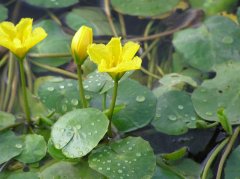
Can the dragon-bone-petal water snowflake be eaten? What uses does this aquatic plant have?
Distribution of aquatic plants in Taiwan, China. Due to different environments, they develop different appearances. Common aquatic plants in Taiwan, China, in order to adapt to environments with different degrees of moisture, have developed various lifestyles, and can be roughly divided into submerged plants, floating-leaf plants, free-floating plants, and emergent plants.
-
Chinese Medicinal Herb "Dragon Bone": Alternative Names and Potted Cultivation Key Points Explained
Dragon Bone is a succulent plant in the genus Euphorbia of the family Euphorbiaceae. Because its shape somewhat resembles a spine, it is called by this name. Besides its unique appearance, which makes it suitable for potted ornamental growing, its flowers and stems also have certain medicinal value. The flowers can treat cough and coughing up blood,
-
How to grow a dragon bone plant? A detailed guide to its care methods
Summary Soil: A mix of coarse sand and leaf mold can be used to prepare the soil, with a small amount of decomposed chicken manure added as a base fertilizer. Watering: The dragon bone plant is drought-tolerant; water once every 10-15 days in spring and autumn, once every 5 days in summer, and in winter it can go 1-2 months without watering. Light
-
Dragon Bone Flower Cultivation Methods and Which Month to Prune
Summary Pruning time: The dragon bone flower can be pruned at any time, but it is better to do so in spring from March to May. When the height reaches 10-15cm, the top needs to be pinched off, and when the branches grow to 20-15cm, pinch off the top again. Old branches and weak branches that do not bloom much should be removed in time. Cultivation methods: The dragon bone flower can be planted in soil mixed with coarse sand, decomposed
-
How to grow Dragon Bone Flower? Water reasonably, avoid applying concentrated fertilizer, repot every 2 years and prune properly
Summary Choosing soil: preferably choose fertile, loose potting soil. Light and temperature: shade in summer, face the sun in winter and rotate the pot, overwintering temperature needs to reach 10°C. Water and fertilizer management: in spring and autumn water once every 10-15 days, in summer water every day, in winter keep dry, use granular compound
-
Scientific Cultivation Techniques and Planting Methods for Sophora flavescens
Sophora flavescens, also known as Kushen, Kushen (bitter bone), Niushen, or Chuanshen, is the dried root of the leguminous plant Sophora flavescens Ait. It has the effects of clearing heat, drying dampness, killing parasites, and promoting urination, and is used to treat bloody dysentery due to heat toxin, bloody stool from intestinal wind, jaundice with urinary retention, red and white vaginal discharge, vulvar swelling and itching, and
条件筛选