-
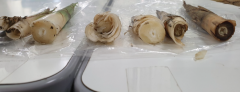
Arrow bamboo shoot yields drop due to drought, Eastern Region Branch builds water storage facilities to fight drought
This year, rainfall in January and February was less than in previous years, affecting the production of many crops. To date, the Agriculture and Food Agency has announced that crops such as plums, arrow bamboo shoots and lychees in some areas have been affected by drought and listed as items under the cash relief program for agricultural natural disasters. Chen Chang-tsen, head of the Eastern Region Branch of the Agriculture and Food Agency
-
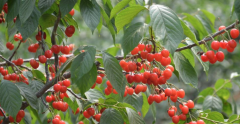
Uzbekistan and Kyrgyzstan imported cherries enter the East China market, will cherry prices be affected?
Red Lantern cherry variety, do you like to eat them? Fruit prices have been high all year this year, especially the prices of those premium fruits, which have risen one or two times, and cherries are one of them. But according to Xinhua News Agency Shanghai on June 15, 2019, Central Asian cherries are entering the East China market in batches
-

How to grow high-yielding spring beets? Plus the 2020 production technical guidance!
Affected by the pandemic, people will vigorously develop planting and breeding this year to avoid food shortages later on, and now is the time to plant beets, so how do you grow high-yielding spring beets? How should pests and diseases be controlled? 1. Introduction to beets: 1. What do beets look like?
-
Drought in the middle and lower reaches of the Yangtze River: how to plant winter rapeseed without being affected? Experts offer advice
During this year's rapeseed sowing period, rainfall in some areas of China's Yangtze River Basin was lower than the same period last year, with persistent drought occurring, which has had a certain impact on rapeseed sowing and emergence. So how can winter rapeseed be planted in the drought-affected middle and lower reaches of the Yangtze River without being affected? To guide drought-affected areas
-
Key Technical Points for Pest and Disease Control During the Cotton Seedling Stage
Due to the influence of ecological conditions, meteorological factors and so on, pests and diseases during the cotton seedling stage are characterized by many species, rapid development and severe damage, often causing missing seedlings and broken rows in cotton fields, and in severe cases, large areas of death. The main diseases that occur include black root rot, red rot, damping-off, anthracnose
-
How to fertilize wheat rationally? Master these planting key points
Wheat fertilizer requirement is greatly affected by soil properties and its own fertility, and different factors such as sowing date and yield must also be considered, while there are also certain differences among wheat varieties. Farmers should pay attention to the following points in fertilization: First, apply more phosphate fertilizer. Wheat has a demand for phosphate fertilizer
-
Detailed Methods for the Prevention and Control of Slime Mold Disease in Bamboo Fungus
Once bamboo fungus (Phallus indusiatus) is attacked by slime mold, the losses are extremely severe, and mushroom growers everywhere should pay attention to this. This article provides a brief introduction to the damage symptoms, causes of the disease, and prevention and control measures. 1. Pathogen: The pathogen of bamboo fungus slime mold disease is Comatricha pulchella (C. Bab) Rost, also known as the beautiful hair net. Its form consists of sporangia growing in groups, sometimes densely packed, stalked, oval to cylindrical, slightly pointed at the top, dark brown or rusty colored, with a total height of 0.7-1.5mm; the stalk is black, generally shorter than the sporangium, rarely reaching half of the total height; the cyst base membrane is thin and membranous, disc-shaped and solitary, or a group forming a continuous sheet; the columella is straight, gradually tapering upward, nearly reaching the top of the sporangium; the capillitium is dense, curved, dark brown, with main branches relatively thick, branches gradually thinning, with many connections, few free ends, spores spherical, brown when in masses, with a diameter of 6.5-8cm.
-
How to prevent and control gray leaf spot when growing Isatis indigotica
Symptoms: On both sides of the leaves of affected Isatis indigotica, round lesions form, 2-6 cm in diameter, slightly sunken, grayish-white in the center, with brown edges. In the later stage, the lesions become thin and brittle, crack or perforate; when moist, a brown mold-like growth appears on them, which consists of the pathogen's conidiophores and conidia. Old
-
How should rice be remedied after herbicide damage?
Rice is an important food crop in our country, grown by almost every household, especially in the north where it covers the largest planting area. During rice cultivation, various types of herbicide damage can occur, so what should be done when rice suffers herbicide damage? 1. Fertilization remedy
-
What to Do About Herbicide Damage in Wheat? Detailed Remedial Methods
In late spring and early summer, all kinds of crops enter a period of vigorous growth, and pesticides also enter their peak use season. However, due to improper use, many cases of herbicide damage of varying degrees occur every year, affecting crop yields. So what should you do when wheat suffers herbicide damage? Take a look with the editor.
条件筛选